In This Guide
- Forget the Calendar: When to Actually Water
- How to Water: It's Not Just a Pour
- What Are You Even Pouring? Water Quality Matters
- A Tool for Every Job: Watering Cans, Meters, and More
- Plant Personalities: A Quick Watering Guide
- The SOS Signals: Reading Your Plant's Leaves
- Answering the Big Questions (The Stuff You Actually Search For)
- Putting It All Together: A Simple Watering Checklist
Let's be honest. Watering plants seems like the easiest thing in the world, right? You get a jug, you pour some water, done. If only it were that simple. I've killed more plants with kindness (read: overwatering) than I care to admit. A beautiful fiddle-leaf fig? Reduced to a mushy-stemmed memorial. A succulent collection? Let's just say they drowned in my enthusiasm.
It turns out, this basic act is where most of us go wrong. It's the silent killer in the plant world. Too much, and you're inviting root rot. Too little, and you're basically running a plant desert. So, how do you get it right? After years of trial and error, and a lot of dead leaves, I've learned that watering plants is less about a schedule and more about understanding a conversation. Your plant is talking to you. You just need to learn how to listen.
Forget the Calendar: When to Actually Water
The number one rule, the golden commandment of watering plants, is this: ditch the fixed schedule. Your plant doesn't know it's Tuesday. It knows if its roots are dry. Watering based on the day of the week is a fast track to problems.
So what should you do instead? You check the soil. It's that simple, and that complicated.
The Finger Test (And Other Trusty Methods)
Stick your finger into the soil, about an inch or two deep (up to your first knuckle or a bit more for larger pots). What do you feel?
- Dry and crumbly: It's time. The soil pulls away from the edges of the pot, and it feels like... well, dry dirt.
- Cool and slightly damp: Hold off. This is the sweet spot for many plants—moist but not wet. Come back in a day or two.
- Wet and muddy: You've waited too long, or you're overdoing it. If it's soggy days after watering, you have a drainage issue.
Other methods? You can lift the pot. A pot with dry soil is surprisingly light. A watered pot has real heft to it. With practice, you'll know the weight. For those who want a gadget, a simple moisture meter from the garden center can take the guesswork out. I have one, but I still use the finger test more often. It's free and connects you to what's happening in the pot.
But here's a curveball. What about the seasons? You can't water the same way in July as you do in January. In the growing season (spring and summer), plants are thirsty. They're putting out new leaves, growing roots, and using up water fast. In the dormant season (fall and winter), most houseplants slow way down. Their water needs plummet. I've lost more plants to winter overwatering than anything else. The soil just stays wet for weeks in the cooler, darker indoor air.
How to Water: It's Not Just a Pour
Okay, so you've determined your plant is thirsty. Now what? You don't just sprinkle a little on top and call it a day. That encourages shallow roots. The goal is to encourage deep, strong roots that seek water downward.
The Thorough Soak Method
This is the method most experts swear by. Take your plant to the sink, bathtub, or outside. Water it slowly and evenly over the entire surface of the soil until you see water running freely out of the drainage holes at the bottom. Let it drain completely. I mean it—let it sit in the sink for 10-15 minutes until no more drips come out. Then put it back in its decorative pot or saucer.
Why is this so good? It ensures the entire root ball gets moistened. It also helps flush out any mineral salts that can build up from fertilizer or tap water, which can harm roots over time. If you only water a little from the top, those salts never get flushed and just concentrate in the soil.
But what if your pot doesn't have drainage holes? This is a personal pet peeve of mine. Those beautiful ceramic pots with no hole in the bottom are plant death traps. They look great, but they're a nightmare for watering plants correctly. You have two choices: 1) Drill a hole (use a proper ceramic/tile drill bit), or 2) Keep the plant in a plastic nursery pot with holes, and just slip that inside the decorative pot. Then, when you water, take the inner pot out, water it in the sink, let it drain, and put it back. It's an extra step, but it saves the plant.
Bottom Watering: Let the Plant Drink Up
This is a fantastic alternative, especially for plants that hate wet leaves (like African Violets) or for pots that are packed tightly with foliage. You simply place the pot (with drainage holes, of course) in a saucer or bowl filled with an inch or two of water. Let it sit for 15-30 minutes. The soil will act like a sponge, drawing water up through the holes via capillary action. You'll see the topsoil become dark and moist. Once it's moist, take the pot out of the water and let any excess drain away.
It's brilliant for ensuring even moisture and avoiding crown rot. The downside? It doesn't flush salts from the soil as effectively as top watering. So, maybe alternate between top and bottom watering every few sessions.
What Are You Even Pouring? Water Quality Matters
We just turn on the tap, right? Well, your tap water might be part of the problem. Many municipal water supplies contain chlorine, chloramines, and fluoride. Some plants, like spider plants, dracaenas, and peace lilies, are particularly sensitive to fluoride, which can cause brown leaf tips.
Also, if you have hard water (water with a high mineral content, especially calcium and magnesium), you might see a white crusty buildup on the soil surface or the pot's rim. That's the mineral residue.
So what are the options?
- Tap Water (Left Out): The simplest fix. Fill your watering can and let it sit out, uncovered, for 24 hours. This allows chlorine (not chloramines, which are more stable) to evaporate and lets the water come to room temperature, which is less shocking to roots.
- Rainwater: The gold standard. It's soft, slightly acidic, and free of chemicals. If you can collect it, do it. Your plants will show the difference.
- Filtered Water: Using a basic carbon filter (like a Brita pitcher) can remove some chlorine and improve taste for you and your plants.
- Distilled/Purified Water: Great for the most sensitive plants (like carnivorous plants), but it can be expensive and feels a bit excessive for a monstera.
I use rainwater when I can, and tap water that's been sitting out for a day when I can't. The difference in my calathea's leaf crispiness was noticeable.
A Tool for Every Job: Watering Cans, Meters, and More
You don't need a lot of gear, but the right tool makes watering plants so much easier and more precise.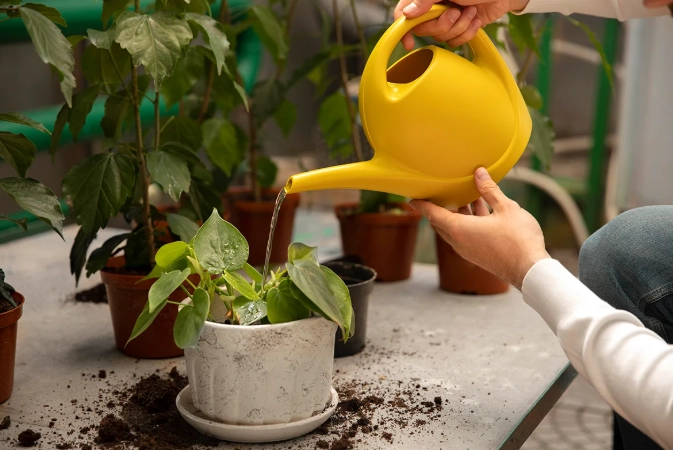
| Tool | Best For | My Thoughts |
|---|---|---|
| Long-Spout Watering Can | Most indoor plants, reaching into dense foliage, targeting soil without wetting leaves. | An absolute essential. The long spout gives you control. Get one with a removable "rose" (the sprinkler head) for gentle watering of seedlings. |
| Moisture Meter | Beginners, deep pots, plants you're nervous about (like fussy ferns). | Takes the guesswork out. Don't become a slave to it, but it's a great training tool. The cheap ones are often just as good as expensive ones. |
| Watering Bulb/Globe | Keeping soil moist for short periods (e.g., during a weekend away). | They look cute, but they're not a long-term solution. They can promote constantly wet soil if you're not careful. Okay for vacations, not for daily care. |
| Mister/Spray Bottle | Increasing humidity for tropical plants, cleaning leaves. | Important: Misting is NOT watering. It doesn't provide meaningful water to the roots. It's for humidity. Don't rely on it to quench your plant's thirst. |
| Self-Watering Pot | Consistent moisture lovers (like some ferns, peace lilies), busy plant parents. | These pots have a reservoir at the bottom. They can be great for specific plants but are terrible for succulents or others that need to dry out. Know your plant's needs first. |
My go-to is a 1-gallon metal watering can with a long, curved spout. It feels good in the hand, and I don't have to refill it constantly.
Plant Personalities: A Quick Watering Guide
Not all plants drink the same. Here’s a crash course. Remember, these are general rules—always check your specific plant's soil!
Succulents & Cacti: The drought champions. Let the soil dry out completely, then give it a thorough soak. In winter, you might only water them once a month or less. Their worst enemy is wet feet. I learned this the hard way with a jade plant that turned to mush.
Monsteras, Pothos, Philodendrons (Common Tropicals): These are relatively forgiving. Let the top 1-2 inches of soil dry out, then water thoroughly. They like consistency but can handle a little neglect.
Ferns (Boston, Maidenhair): The drama queens of moisture. They never want to dry out completely. Keep the soil consistently moist (but not soggy!). Bottom watering is great for them. Dry soil equals instant crisping.
Fiddle Leaf Figs: Surprisingly, they don't like to be soggy. Let the top few inches dry out before a deep drink. They hate inconsistency—wild swings between drought and flood cause those infamous brown spots and leaf drop.
Orchids (Phalaenopsis): Most are epiphytes (air plants) in the wild. Their potting mix (usually bark) drains very fast. Water thoroughly when the roots look silvery-gray (not green) and the pot feels light. Never let them sit in water. The American Orchid Society has a fantastic library of care sheets that goes into precise detail for each type.
The SOS Signals: Reading Your Plant's Leaves
Your plant will tell you if your watering habits are off. You just have to decode the message.
Signs of Overwatering (The most common killer):
- Yellowing leaves, especially older, lower leaves. They often feel soft and mushy.
- Wilting despite wet soil. This is a huge red flag—the roots are rotting and can't take up water, so the plant acts thirsty even though it's drowning.
- Brown, mushy roots and a foul smell from the soil if you unpot it.
- New leaves turning brown and soft.
Signs of Underwatering:
- Wilting with dry, crispy soil. The leaves droop and feel limp or papery.
- Leaves turning brown and crispy at the edges and tips.
- Slow growth or no growth.
- Soil pulling away from the edges of the pot.
See? Yellow leaves can happen in both scenarios. The key is to touch the soil and the leaf. Is the soil wet and the leaf mushy? Overwatered. Is the soil bone-dry and the leaf crispy? Underwatered.
Answering the Big Questions (The Stuff You Actually Search For)
How often should I water my indoor plants?
I hate this question because there's no single answer, and it's why so many people fail. The frequency depends on: the plant type, pot size (small pots dry out faster), pot material (terracotta dries out faster than plastic), soil mix, light levels (more light = more water), temperature, and humidity. A plant in a sunny, warm window might need water weekly. The same plant in a cool, low-light corner might need it every three weeks. This is why the finger test is non-negotiable. It accounts for all these variables instantly.
Can you overwater by bottom watering?
Absolutely. If you leave the plant sitting in water for hours or days, the soil will become saturated, and you'll have the same root rot problems as with overwatering from the top. The key is to remove the plant from the water once the topsoil is moist (15-45 minutes usually). Don't just leave it in a full saucer.
What's the best water for watering plants?
As discussed, rainwater is best. For most people using tap water, the simple act of letting it sit out overnight to dechlorinate and reach room temperature is a massive improvement. For specialized collections (like orchids or carnivorous plants), researching their specific needs is worth it. The University of Florida's IFAS Extension has a great resource on houseplant watering that confirms the room-temperature water advice.
My plant has fungus gnats. Is it a watering issue?
Almost certainly. Those tiny black flies love damp, rich soil. They're a classic sign that your soil is staying too wet for too long. To break their life cycle, let the top layer of soil (1-2 inches) dry out completely between waterings. You can also use yellow sticky traps. It's a clear signal to adjust your watering plants routine.
Putting It All Together: A Simple Watering Checklist
- Pause. Don't water on autopilot. Look at your plant.
- Check. Do the finger test. Is the soil dry at the appropriate depth for this plant?
- Prepare. Use room-temperature water, preferably left out overnight.
- Water. Take the plant to the sink. Water slowly and evenly until water runs freely from the drainage holes.
- Drain. Let it sit and drain completely. No shortcuts.
- Return. Put it back in its spot. Empty the saucer if any water collects later.
- Observe. Watch how the plant responds. Note how long it takes for the soil to dry out again. That's your unique "schedule" for that plant, in that spot, at this time of year.
The goal isn't perfection. It's awareness. You're going to mess up. I still do. Sometimes life gets busy, and a plant wilts. Sometimes you get overzealous. The point is to learn from it. Your plants are resilient. By focusing on the soil's condition and giving a deep, thorough drink when needed, you're working with nature, not against a calendar. You'll start to see the signs before they become problems. The leaves will look perkier. Growth will be stronger. And you'll have fewer mysterious plant deaths.
Watering plants stops being a chore and starts being a quiet, mindful part of your week. At least, that's how it feels to me now. Most of the time.
Reader Comments