Let's be honest. Rose care gets a reputation for being fussy. Black spot, aphids, finicky pruning... it can feel like a part-time job. I've been growing roses for over a decade, and I've killed my fair share. The biggest lesson? It's not about following a rigid set of rules, but understanding what the plant actually needs. Forget the complex rose fertilizer schedules for a minute. We're going back to basics.
What You'll Learn Inside
Getting Started: The Non-Negotiable Planting Foundation
Most rose failures happen in the first six months, and it's almost always due to poor planting. You can't fix a bad start with perfect care later.
Location is Everything (More Than Sun)
Yes, they need at least 6 hours of direct sun. But the nuance everyone misses is air circulation. Planting a rose against a solid fence or crammed between shrubs is an invitation for fungal diseases. Give it space to breathe. Morning sun is particularly valuable—it dries dew from the leaves quickly, reducing the dampness fungi love.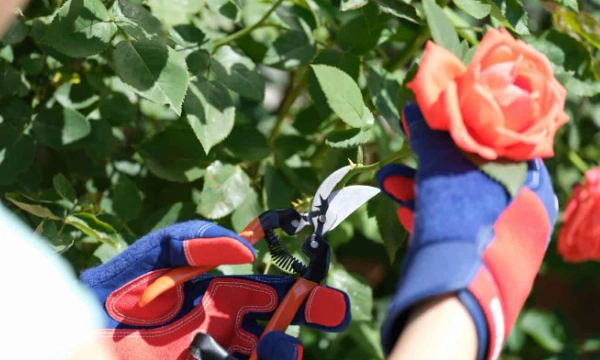
The Hole Truth About Soil
Digging a $10 hole for a $50 plant is a real saying for a reason. A common pitfall is just dropping the rose into native clay or sand and hoping for the best.
My planting mix: I combine the native soil from the hole with a generous amount of well-rotted compost (about 30-50% of the volume). A handful of bone meal mixed into the bottom of the hole provides slow-release phosphorus for root development. I avoid fresh manure or high-nitrogen fertilizers at planting—they can burn tender new roots.
The planting depth is critical, especially for grafted roses (where the knobby graft union is visible). In colder climates (USDA zones 6 and below), bury the graft union 2-3 inches below soil level for winter protection. In warmer zones (7 and above), keep it at or just above soil level.
The Rhythm of Care: Watering and Feeding
Roses are hungry and thirsty, but consistency beats intensity.
Watering Deeply, Not Frequently
Light, daily sprinkling encourages roots to stay near the surface, making the plant vulnerable to drought. The goal is deep, infrequent watering. I give my established roses a thorough soak that penetrates at least 12-18 inches into the soil, which usually means letting a hose trickle at the base for 20-30 minutes. Then I let the top few inches of soil dry out before doing it again. In peak summer, that might be twice a week.
Biggest watering mistake: Wetting the foliage. Water on leaves overnight is the primary cause of black spot and powdery mildew. Always water at the base of the plant, in the morning if possible.
Feeding: Less is More (If It's the Right Stuff)
New gardeners often overfeed with high-nitrogen fertilizers, which produces lush, weak growth that pests adore. Roses need a balanced diet. I follow a simple schedule:
- Early Spring: A balanced, slow-release granular fertilizer (look for an N-P-K ratio like 5-5-5 or 10-10-10) scratched into the soil after pruning.
- After First Bloom Flush (Early Summer): Another application of the same granular fertilizer to fuel the next round of blooms.
- Mid-Summer (July): A final light feeding. I stop fertilizing by early August to avoid encouraging tender new growth that won't harden off before winter.
Every spring, I also top-dress with a fresh 2-inch layer of compost. It feeds the soil, which in turn feeds the rose.
Pruning Without Fear: Shaping for Health and Blooms
Pruning looks brutal, but it's the most rejuvenating thing you can do for a rose. The plant's energy gets redirected to fewer, stronger stems and bigger blooms.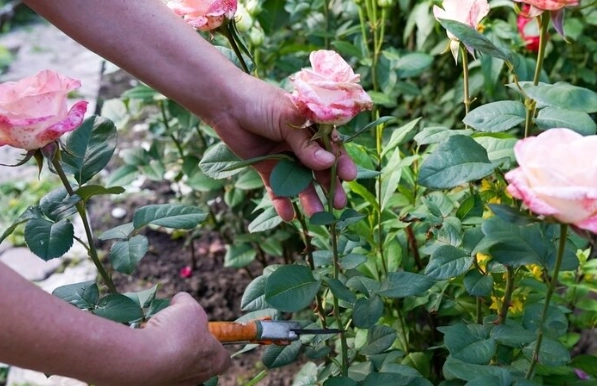
The Annual Spring Chop
For most repeat-blooming roses (hybrid teas, floribundas), late winter or early spring—when the forsythia starts to bloom—is prime time. The goal is to create an open vase shape.
- Remove the Three D's: Any dead, diseased, or damaged wood first. Cut it back to healthy, white pith.
- Take Out the Weak: Any spindly canes thinner than a pencil. They'll never produce good flowers.
- Open the Center: Remove canes that are crossing or growing into the center of the plant. This improves air flow.
- Reduce Height: Cut the remaining healthy canes back by about one-third to one-half. Make your cut at a 45-degree angle, about 1/4 inch above an outward-facing bud (a small bump on the cane). This directs new growth outward.
Use sharp, clean bypass pruners. A clean cut heals faster.
Deadheading: The Secret to Non-Stop Blooms
This is where most people are too gentle. Don't just snap off the old flower. Cut the stem back to the first set of five leaflets, again making the cut just above a leaf that faces the outside of the plant. This tells the rose to send energy into making a new flowering stem, not into producing rose hips (seeds).
Keeping Trouble at Bay: Pest and Disease Defense
You can't eliminate all problems, but you can manage them so they don't ruin your season.
The Usual Suspects: Black Spot and Aphids
Black Spot: This fungal disease starts as black spots on leaves, which then turn yellow and fall off. Prevention is 90% of the battle. Beyond good air circulation and dry leaves, I start a preventative spray regimen in early spring when leaves are just unfurling. A weekly spray of a homemade solution (1 tablespoon baking soda, 1 teaspoon horticultural oil or mild dish soap per gallon of water) can be remarkably effective. For severe cases, a fungicide containing chlorothalonil or myclobutanil may be needed, but rotate products to prevent resistance.
Aphids: Those tiny green or black bugs clustered on new buds and shoots. They suck sap and excrete sticky honeydew. My first line of defense is a strong blast of water from the hose to knock them off. If they persist, insecticidal soap spray works. The long-term solution? Encourage beneficial insects. I plant alyssum and dill nearby to attract ladybugs and lacewings, which are voracious aphid eaters.
Your Rose Care Calendar: A Seasonal Roadmap
Here's a simple breakdown of what to focus on and when. This is for temperate climates; adjust slightly for your zone.
| Season | Key Tasks | Pro Tip |
|---|---|---|
| Late Winter / Early Spring | Major pruning. Apply first dose of slow-release fertilizer. Top-dress with compost. Remove winter mulch. | Wait until the worst frosts are past and buds start to swell. Pruning too early can lead to frost damage on new cuts. |
| Spring | Begin preventative disease sprays. Monitor for aphids. Water deeply as new growth emerges. | Start spraying before you see disease. Clean up any old, diseased leaves from the ground. |
| Summer | Regular deep watering. Deadhead spent blooms. Apply second fertilizer after first bloom. Watch for spider mites in hot, dry weather. | A 2-3 inch layer of organic mulch (shredded bark, wood chips) conserves water and suppresses weeds. Keep mulch away from the crown. |
| Autumn | Stop deadheading to allow hips to form (optional). Reduce watering. Do NOT fertilize. Clean up all fallen leaves to remove disease spores. | Letting hips form signals the plant to start hardening off for winter. A beautiful rose hip display can be a fall feature. |
| Winter | In cold zones (5 and below), mound 10-12 inches of soil or mulch over the base of the plant after the ground freezes. Prune out only obviously dead canes. | The goal of winter protection is to keep the plant consistently frozen, preventing freeze-thaw cycles that heave roots. |
Quick Answers to Your Thorniest Questions
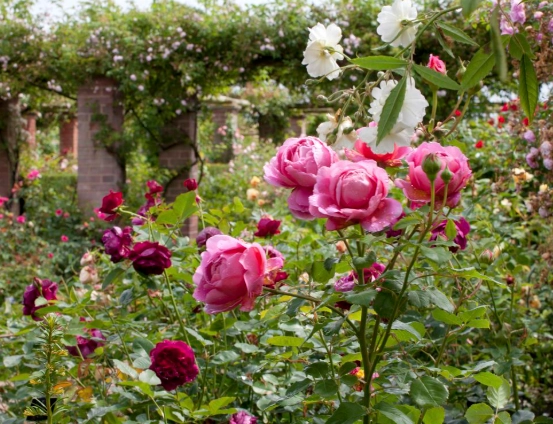
Rose care isn't about achieving perfection. It's about understanding a plant's language—what yellow leaves, few blooms, or weak growth are telling you. Start with a good planting site, water deeply at the roots, feed it a few times a season, and don't be afraid to prune. Do those things consistently, and you'll have more roses than vases. The rest is just fine-tuning.
I learned most of this through trial and error, and by consulting resources like the Royal Horticultural Society's advice on pruning and the University of California's Integrated Pest Management Program for organic disease control strategies. Sometimes the best rose care tip is to step back, watch your plant, and let it show you what it needs.