In This Guide
- What Exactly Is a Heuchera Plant?
- Navigating the Jungle: How to Choose the Right Heuchera Variety
- The Real-World Planting Guide: It's Not Just a Hole in the Ground
- Year-Round Heuchera Care: Less is Often More
- Solving Common Heuchera Problems (Before They Happen)
- Dividing and Propagating: Making More of a Good Thing
- Designing with Heuchera: From Filler to Focal Point
- Answering Your Heuchera Questions
Let's be real. Finding plants that actually thrive in shade can feel like a constant battle. You see those lush, colorful gardens in magazines, but your shady corner just ends up looking... green. And maybe a bit sad. I've been there. For years, my north-facing bed was a graveyard for plants that promised "partial shade tolerance." Then I discovered Heuchera.
Honestly, I was skeptical at first. Coral Bells? Sounded delicate. But the first time I planted a 'Palace Purple' heuchera and saw those deep burgundy leaves hold their color from spring straight through a mild winter, I was hooked. These aren't your grandmother's filler plants. Modern Heuchera cultivars are tough, versatile, and pack a visual punch that can anchor a design.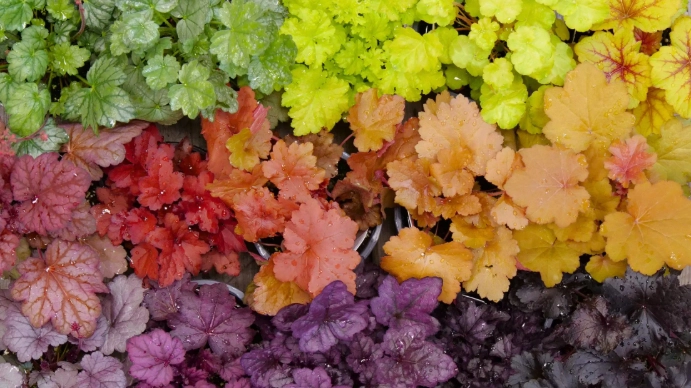
This guide is everything I wish I'd known when I started. We're going beyond the basic plant tag info. We'll dig into how to pick the right variety for your specific spot (because not all heucheras are created equal), how to keep them happy with surprisingly simple care, and how to use them to solve real garden design problems. Whether you're dealing with dry shade under a tree or a damp, gloomy spot by a wall, there's a heuchera that can handle it.
What Exactly Is a Heuchera Plant?
Before we get carried away with all the pretty colors, let's cover the basics. Heuchera, commonly called Coral Bells or Alumroot, is a genus of evergreen to semi-evergreen perennial plants native to North America. The name "Coral Bells" comes from the tiny, bell-shaped flowers they send up on slender stalks in late spring or early summer. But let's be honest—most of us are buying them for the foliage.
The leaves form a low, rounded mound, often described as a "clump." This mounding habit is one of their key design features. From that mound, flower scapes (stems) emerge, covered in dozens of little flowers that attract hummingbirds and bees. The flowers are a nice bonus, but the leaf show is the main event, lasting from the moment the frost melts until it returns.
The Royal Horticultural Society, a globally recognized authority on plants, lists Heuchera in its extensive plant database, noting their resilience and value for foliage interest. Their popularity has exploded thanks to intensive breeding programs that have pushed leaf colors far beyond the original green.
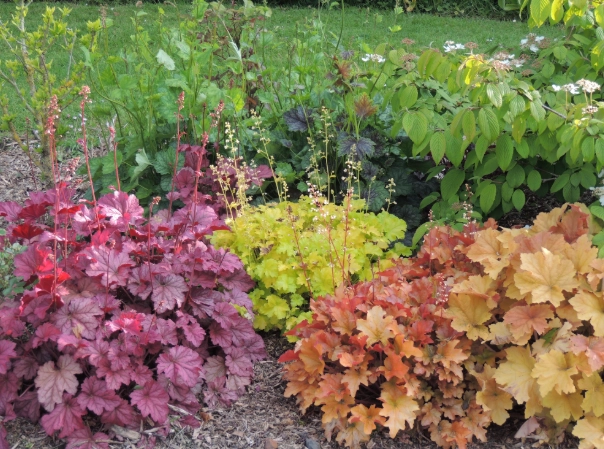
You can now find heuchera leaves in shades of lime green, deepest purple, metallic silver, burnt orange, and even near-black, with intricate veining and ruffled edges. It's this incredible range that makes them so useful.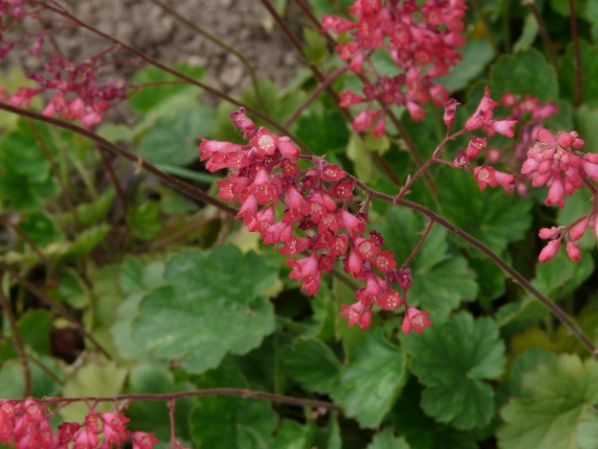
Navigating the Jungle: How to Choose the Right Heuchera Variety
This is where most people, myself included, make their first mistake. You fall in love with a photo of a stunning, peach-colored heuchera online, buy it, plop it in deep shade, and watch it turn a sickly green. Not all heucheras have the same light requirements or hardiness. Picking the right one for your conditions is 90% of the battle.
Based on leaf color and parentage, heucheras have some general preferences. It's not an absolute rule, but a fantastic starting point.
Here’s a breakdown of some popular types and where they perform best. This isn't just from reading tags; it's from watching them in gardens (and in my own).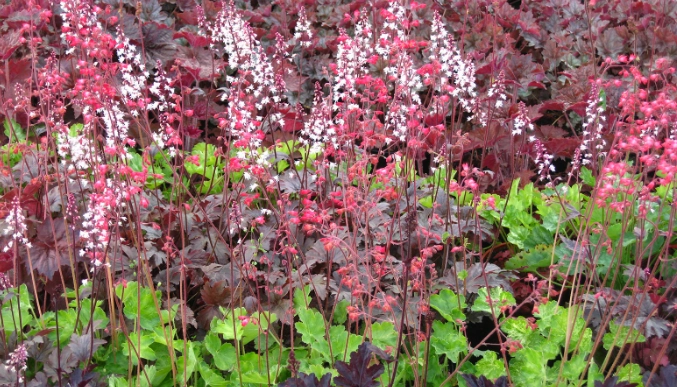
Heuchera for Deep Shade
These are the workhorses for your darkest corners. They tend to be varieties with darker foliage—purples, blacks, dark greens. The darker pigments are better at photosynthesis in low light.
- 'Palace Purple': The classic. A deep purple-burgundy that's almost indestructible. It's one of the older cultivars, but it's still widely available for a reason. It just works.
- 'Obsidian': As the name suggests, near-black leaves. It creates an incredible contrast. In deep shade, it looks dramatic and moody.
- 'Dark Secret': Very dark purple with silvery reverse. Holds its color exceptionally well.
Heuchera for Morning Sun / Dappled Light
This is the sweet spot for most of the fancy, brightly colored cultivars. A few hours of gentle morning sun intensifies their colors without scorching the leaves.
- 'Lime Rickey' or 'Electric Lime': A bolt of neon green that lights up a shady spot. Incredible for brightening dark areas.
- 'Peach Flambe' or 'Marmalade': Those beautiful peach, amber, and apricot tones need some light to truly glow. Without it, they fade.
- 'Silver Scrolls': A personal favorite. Deep purple leaves overlaid with a metallic silver mosaic pattern. The silver pops with a bit of sun.
Heuchera That Can Handle More Sun (in cooler climates)
If you have a spot with several hours of sun, especially in hotter zones, you need to choose carefully. Look for varieties with thicker, often lighter-colored leaves that reflect heat.
- 'Caramel': A warm amber-orange. It has a waxy, thicker leaf that seems to handle sun better than other orange types.
- 'Georgia Peach': Another one with good sun tolerance for a peach-colored variety.
- The 'Dolce' series (like 'Dolce Key Lime Pie', 'Dolce Cinnamon Curls') is often bred for better heat and humidity tolerance.
Remember, "more sun" is relative. In Georgia, "more sun" might mean one hour of morning light. In Oregon, it might mean four. Always observe your garden's microclimates.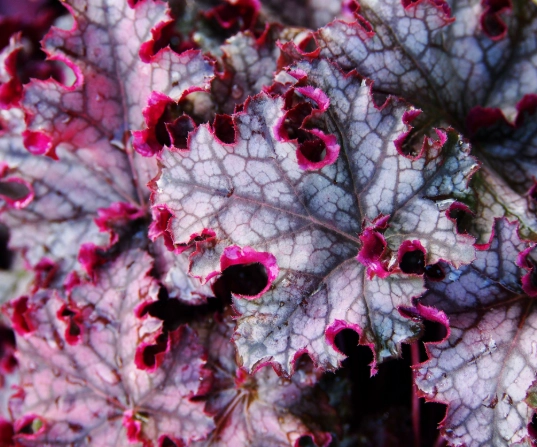
The Real-World Planting Guide: It's Not Just a Hole in the Ground
Okay, you've picked your plant. Now, how do you give it the best start? Planting a heuchera correctly is critical because of one specific issue: crown rot. This is the Achilles' heel of many a heuchera. The "crown" is where the stems meet the roots. If it's buried or sits in soggy soil, it's a death sentence.
Here's my step-by-step process, born from a few tragic, mushy-crown learning experiences.
- Timing is (Almost) Everything: Spring or early fall are ideal. This gives the roots time to establish without the stress of summer heat or winter freeze. I've planted in summer, but it requires vigilant watering.
- The Hole: Dig a hole about twice as wide as the pot but only as deep. You want the root ball to sit level with or slightly above the surrounding soil. This promotes drainage away from the crown.
- Soil Amending – The Big Debate: If you have heavy clay (like I do), you must improve drainage. I mix in a generous amount of compost and maybe some coarse sand or fine bark chips. The goal is to create a loose, crumbly texture. The Missouri Botanical Garden, a trusted scientific resource, notes that Heuchera perform best in organically rich, medium-moisture, well-drained soils. Don't just backfill with native clay.
- The Moment of Truth – Planting Depth: Gently remove the heuchera from its pot. Loosen any circling roots. Place it in the hole so the crown (you'll see the little stem bases) is above the soil line. I sometimes even leave it a quarter-inch proud. Backfill gently, firming the soil around the roots but not on top of the crown.
- Water & Mulch Wisely: Water deeply to settle the soil. Apply a thin layer of mulch (like shredded bark) to conserve moisture, but keep it away from the crown. Imagine a donut of mulch around the plant, with the crown sitting in the hole. This was a game-changer for me.
Year-Round Heuchera Care: Less is Often More
Once established, heucheras are famously low-maintenance. But "low" doesn't mean "none." Here’s the simple routine that keeps them looking their best.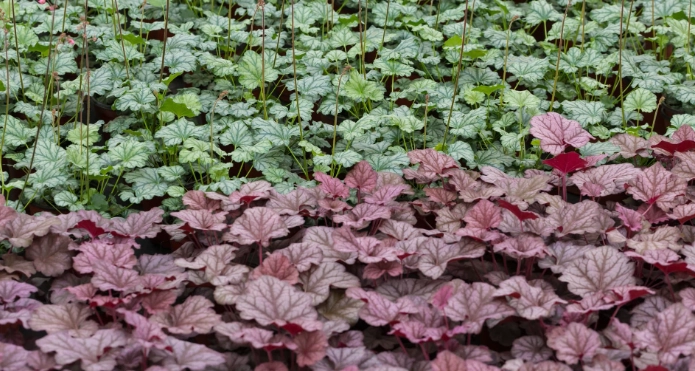
Watering: Finding the Balance
They like consistent moisture, especially in their first year, but absolutely despise wet feet. The goal is "evenly moist," not soggy. I stick my finger into the soil near the plant. If the top inch is dry, it's time to water. Deep, infrequent watering is better than daily sprinkles, which wet the leaves and crown and encourage disease.
In hot, dry summers, they might need water once or twice a week. In cool, rainy springs, maybe not at all. Let the soil be your guide, not the calendar.
Feeding: A Light Touch
Heucheras aren't heavy feeders. A single application of a balanced, slow-release fertilizer in early spring as new growth emerges is usually sufficient. I use a simple organic granular fertilizer scratched lightly into the soil around the plant (again, not touching the crown). Over-fertilizing, especially with high-nitrogen formulas, can lead to soft, floppy growth that's prone to pests and less vibrant color.
Grooming & Deadheading
This is the main hands-on task. In early spring, I go out with my pruners and clean up the clump. I remove any winter-damaged or tatty leaves, cutting them back to the base. This makes way for the fresh, new foliage that emerges from the center.
After the flowers fade in summer, you can cut the flower stalks back to the base to keep the plant looking tidy and redirect energy to the leaves. I sometimes leave a few stalks on varieties with attractive seed heads for winter interest.
Winter Care
In most climates, heuchera are hardy. In colder zones (USDA 4 and below), a light mulch applied after the ground freezes can help prevent "heaving," where freeze-thaw cycles push the shallow roots out of the ground. Remember, keep mulch away from the crown! In spring, remove this winter mulch to allow the soil to warm.
Solving Common Heuchera Problems (Before They Happen)
No plant is completely bulletproof. Here are the issues you might encounter and, more importantly, how to prevent them.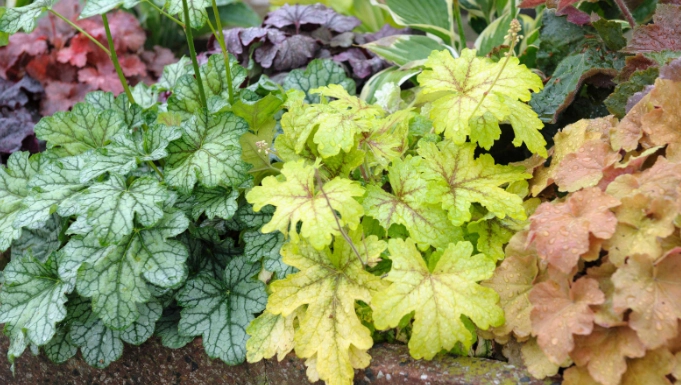
| Problem | What It Looks Like | Likely Cause | The Fix & Prevention |
|---|---|---|---|
| Crown & Root Rot | Plant collapses; center (crown) is mushy, black, or smelly. | Soil too wet/poorly drained; crown buried; overwatering. | Prevention is key. Ensure perfect drainage, plant crown high, avoid overhead watering. Infected plants usually can't be saved. |
| Leaf Scorch | Brown, crispy edges or bleached spots on leaves. | Too much intense sun or heat, especially for lighter-colored varieties. | Relocate plant to a shadier spot or provide afternoon shade with a taller plant or shade cloth. |
| Vine Weevil | Notched, U-shaped bites taken from leaf edges (adult damage). Grubs in soil eat roots (larval damage). | Adult weevils feed at night. A common pest for container plants. | Handpick adults at night with a flashlight. Use nematodes (biological control) for grubs in soil. Avoid bringing infested plants home. |
| Rust | Orange-brown pustules on the undersides of leaves. | Fungal disease favored by wet foliage and poor air circulation. | Improve air flow. Water at the base, not overhead. Remove and destroy severely infected leaves. Fungicides are a last resort. |
| Leggy Growth | Clump looks tall, stretched, and sparse in the center. | Plant is aging; center has become woody. | Time to divide! (See section below). |
Dividing and Propagating: Making More of a Good Thing
After 3-4 years, a heuchera clump might start to look a bit tired. The center gets woody and the growth seems to ring around a dead spot. This is normal—it's just asking to be divided. It's also the cheapest way to get more plants.
When: Early spring is best, as the plant is full of energy for new growth. Early fall is a second option.
How:
- Dig up the entire clump carefully with a garden fork.
- Wash or brush off the soil so you can see the structure.
- Using a sharp knife or even your hands, tease or cut the clump into smaller sections. Each section needs to have some healthy roots and at least a couple of growth points ("eyes").
- Replant the divisions immediately, following the planting guide above. Plant them at the proper depth! Water them in well.
The old, woody center can be composted. You can also try rooting individual stems as cuttings in a moist potting mix, but division is far more reliable for most home gardeners.
Designing with Heuchera: From Filler to Focal Point
This is the fun part. Heuchera is incredibly versatile in the landscape. Don't just think of it as an edge plant. Here are some concrete ways to use them.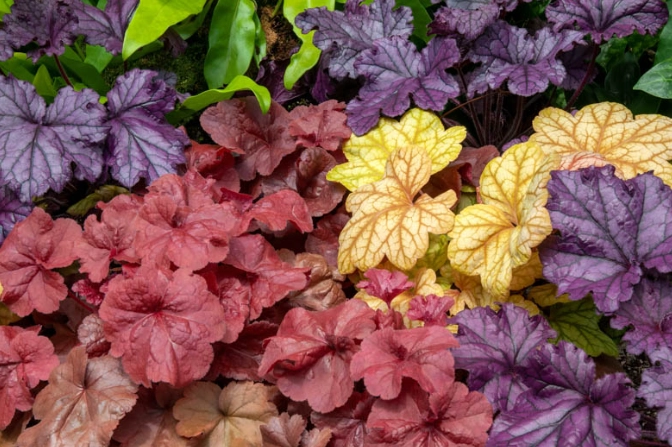
1. The Ultimate Shade Container Thriller or Filler
Heuchera is a container superstar. Its mounding form provides structure and color. Use a dark purple heuchera ('Obsidian') as the dark, dramatic centerpiece (the "thriller") in a pot, surrounded by trailing white bacopa and upright ferns. Or use a bright lime one ('Lime Rickey') as the color "filler" between a taller grass and some trailing ivy.
2. Creating Cohesion in a Mixed Border
Repeating the same heuchera variety along the front of a shady border creates a unified, professional look. It ties together different shrubs and perennials. I used 'Silver Scrolls' repeated every 4-5 feet along a bed with azaleas, hostas, and astilbes. The silver thread pulled it all together.
3. Problem-Solving Partnerships
Heuchera plays well with others. Its shallow roots don't compete aggressively with deeper-rooted plants.
- Under Trees: Pair with other shade-tolerant, shallow-rooted plants like hostas, ferns, and hardy begonias.
- For Dry Shade: Combine with epimedium, hellebores, and certain carex varieties. All tolerate dry roots once established.
- For Color Echoing: Match a heuchera's leaf color to nearby flowers. A 'Peach Flambe' heuchera looks stunning next to orange-toned impatiens or begonias. A purple one complements blue hydrangeas or salvias.
4. Foliage-Only Gardens
Create a mesmerizing, textured tapestry using only foliage plants. Combine heucheras of different colors and leaf shapes (ruffled, smooth, veined) with hostas, hakonechloa grass, brunnera, and pulmonaria. You get a serene, visually interesting space that looks good from April to November.
Answering Your Heuchera Questions
So, there you have it. Not just a basic plant profile, but a real-world manual for making Heuchera a successful, long-lasting part of your garden. It's a plant that rewards a little knowledge with a lot of beauty. Now, go find that perfect spot for one. You won't regret it.