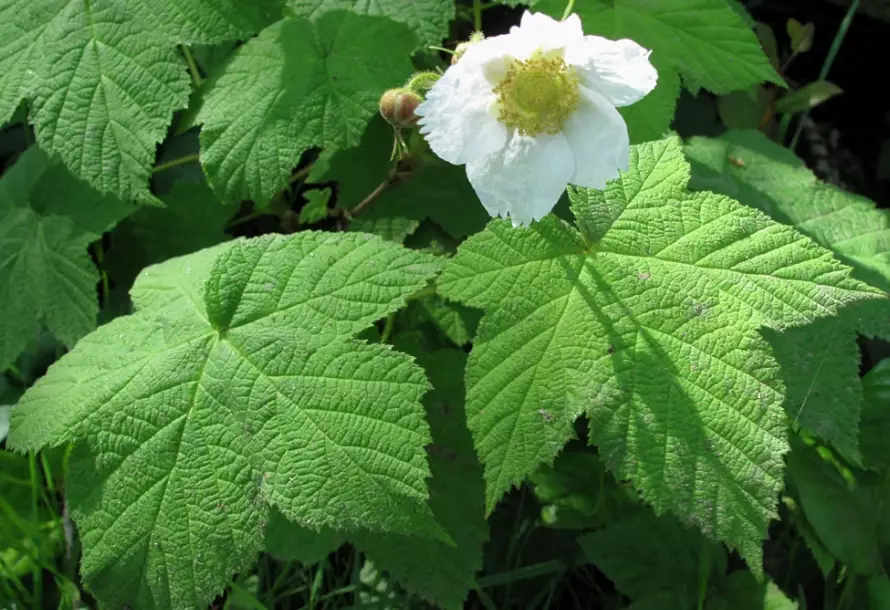
If you've ever hiked through the damp forests of the Pacific Northwest or the Great Lakes region and spotted a shrub with huge, maple-like leaves and delicate white flowers, you've likely met the thimbleberry (Rubus parviflorus). Most people walk right by it, maybe thinking it's an ornamental plant. But this unassuming native holds a secret: it produces one of the most fragile, sweet, and uniquely flavored wild berries in North America. Unlike its thorny blackberry and raspberry cousins, the thimbleberry plant is friendly—no prickles to speak of. Its fruit, which resembles a shallow red thimble, practically melts in your mouth. But there's more to it than just a tasty snack. As a native plant enthusiast who has grown and foraged these for years, I've seen firsthand how thimbleberries are misunderstood and underutilized in gardens and restoration projects.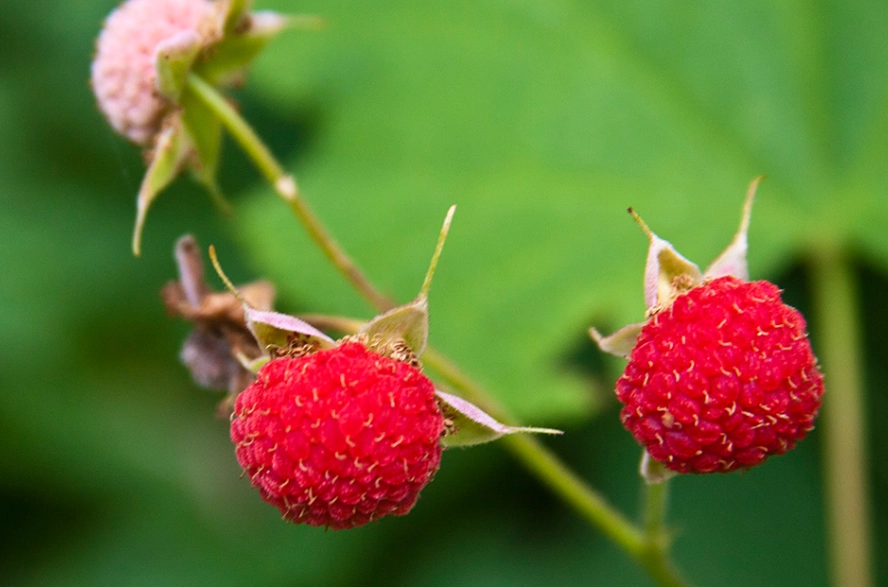
What's Inside?
How to Spot a Thimbleberry (And Not Mistake It for Something Else)
Identification is step one. Get this wrong, and you could be in for a disappointment—or worse. The good news is, once you know what to look for, thimbleberries are unmistakable.
The Leaves. This is your biggest clue. They're massive, often the size of your hand or larger. They're soft, fuzzy, and shaped like a maple leaf with 3 to 5 lobes. They feel almost like flannel to the touch. No other common Rubus species in its range has leaves this big and soft.
The Stems (Canes). Here's the kicker: they are completely thornless. The canes are greenish to reddish-brown, often with a fine, peeling bark. They grow in dense, sprawling thickets. If you're getting poked, you've found a blackberry.
The Flowers. In late spring to early summer, you'll see large, white, rose-like flowers with five petals. They're showy and can be up to two inches across. They look nothing like the smaller, clustered flowers of raspberries.
The Fruit. The berries ripen to a bright, coral-red in mid to late summer. They're aggregate fruits like raspberries, but they're wider, flatter, and more fragile. They come off the core cleanly, leaving a hollow center. The flavor is sweet, mild, and vaguely floral—but they're so soft they barely survive the trip from bush to basket.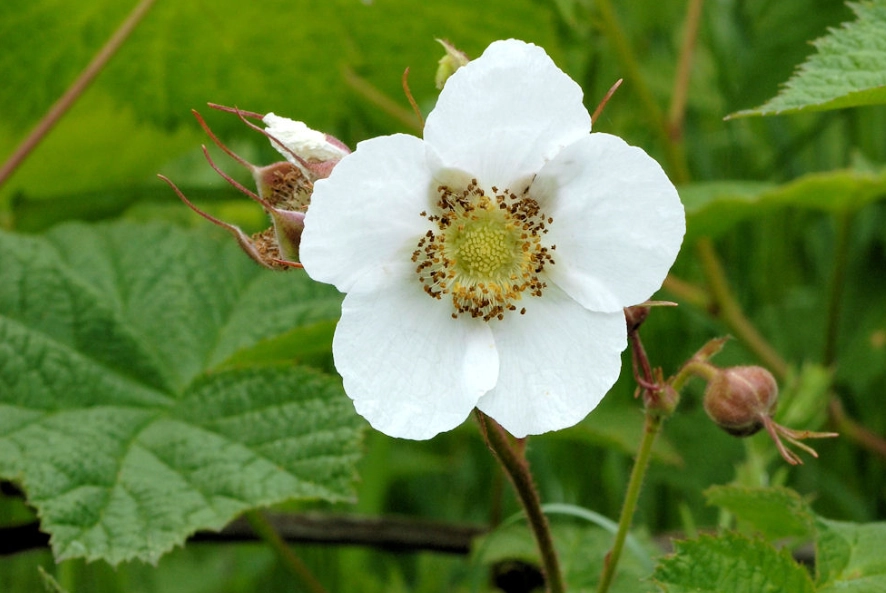
Thimbleberry vs. Its Look-Alikes: A Quick Comparison
| Feature | Thimbleberry (Rubus parviflorus) | Blackberry (Rubus spp.) | Red Raspberry (Rubus idaeus) |
|---|---|---|---|
| Leaves | Very large (4-8\"), maple-shaped, soft and fuzzy. | Medium, compound leaves with 3-5 leaflets, serrated edges. | Medium, compound leaves with 3-5 leaflets, white-silver underside. |
| Stems/Thorns | Thornless, bark may peel. | Arching canes with sharp, stout thorns. | Upright canes with fine, slender prickles. |
| Flowers | Large (2\"), white, single or small clusters. | Smaller, white to pink, in clusters. | Small, white, in loose clusters. |
| Fruit | Bright red, shallow, extremely soft and fragile. | Black or dark purple, firm, retains core when picked. | Red, hollow core, firmer than thimbleberry. |
| Typical Habitat | Moist forest edges, clearings, stream banks. | Sunny fields, roadsides, disturbed areas. | Sunny clearings, forest edges. |
The Real Guide to Growing Thimbleberries Successfully
Thinking of adding thimbleberry to your garden? Great choice. It's a fantastic native alternative to invasive ornamentals. But most gardening guides treat it like a raspberry, and that's a mistake. Here's what actually works, based on my own trial and error (mostly error at first).
Location and Light: Thimbleberries are forest edge plants. They don't want deep shade, nor do they thrive in baking, full-sun, dry spots like some berries. Aim for partial sun—morning sun with afternoon dappled shade is perfect. Under the high canopy of tall trees like Douglas firs or at the edge of a woodland garden is ideal.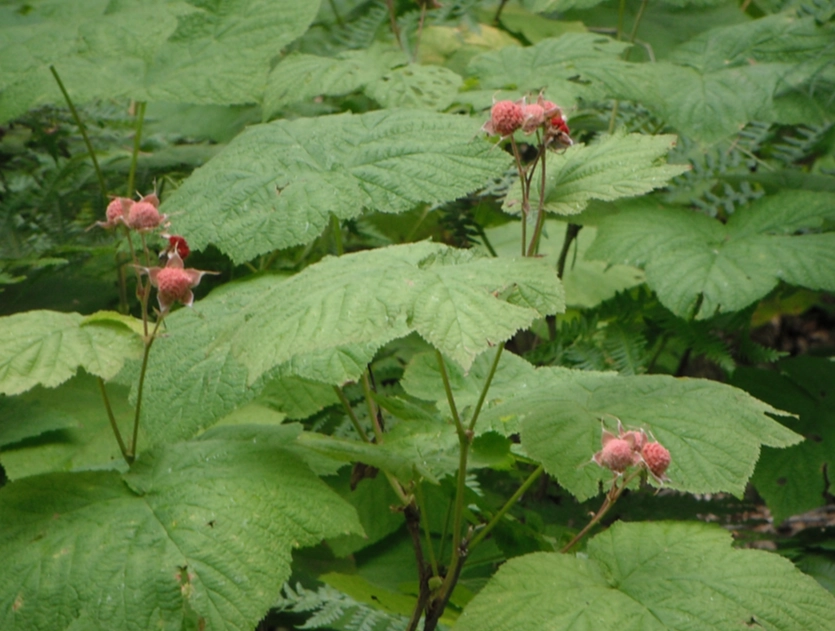
Soil and Water: This is critical. They need consistently moist, well-draining soil that's rich in organic matter. Think of the forest floor. If your soil is heavy clay, amend it heavily with compost. If it's sandy, add lots of compost to retain moisture. My first planting failed because I put them in a sunny, well-drained slope—they simply dried out and sulked. They need more water than you think, especially in the first two years and during dry spells.
Planting and Spacing: You can start from bare-root plants, potted nursery stock, or even root cuttings. Space them about 3-4 feet apart. They will spread by rhizomes to form a thicket, which is what you want. Don't fight it—embrace it as a living mulch and habitat feature.
The Biggest Pruning Mistake: Everyone wants to prune. With thimbleberries, prune as little as possible. They fruit on second-year canes (floricanes). After a cane fruits, it will die back. In late winter, you can simply remove these dead canes at the base to tidy up. That's it. Aggressive annual pruning like you'd do with raspberries will severely reduce your harvest. Let the plant form its natural thicket.
Beyond the Berry: Why You Should Plant Thimbleberry
The fruit is a delicious bonus, but the real value of a thimbleberry plant is ecological. In an era where native gardening is crucial, this plant is a powerhouse.
Its large, early-leafing leaves provide excellent cover for ground-nesting birds and small mammals. The flowers are a significant nectar and pollen source for native bees, butterflies, and other pollinators in early summer when other blooms might be scarce. The berries are a high-energy food for birds like thrushes, grosbeaks, and mammals from chipmunks to bears.
But here's an underappreciated point: its rhizomatous growth makes it an excellent soil stabilizer for slopes, stream banks, and erosion-prone areas. I've used it in riparian restoration projects, and it quickly forms a dense mat that holds soil far better than many non-native groundcovers. The USDA Plants Database lists it as a beneficial native for conservation planting.
By planting thimbleberry, you're directly replacing invasive plants like Himalayan blackberry or English ivy with a native that supports the local food web and heals the landscape.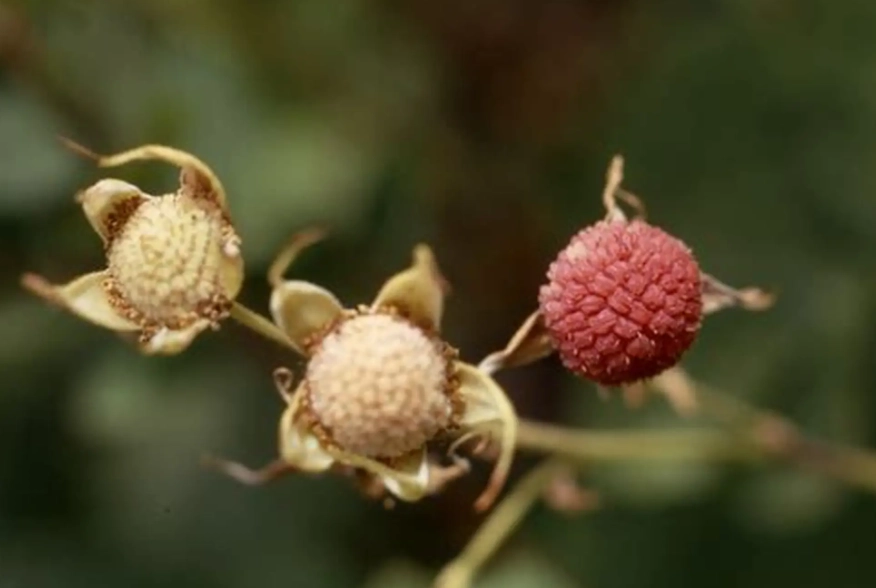
Harvesting and Using Thimbleberries: Tips You Won't Find Elsewhere
So you've found or grown a patch. Now what? Harvesting requires a gentle touch. Don't bring a big bucket. Bring a wide, shallow container. The berries crush under their own weight if piled high.
Pick only the berries that come off with the slightest tug. They should be a uniform, deep red. If they're still pink or resist, leave them. They won't ripen well off the plant. Plan to process them the same day you pick them.
Culinary Uses: Their delicate nature means they're best eaten fresh, sprinkled on cereal or yogurt. They make a sublime, lightly sweet jam or sauce, but you'll need to add pectin or mix with a firmer berry like apple or red currant. Their flavor is subtle, so don't overpower it with too much sugar or lemon.
Here's a non-consensus idea: The leaves are more useful than you think. Young, tender thimbleberry leaves can be dried to make a pleasant, mild herbal tea. Historically, many Native American tribes used the large, soft leaves for practical purposes—wrapping food for cooking, as a natural plate, or even for minor first aid due to their slight astringency.
Your Thimbleberry Questions, Answered