Quick Garden Guide
Let's be honest. You've probably fallen in love with the delicate, dancing blooms of a fuchsia plant, only to watch it turn into a sad, blackened mess after the first frost. I've been there. I've mourned more than one beautiful basket that I thought was a goner. That's the heartbreak with the common, tender fuchsias sold everywhere.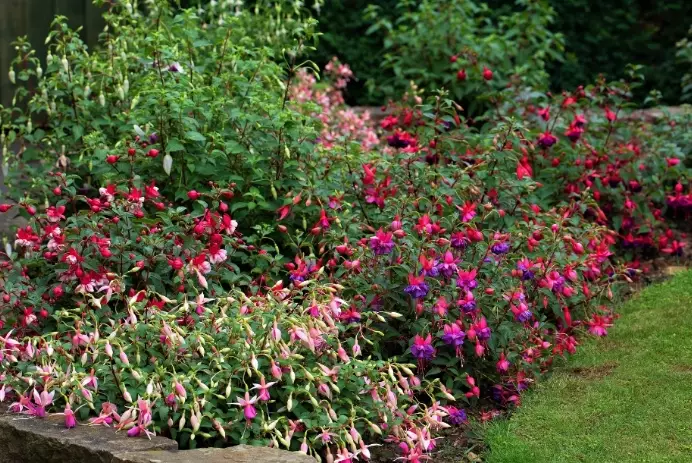
But what if I told you there's a whole other world of fuchsias out there? Plants that laugh in the face of winter, come back stronger every spring, and can even become substantial shrubs in your garden. That's the magic of Fuchsia Hardy. We're not talking about a single plant, but a group of tough, resilient varieties, primarily descended from species like Fuchsia magellanica, that can survive freezing temperatures.
This guide is for anyone who's tired of treating fuchsias as disposable annuals. We're going deep on everything you need to know to successfully grow these stunning perennials.
The Core Idea: Hardy fuchsias are perennial plants that can survive winter dormancy and regrow from their roots or woody stems in spring, unlike their tender cousins. Their hardiness depends heavily on the specific variety and your local climate.
What Exactly Makes a Fuchsia "Hardy"?
It's not just marketing. True hardy fuchsia varieties have genetics that allow them to enter a proper dormancy. When temperatures drop and daylight shortens, they slow down, drop leaves (usually), and hunker down. Their roots and crown (the base where stems meet roots) can withstand soil freezing to a certain point.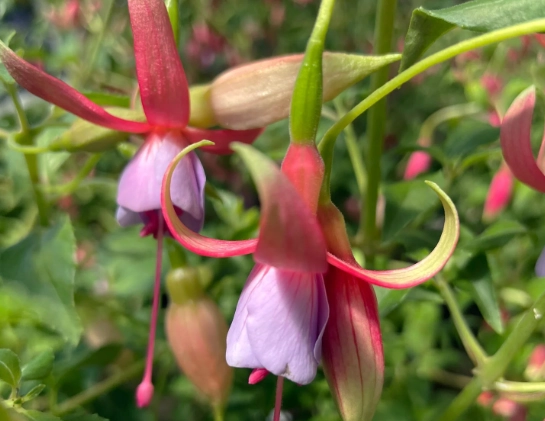
The gold standard for hardiness is Fuchsia magellanica and its hybrids. I've seen Fuchsia magellanica 'Riccartonii' thriving as a massive hedge in coastal British Columbia, barely blinking at a mild frost. The United States Department of Agriculture (USDA) Plant Hardiness Zone Map is your best friend here. Most true hardy types are rated for zones 6-7 and above, meaning they can handle winter lows down to about -10°F to 0°F (-23°C to -18°C). But remember, a rating of zone 7 doesn't guarantee success in every zone 7 garden. Microclimates, snow cover (a great insulator!), and soil drainage play huge roles.
Here's a quick reality check: even hardy fuchsias might die back to the ground in colder zones. The goal isn't always to keep them as evergreen shrubs, but to ensure the root system survives to sprout anew in May.
Top Hardy Fuchsia Varieties You Should Know
Not all hardy fuchsias are created equal. Some are tougher, some bloom more profusely, and some have truly unique colors. After killing a few and nurturing many others, here's my honest take on some standout varieties.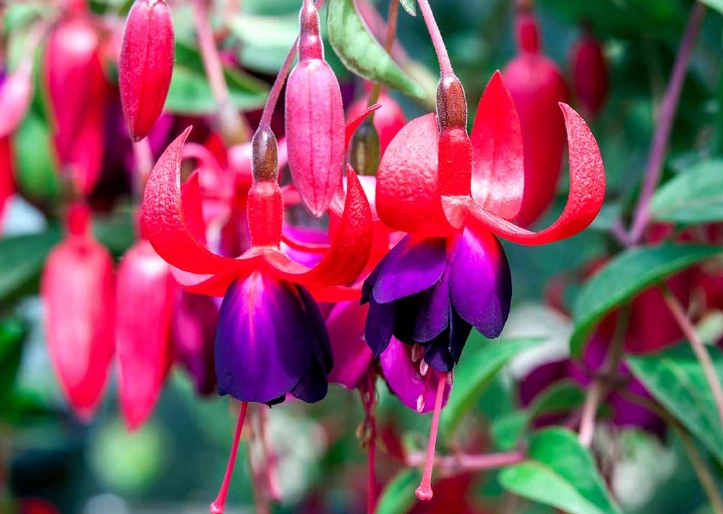
| Variety Name | Key Features & Color | Reported Hardiness (USDA Zone) | My Notes & Growth Habit |
|---|---|---|---|
| Fuchsia magellanica 'Riccartonii' | Small, red and purple flowers. The classic hardy type. | 6-7 (often survives in 5 with protection) | Incredibly vigorous. Can become a large, sprawling shrub (up to 10ft tall in mild areas!). Almost bulletproof. The stems have a lovely reddish tint. |
| Fuchsia 'Dollar Princess' | Double flowers, purple and red. Very floriferous. | 7-8 | A showstopper. The double blooms are stunning and it flowers its head off. Slightly less hardy than 'Riccartonii', so I mulch it well. Compact, bushy habit. |
| Fuchsia 'Hawkshead' | Pure white flowers with a hint of green. Elegant and unusual. | 6-7 | My favorite for a "cool" look. The white blooms stand out in shady spots. It's quite tough and has an upright, arching growth. A real conversation starter. |
| Fuchsia 'Mrs. Popple' | Single, large flowers of vivid red and violet. | 7-8 | An old, reliable variety. The flowers are huge and the plant is a consistent performer. Good for training as a small standard (lollipop shape) in a pot that you can then overwinter in a garage. |
| Fuchsia 'Genii' | Golden-yellow foliage with red and purple flowers. | 7-8 | You grow this one for the stunning chartreuse foliage almost as much as the flowers. It brightens up dark corners. The leaves can scorch in hot afternoon sun, so give it morning light only. |
That's just a sampler. Nurseries like the Royal Horticultural Society (RHS) in the UK have awarded many of these the Award of Garden Merit (AGM), a good indicator of a reliable garden plant.
My personal, slightly negative take? Some of the newer, ultra-floriferous patio types are sometimes marketed as "hardy" when they're really only borderline. Always check the specific zone rating, not just the label.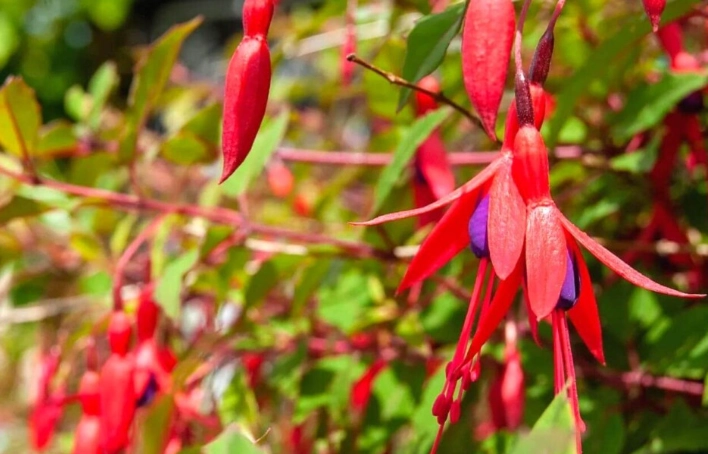
Planting Your Hardy Fuchsia for Success
Getting this right from the start saves so much trouble later. Think of it as building a strong foundation.
Location, Location, Location
This is the biggest decision. In cooler climates (zones 6-7), hardy fuchsias appreciate a spot with morning sun and afternoon shade. The sun helps ripen the wood for winter, but the shade protects them from scorching summer heat. In cooler, maritime climates like the Pacific Northwest, they can often handle more sun.
Crucially, they need excellent drainage. Wet, soggy soil in winter is the number one killer, more than cold itself. Roots rot in cold, wet earth. If you have heavy clay, you must amend it. I dig a hole twice as wide as the root ball and mix in a lot of compost and some grit or perlite.
Pro Tip: Consider planting on a slight slope or in a raised bed to enhance drainage. Even a small mound helps.
The Planting Process
Spring is the ideal time, after the last frost. This gives the plant a full season to establish robust roots before winter. Fall planting is risky in colder areas.
- Dig a hole as deep as the pot and wider.
- Mix compost into the native soil.
- Gently tease out the roots if they're pot-bound.
- Place the plant so the top of the root ball is level with the soil surface. Don't bury the crown deeper.
- Backfill, water thoroughly, and apply a mulch (like bark chips) to retain moisture and suppress weeds.
Space plants according to their expected mature size—often 2-3 feet apart for bushy types.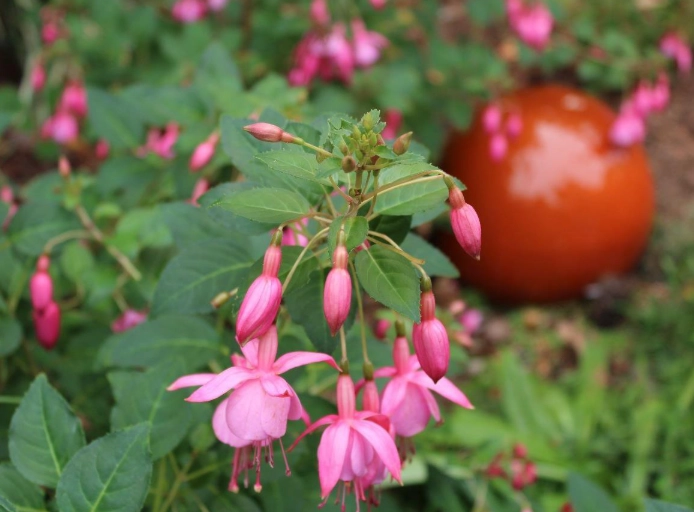
The Year-Round Care Routine
Once established, hardy fuchsias are surprisingly low-maintenance. But a little attention goes a long way.
Watering and Feeding
They like consistent moisture, especially when in active growth and bloom. Don't let them dry out completely. A deep watering once or twice a week is better than daily sprinkles.
Feed them. I use a balanced, slow-release fertilizer in spring as they start growing. Then, I switch to a liquid fertilizer higher in potassium (like a tomato feed) every two weeks during the blooming period to encourage more of those gorgeous flowers. You stop feeding by late summer to let the plant harden off for winter.
Pruning: The Big Question
This confuses a lot of people. The timing is key and depends on your climate.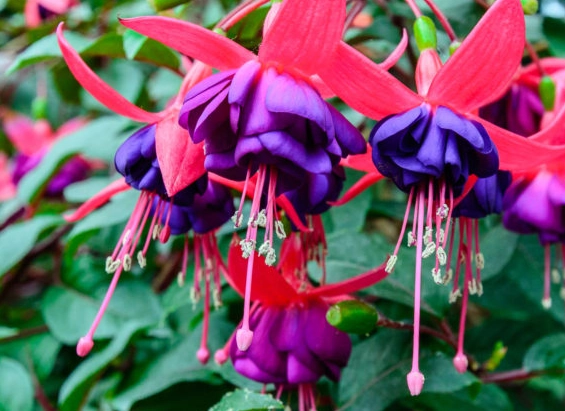
In milder climates (Zone 8+): You can prune in late winter or early spring, just as new buds start to swell. Cut back last year's growth by about one-third to a half to shape the plant and encourage bushy new growth.
In colder climates (Zone 6-7): Do NOT prune in fall. Leave the old stems standing over winter. They provide some protection to the crown. The big pruning happens in spring, after the last frost and when you see new growth emerging from the base. Then, you can cut all the old, dead-looking wood back to where you see fresh green shoots. Some years, it might be all the way to the ground. Don't panic.
Patience is a Virtue: Hardy fuchsias are often late to break dormancy. Don't assume it's dead in April if your daffodils are up. I've had plants not show signs of life until late May. Wait until early June before you finally give up and start digging.
The Winter Survival Guide: Your Key to Success
This is the make-or-break section. How you handle winter determines if you have a perennial or an annual.
Pre-Winter Prep (Late Fall)
After the first killing frost blackens the leaves:
- Stop watering once the plant goes dormant.
- Do not prune. (I know, it's tempting to tidy up).
- Apply a thick, loose mulch. This is the most important step. Pile 4-6 inches of shredded leaves, straw, or bark chips over the crown of the plant. The goal is to insulate the root zone from freeze-thaw cycles and maintain a consistently cold temperature. Don't use heavy, wet materials like whole leaves that can mat down and smother the crown.
Winter Strategies by Zone
Zone 7 & 8: Heavy mulching is often sufficient. Snow provides excellent extra insulation.
Zone 6 & borderline 5: Mulch heavily. After the ground freezes slightly, you can add further protection like an overturned basket or a cage stuffed with leaves. The key is to keep the plant cold and dormant, not warm, which can trigger premature growth.
Potted Plants: Pots are vulnerable because roots freeze easily. For a potted hardy fuchsia, your best bet is to move the entire pot to an unheated garage, shed, or cold frame where it stays dark and just above freezing. Water it very sparingly once a month so the roots don't desiccate completely.
Common Problems (And Real Solutions)
They're tough, but not invincible.
Fuchsia Gall Mite: This is a nasty, microscopic pest that causes distorted, swollen growth at the shoot tips. It's become a major issue. If you see it, the best advice from experts like those at state extension services (e.g., OSU Extension) is to prune out and destroy the affected stems immediately. In severe cases, you might need to remove the plant. Some newer varieties claim resistance.
Aphids & Whiteflies: Common on soft new growth. A strong blast of water usually knocks them off. Insecticidal soap works for heavier infestations.
Rust: A fungal disease causing orange spots on leaves. Improve air circulation, avoid overhead watering, and clean up fallen leaves in autumn.
Winter Die-Back: Not really a "problem" but an expectation in cold zones. Just follow the spring pruning advice above.
Frequently Asked Questions (FAQs)
Let's tackle the stuff people really search for.
Final Thoughts: Is a Hardy Fuchsia Right for You?
If you live in zone 7 or above, I'd say absolutely give it a try. Start with a tough cookie like 'Riccartonii' or 'Hawkshead'. If you're in zone 6 or a cold 5, you'll need to be more committed to the winter protection ritual. Treat it as an experiment the first year.
The joy of seeing those first red shoots push through the mulch in late spring, knowing your plant survived, is immense. And then come the flowers—weeks and months of elegant, hummingbird-magnets that just keep going. It's a different relationship than with a tender fuchsia. It's a garden partnership.
They offer structure, long-season color, and a touch of the exotic to perennial borders, woodland gardens, and sheltered corners. Don't just think of them as basket plants. A mature, well-grown hardy fuchsia shrub is a thing of beauty and a real talking point.
So, maybe skip the doomed-to-die annual fuchsia basket this year. Instead, hunt down a true Fuchsia Hardy variety, plant it with care, protect it in winter, and enjoy it for years to come. It's one of the most rewarding gambles you can take in the garden.