What You'll Find Here
Let's be honest, we've all killed a plant or two. I certainly have. But the clematis vine? It's got this reputation for being fussy, a real diva of the garden. After years of trial and error (and a few tragic losses), I'm here to tell you that's mostly a myth. With a few simple tricks, this climbing beauty can be one of the most rewarding plants you'll ever grow.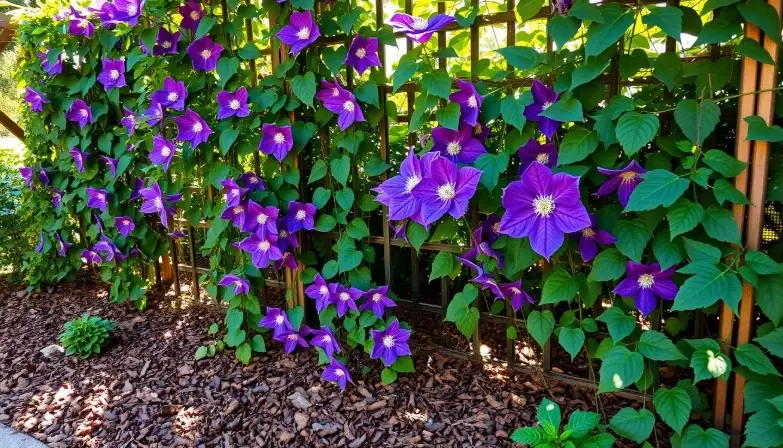
Picture this: a cascade of vibrant purple stars covering an old fence, or delicate white bells tumbling over an arbor. That's the magic of clematis. They're not just one-trick ponies either. The variety is staggering—from early spring bloomers that shout "hello!" to late-season showstoppers that keep the color going until frost.
Getting Started: The Non-Negotiable Basics
If you want your clematis vine to thrive, you can't just stick it in the ground anywhere. They have specific needs, but they're not complicated once you understand them. Think of it like setting up a new pet for success.
The Golden Rule: Head in the Sun, Feet in the Shade
This is the oldest piece of gardening advice for clematis, and it's spot on. The vines love to climb towards the sunlight, but their root zone hates getting baked. How do you manage that?
- Plant it deep. Bury the crown (where the stems meet the roots) about 2-3 inches below the soil surface. This encourages extra stems to shoot from below ground, making a bushier plant, and keeps those sensitive roots cooler.
- Use a mulch. A good layer of bark chips, compost, or even flat stones around the base acts like a sun hat for the roots. It keeps moisture in and heat out.
- Plant a low-growing companion. I love planting shallow-rooted annuals like marigolds or sweet alyssum around my clematis. They look pretty and their foliage creates natural shade for the clematis roots.
Soil: It's All About the Drainage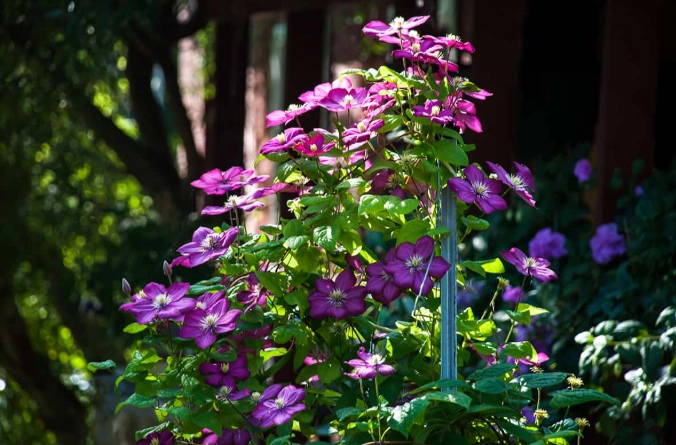
Clematis despise wet feet. Soggy soil leads to root rot, which is a death sentence. Your soil needs to be like a wrung-out sponge—moist but not waterlogged. If you have heavy clay, you must amend it. Dig a hole twice as wide as the pot and mix in plenty of compost, well-rotted manure, or even some grit or perlite to open up the soil structure.
They also prefer neutral to slightly alkaline soil. If your soil is very acidic, a handful of garden lime mixed into the planting hole can help. The Royal Horticultural Society (RHS) has a great, simple guide on understanding your soil type which is worth a quick look.
The Pruning Puzzle Solved (It's Easier Than You Think)
This is the part that scares people off. All those pruning groups (1, 2, 3)... it sounds like a math test. But it's really just about when your clematis vine blooms.
Here’s the simple breakdown:
| Pruning Group | When It Blooms | When & How to Prune | Common Varieties |
|---|---|---|---|
| Group 1 | Early Spring. On last year's old wood. | Prune right after flowering. Just tidy it up, remove dead bits. Don't cut back hard or you'll lose next year's flowers. | Clematis montana, Clematis armandii |
| Group 2 | Late Spring/Early Summer on old wood, often again in late summer on new wood. | Prune lightly in late winter/early spring. Remove dead and weak stems, cut other stems back to a pair of strong buds. A light trim again after the first flush of blooms can encourage a second show. | 'Nelly Moser', 'Henryi', 'The President' |
| Group 3 | Mid-Summer to Fall. On new growth made that same year. | Prune hard in late winter/early spring. Cut all stems down to a strong pair of buds, 6-12 inches from the ground. Sounds brutal, but they love it. | Clematis viticella types, 'Jackmanii', 'Sweet Autumn' Clematis |
What if you don't know the group? No panic. If you buy from a nursery, the tag should say. Lost the tag? Observe for a year. See when it flowers. If it blooms very early on bare stems, it's Group 1. If it blooms late in summer on a mass of new green growth, it's Group 3. The repeat-blooming ones are usually Group 2.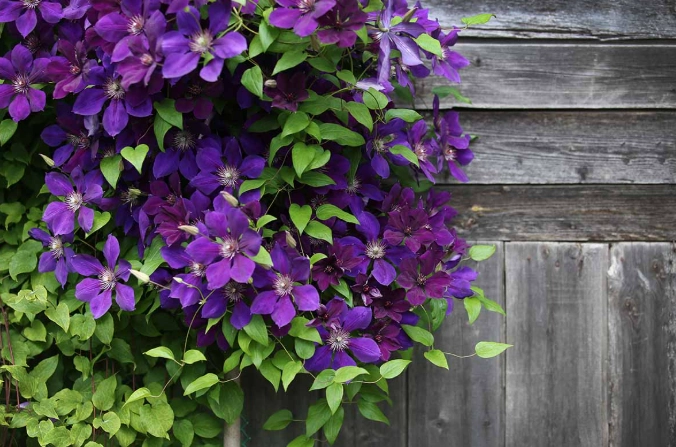
Choosing Your Champion: A Few Can't-Go-Wrong Varieties
The American Clematis Society lists hundreds of cultivars. It's overwhelming. To keep it simple, here are my personal top picks for reliability and sheer impact, based on what you might be looking for.
For the Beginner: The Tough Cookies
- Clematis viticella 'Polish Spirit': This one is nearly indestructible. Purple flowers all summer long, belongs to Group 3 (so you cut it right back), and is resistant to clematis wilt. It's my number one recommendation for new gardeners.
- Clematis 'Jackmanii': The classic. Deep velvety purple, blooms for ages, and again, a simple Group 3 prune. It's been popular for over 150 years for a reason.
For Big, Showy Flowers: The Statement Makers
- Clematis 'Nelly Moser': Pale pink bars on a mauve background. Stunning. It's a Group 2, so needs a gentler prune, but those plate-sized flowers are worth the tiny bit of extra effort.
- Clematis 'The President': Deep purple with a silvery reverse. Reliable and flowers profusely. A great, sturdy Group 2.
For Fragrance & Charm
- Clematis montana: A Group 1 beast that will cover a wall or fence in a season with a cloud of small, pink or white flowers in May. The scent is sweet and lemony. Warning: it's vigorous. Give it space.
- Clematis 'Sweet Autumn' (Clematis terniflora): A Group 3 monster that smothers itself in thousands of tiny, star-like white flowers in late summer/fall. The fragrance on a warm evening is incredible—honey-like and pervasive. Can be invasive in some areas, so check locally.
For an authoritative database to browse more varieties, the British Clematis Society's website is an incredible resource.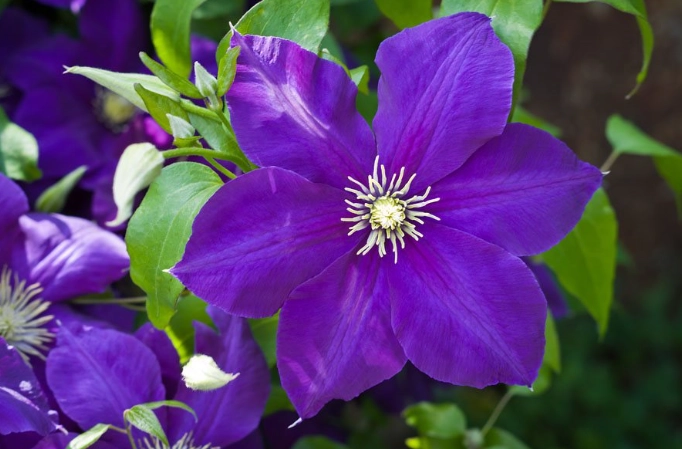
What's Wrong With My Clematis? Troubleshooting Common Problems
Even with perfect care, things can go wrong. Here's how to diagnose the main issues.
The Dreaded Clematis Wilt
This is a fungal disease where a seemingly healthy vine suddenly collapses, with stems turning black and wilting. It's dramatic and scary. Important: It usually affects the large-flowered hybrids (often Group 2), not the species or viticella types.
What to do? Don't rip the plant out! The fungus doesn't attack the roots. Cut all the affected stems back to healthy tissue, or even right down to the ground. Clean your shears with disinfectant. The plant will often re-sprout from the base the following year. To help prevent it, ensure good air circulation and avoid damaging the stems near the base.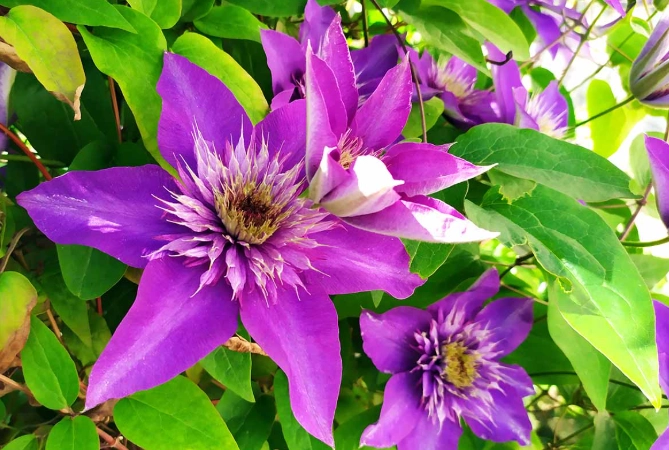
No Flowers? Let's Investigate.
- Too much nitrogen: Are you feeding it a lawn fertilizer? That promotes leafy growth at the expense of flowers. Use a fertilizer higher in potassium (the third number, like 5-10-10), which promotes blooms. Tomato feed is perfect.
- Wrong pruning: This is the most common cause. You cut back a Group 1 or 2 at the wrong time and removed the flowering wood. Follow the group guide above.
- Not enough sun: While the roots need shade, the vines need at least 6 hours of sun to flower well.
Yellow Leaves
Usually a sign of stress. Could be overwatering, poor drainage, or a magnesium deficiency. If the leaves are yellow but the veins stay green, it's likely a nutrient issue. A feed with Epsom salts (magnesium sulfate) dissolved in water can sometimes green it up quickly.
Beyond the Basics: Clematis Design Ideas
A clematis vine doesn't have to climb a trellis against a wall. That's just the start.
Through a Shrub or Tree: This is my favorite trick. Plant a clematis near a spring-flowering shrub like a lilac or a rose. The shrub provides support and shade for the roots. The clematis (choose a summer-blooming one) then flowers through the shrub when it's finished, extending the season of interest. A yellow rose with a blue clematis weaving through it? Magic.
In a Pot: Yes, you can! Choose a large, deep pot (at least 18 inches deep and wide) and a less vigorous variety. Use a good quality potting mix with extra grit for drainage. Provide a small obelisk or tripod for support. Watering is critical—pots dry out fast. This is a great option for patios or balconies.
As a Ground Cover: Some of the shorter, non-clinging varieties can be left to sprawl over a bank or at the front of a border. Clematis integrifolia is great for this.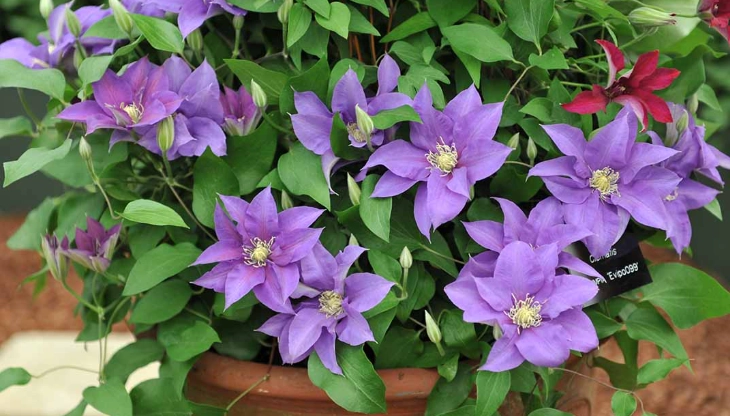
Your Clematis Vine Questions, Answered
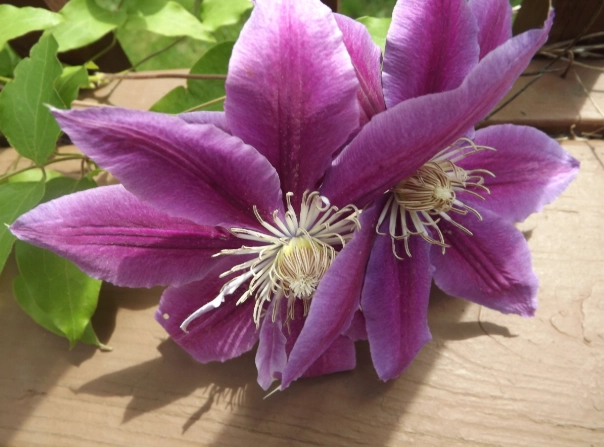
Look, gardening is an experiment. You'll have successes and failures. The clematis vine might seem like a challenge, but it's one of the most generous plants when you get it right. Start with an easy Group 3 variety, plant it with its head in the sun and feet cool, and don't be afraid of the pruners. Before you know it, you'll have a vertical masterpiece that makes your garden feel complete.
And if a stem suddenly wilts or a plant seems sluggish, don't take it personally. Just troubleshoot, adjust, and try again. The payoff—those incredible, often massive blooms climbing towards the sky—is absolutely worth the effort.
Reader Comments