Quick Guide
You know, I used to walk past these little plants in rockeries and dry gardens without giving them a second glance. They were just... there. A mat of interesting foliage with tiny, delicate flowers. It wasn't until I killed my third attempt at a lawn in a sunny, poor patch of soil that a nursery owner shoved a pot towards me and said, "Try this. It's called erodium. It won't die." He was right. It didn't just not die; it thrived, and it completely changed how I see so-called "filler" plants.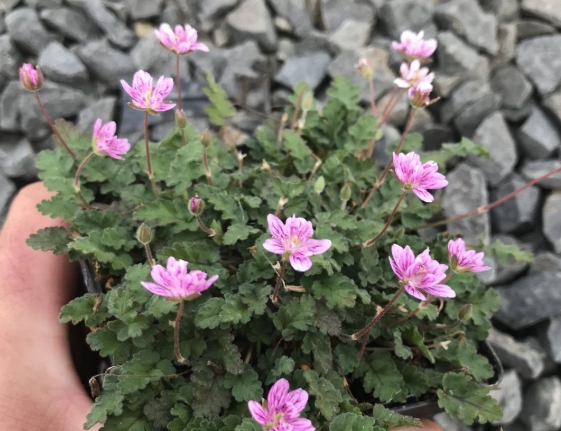
So let's talk about the erodium plant. If you're searching for it, you might be a frustrated gardener like I was, dealing with a brutal spot where nothing seems to work. Or maybe you're a rock garden enthusiast looking for authentic alpine flora. You could just be curious about that pretty ground cover with the funny name at the botanical garden. Whoever you are, you've probably found that information is scattered. Some sources get overly botanical, others are just a line or two. This guide is my attempt to pull it all together, from the basic "what is it" to the nitty-gritty of making it work in your own space.
What Exactly Is an Erodium Plant?
Let's clear up the confusion right at the start. Erodium is a genus of flowering plants, and it's part of the Geraniaceae family. That's the same family as the popular geraniums (Pelargonium) you buy for your patio pots and the true hardy geraniums (Geranium) that form lovely clumps in borders. Think of them as cousins. But erodium has its own distinct personality.
The most common names you'll hear are storksbill or heron's bill. The name comes from the fruit's shape, which has a long, pointed beak that supposedly resembles a stork's or heron's bill. It's a charming detail once you see it up close. These plants are native to a wide range of regions, from the Mediterranean basin to temperate parts of Australia and the Americas. This widespread native habitat is a huge clue to their character: they are survivors, adapted to often challenging conditions.
I have to admit, for years I mixed up erodium and some of the low-growing hardy geraniums. The leaves can look similar at a glance. The real giveaway, for me, became the flower. Erodium flowers are often more delicate, with five petals that usually have lovely, intricate veining or spots, and they seem to float just above the foliage on slender stems.
Why Gardeners Are Falling for Erodium
It's not a plant you see in every big-box garden center, but it's gaining a serious following. Why? Our gardening needs are changing. Water conservation isn't just a California problem anymore. People want gardens that don't demand constant babysitting. The erodium plant fits this modern ethos perfectly.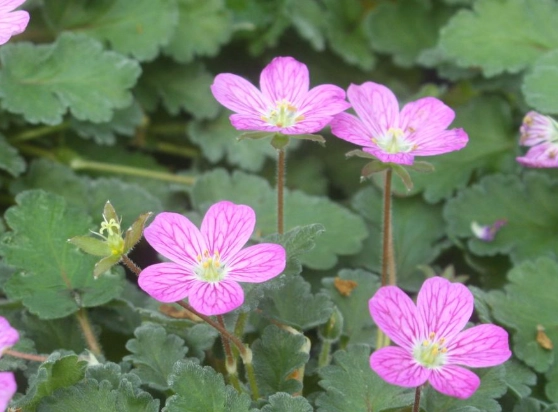
Its main selling points are brutally practical: extreme drought tolerance once established, an ability to grow in poor, rocky, or shallow soils that would make other plants sulk, and a generally pest-resistant and disease-free nature. On top of that utility, it offers real beauty. The foliage forms attractive, often finely-cut or silvery mats that provide textural interest even when not in bloom. And the flowers, while small, are produced in such abundance and have such intricate details that they create a lovely, soft haze of color.
It's the ultimate low-input, high-reward plant.
Popular Erodium Varieties You Can Actually Find
With over 100 species, the genus is diverse. But don't worry, you don't need to know them all. Only a handful have made the jump into mainstream horticulture. Here’s a breakdown of the ones you're most likely to encounter and consider for your garden.
| Common Name & Species | Key Characteristics | Best Used For | My Personal Take |
|---|---|---|---|
| Erodium reichardii (formerly E. chamaedryoides) "Alpine Geranium" |
Tiny, rounded leaves forming a tight, moss-like mat. Small white or pink flowers with dark pink veins. Super slow, tidy grower. | Rock gardens, between paving stones, trough gardens, miniature landscapes. The quintessential alpine plant. | Adorable but fussy about winter wetness. It needs perfect drainage more than any other. Worth the effort for a perfect spot. |
| Erodium x variabile 'Roseum' (and other cultivars) |
Probably the most common in gardens. Forms loose, spreading mats of grey-green, lobed leaves. Flowers are pink with deeper veins. | General ground cover in sunny, dry areas, sprawling over walls, filling in gravel gardens. | The workhorse. Reliable, flowers for months, spreads politely but not invasively. My top recommendation for beginners. |
| Erodium manescavii | Taller and more upright than others (up to 18 inches). Large, magenta-pink flowers held well above fern-like foliage. | Adding vertical interest in a dry border, the front of a sunny perennial bed. | Feels more like a traditional perennial. The flower show in early summer is spectacular, but it can look a bit ragged after blooming if not trimmed. |
| Erodium trichomanifolium | Extremely fine, thread-like, grey-green foliage that forms a soft, cloud-like mound. Delicate lilac-pink flowers. | Providing exquisite, soft texture in rockeries and gravel gardens. Looks amazing next to bold-leaved succulents. | Pure texture plant. The flowers are almost a bonus. It hates being waterlogged more than almost anything. A beauty with an attitude. |
Finding these can be the trick. You won't typically find them at the average garden center. Your best bets are specialty nurseries that focus on perennials, rock garden societies, and online plant retailers that specialize in hardy plants. It's worth the hunt.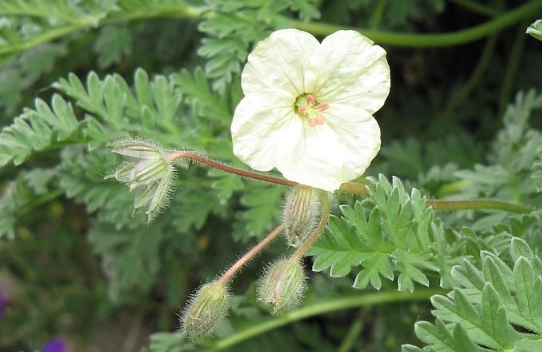
How to Grow and Care for Your Erodium Plant
This is where the magic happens. Getting it right at the planting stage is 90% of the battle with these plants. They are forgiving of neglect but surprisingly sensitive to a few key mistakes.
The Non-Negotiables: Sun and Soil
Think of where they come from: sunny, open, well-drained hillsides. Mimic that.
Sunlight: Full sun is ideal. They need at least 6 hours of direct sun to flower well and stay compact. In hot inland climates, they can handle all-day sun. In partial shade, they'll grow, but they'll become leggy, flower poorly, and be more susceptible to rot. They are not shade plants.
Soil: This is critical. The soil must be well-draining. Sandy, gravelly, or rocky soil is perfect. Heavy clay is the enemy. If you have clay soil, you must amend it. I'm not talking about a little bag of compost. To plant an erodium in clay, you need to either:
- Create a raised mound or bed: Build it up at least 6-8 inches with a mix of native soil and a large amount of coarse sand, fine gravel (like horticultural grit), and some compost.
- Plant on a slope: Gravity helps pull water away.
- Go full container: Use a very gritty potting mix, like one formulated for cacti and succulents, with extra perlite or pumice added.
I learned this the hard way. I planted my first Erodium x variabile in "improved" clay, thinking the compost would be enough. It survived one winter and then melted away in a wet spring. The second one, planted in a mound of gritty mix, is still going strong five years later.
Watering: The Art of Neglect
Water deeply to establish the plant in its first season. This encourages roots to go down. After that, back off. These are xeric plants. Overwatering is the fastest way to kill an erodium. Let the soil dry out completely between waterings. In many climates with occasional rainfall, established plants may need no supplemental water at all. In containers, water only when the soil is bone-dry an inch down.
They are incredibly drought-tolerant. The foliage might look a bit tired during a prolonged heatwave, but it will perk up with the next rain or a deep drink. It's a survival mechanism.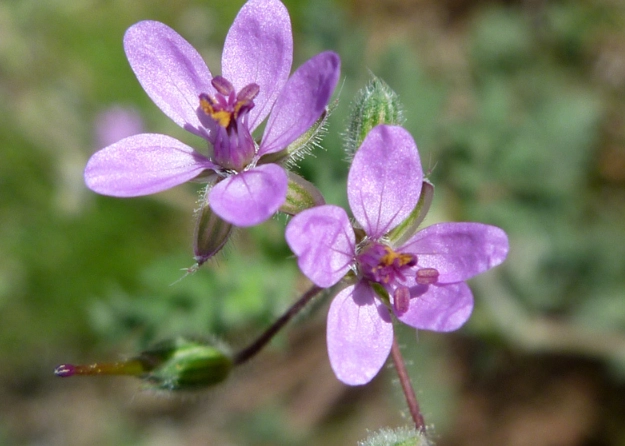
Feeding and Maintenance
They are light feeders. Too much fertilizer, especially nitrogen, will lead to lots of soft, weak foliage and few flowers. If your soil is very poor, a light application of a balanced, slow-release fertilizer in early spring is plenty. In decent garden soil, they often need nothing at all.
Maintenance is simple. After the main flush of flowering, give the plant a light shear or trim with garden shears. This removes the spent flower stalks and encourages a tidier mound and often a second, smaller wave of blooms. In late fall or early spring, you can tidy up any winter-damaged leaves. That's really it.
Design Ideas: Putting Erodium to Work in Your Garden
This isn't just a plant to stick in the ground and forget. It has serious design potential. Here’s how I've used it and seen it used brilliantly.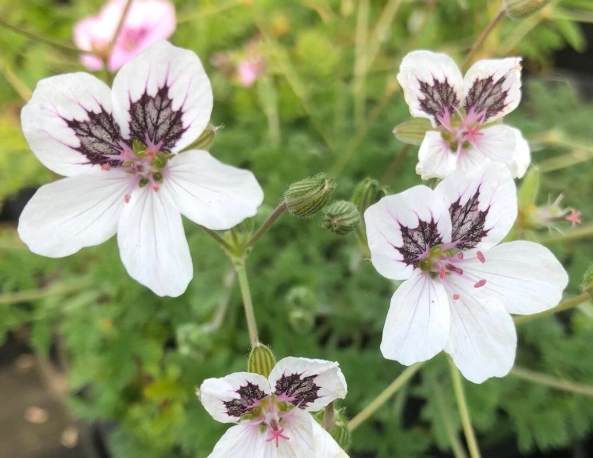
The Ultimate Gravel Garden Plant: This is its natural home. Planted in a sea of gravel or pea stone, an erodium plant will sprawl and weave between other drought-tolerant stars like lavender, santolina, ornamental grasses, and sedums. The soft foliage and flowers contrast beautifully with the hard, sharp texture of the stone.
Rock Garden Royalty: For a true alpine rock garden, the smaller species like E. reichardii are essential. They nestle perfectly into crevices between rocks, softening hard edges and adding pops of color. Pair them with tiny bulbs, saxifrages, and dwarf campanulas.
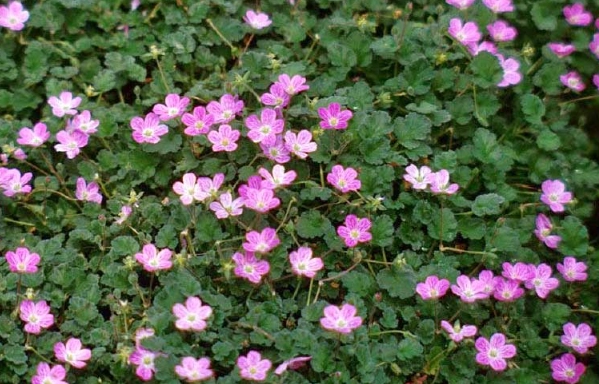
Living Mulch & Lawn Alternative: This is where it saved me. In a small, sunny, awkward strip of land between a sidewalk and a fence, I planted several Erodium x variabile about a foot apart. Within two years, they had knitted together into a dense, weed-suppressing, evergreen mat. It never needs mowing, stays green(ish) year-round, and flowers for months. It's not for playing soccer on, but for a visual ground cover, it's unbeatable. The University of California's Division of Agriculture and Natural Resources has done great work promoting water-wise lawn alternatives, and plants like erodium fit perfectly into that model.
Container Magic: They are fantastic in pots. Use a wide, shallow pot with excellent drainage. Let it spill over the edges. Combine it with other drought-tolerant thrillers and fillers for a low-maintenance patio display. The key is a very gritty potting mix and resisting the urge to overwater.
See? It's versatile.
Propagation: Making More of a Good Thing
Once you have a healthy plant, you'll probably want more. Luckily, propagating erodium is straightforward. Division is the easiest method for the clump-forming types. In early spring or fall, simply dig up the plant and gently pull or cut it into smaller sections, each with some roots and shoots. Replant immediately.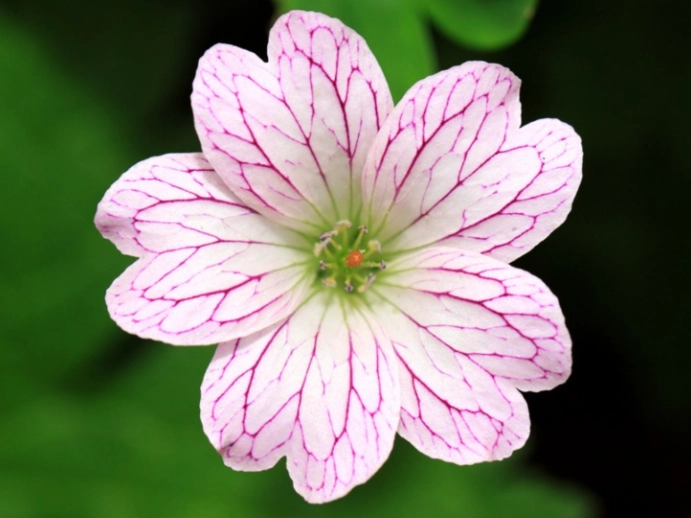
You can also grow them from seed, which is fun, especially for the species. The ripe seed pods have that famous "storksbill" shape. When dry, the beak coils and then suddenly straightens, flinging the seed away—a fascinating bit of natural engineering. To collect seeds, tie a small bag over a drying seed head. Sow the seeds in pots of gritty mix in fall or spring; they often need a period of cold to germinate well, so fall sowing outdoors can work naturally.
Frequently Asked Questions (The Stuff You're Really Wondering)
Let's tackle the common head-scratchers.
The Final Word
Look, the erodium plant isn't going to give you the dramatic, Instagram-ready bloom of a dinnerplate dahlia. It's a subtle plant. But what it offers is something perhaps more valuable: resilience, effortless beauty, and a way to garden smarter, not harder. It solves problems—ugly barren spots, water waste, high-maintenance lawns.
If you have a sunny, well-drained spot (or are willing to create one), do yourself a favor and try one. Start with something like Erodium x variabile 'Roseum' or 'Bishop's Form'. Plant it, water it to get it started, and then mostly leave it alone. Watch it weave its magic through the seasons. I think you'll be as converted as I am. It's the quiet, tough plant that ends up becoming a backbone of a thoughtful, sustainable garden.
And if you kill one? Don't sweat it. I did. Figure out what went wrong (it was the soil, I promise), adjust, and try again. The reward—a lush, flowering mat that asks for nothing—is absolutely worth it.