Quick Navigation
- Why Are There So Many Types of Euphorbia?
- The Main Players: A Casual Breakdown of Euphorbia Groups
- Choosing Your Euphorbia: A Quick-Reference Table
- Beyond the Looks: What Really Defines a Euphorbia?
- Common Questions (The Stuff You're Actually Searching For)
- My Personal Top 5 Types of Euphorbia for Beginners
- Wrapping It Up: Embrace the Chaos
Let's talk about Euphorbia. You've probably seen one. Maybe it was a spiky, cactus-like thing in a friend's sunny window that they called a "crown of thorns." Or perhaps you've admired the architectural, candelabra-shaped forms in a desert garden. Heck, you might even have a poinsettia from last Christmas that's stubbornly hanging on (good for you!). What ties all these wildly different plants together? They're all part of the massive, confusing, and utterly fascinating Euphorbia genus.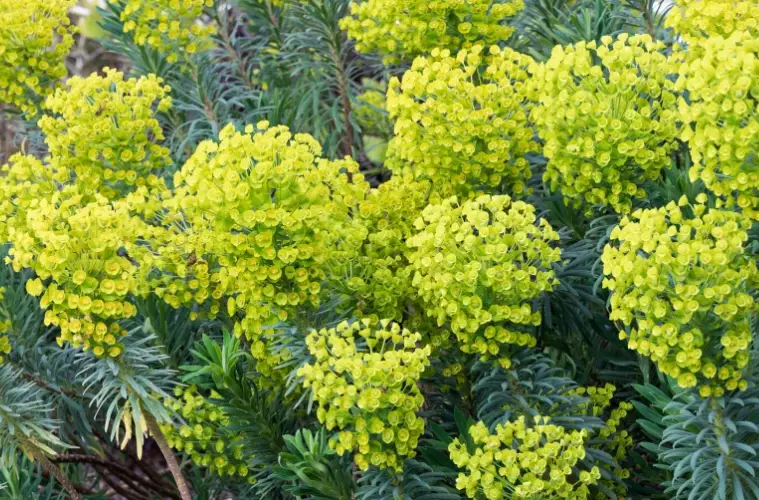
I got into them by accident. A few years back, I bought a small, weird-looking succulent labeled simply "Euphorbia." It died. I bought another. It thrived. I was hooked, but also completely bewildered. What are these things? Why do some look like cacti and others like tropical shrubs? This guide is the one I wish I had when I started—a down-to-earth look at the different types of Euphorbia, cutting through the botanical jargon to help you understand, identify, and (most importantly) keep them alive.
Why Are There So Many Types of Euphorbia?
It's a simple question with a complex answer. Evolution, basically. The Euphorbia genus has successfully adapted to almost every environment you can imagine, from rainforests to deserts. This adaptability is why we have such a stunning array of forms. Some evolved thick, water-storing stems to survive drought—these are the succulent types of Euphorbia that collectors love. Others evolved to thrive as understory plants in forests, or as fast-growing annuals that colonize disturbed ground.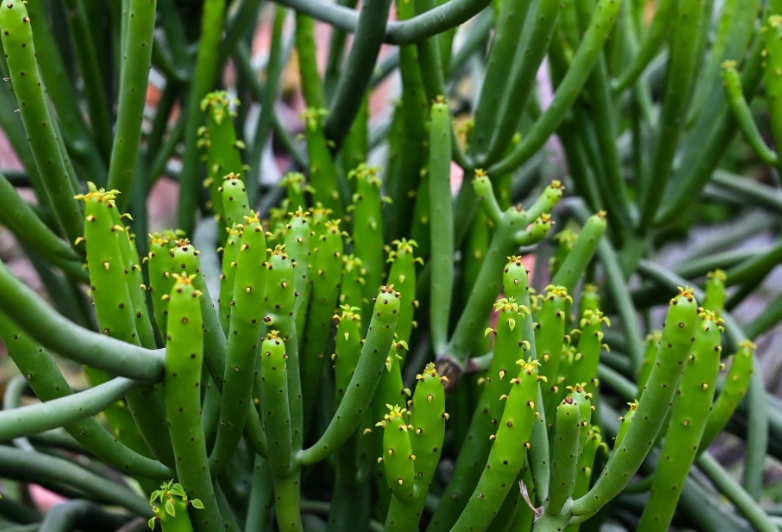
Botanists group them based on their growth habits and morphology. For us home growers, that's actually helpful. It tells us roughly what kind of care they'll need. Is it a succulent type that needs desert-like conditions, or a leafy shrub that prefers more humidity? Knowing the basic group is half the battle.
So, let's break them down into categories that actually make sense when you're browsing a nursery or online shop.
The Main Players: A Casual Breakdown of Euphorbia Groups
I find it easiest to think of Euphorbias in a few big, loose buckets. This isn't strict botanical classification, but a practical one based on how they look and grow.
The Succulent & Cactus-Lookalikes
This is the group that causes the most confusion. They look incredibly similar to cacti, with spines, ribs, and segmented stems. But they're not cacti at all—they're a brilliant example of convergent evolution. My first one was a Euphorbia trigona (African Milk Tree). I was sure it was a cactus. The spines, the green stems... but nope. The tell-tale sign? That milky sap. Prick a cactus, you get clear juice or nothing. Prick one of these Euphorbias, you get a sticky white latex. Be careful with that stuff, by the way.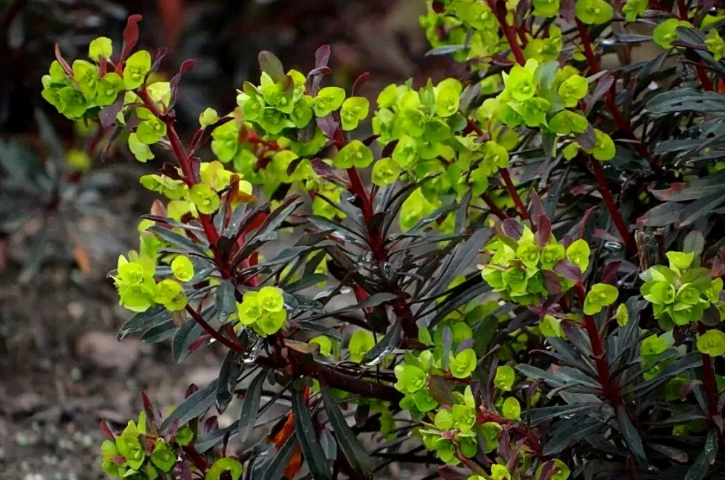
Popular types in this category include the spectacular Euphorbia ingens (Candelabra Tree), the compact and geometric Euphorbia obesa (Baseball Plant), and the fiercely spined Euphorbia milii (Crown of Thorns), which is actually more of a thorny shrub but often grouped here. These are generally sun-worshippers that need excellent drainage and infrequent watering. Treat them like you would a cactus, and you'll be fine.
The Architectural Shrub & Tree Types
These are the landscape stars. They have more traditional branches and leaves, but often with a dramatic, sculptural form. The most famous is the Euphorbia tirucalli, or Pencil Cactus/Firestick. It's a branching shrub with slender, pencil-like green stems that turn a brilliant orange-red at the tips in full sun. It's stunning. And also very toxic—keep it away from pets and kids.
Another classic is Euphorbia characias, a Mediterranean native with blue-green foliage and huge, chartreuse flower heads in spring. It looks nothing like a succulent; it's more like a robust perennial. These types are often hardier and can tolerate more varied conditions than the true succulents. They're perfect for adding year-round structure to a garden.
The Annuals & Perennials (The "Normal-Looking" Ones)
This is where the genus gets sneaky. Ever heard of spurge? That common garden weed with the milky sap? Yep, that's a Euphorbia (Euphorbia peplus and others). But there are also gorgeous cultivated varieties in this group. Euphorbia polychroma (Cushion Spurge) is a fantastic perennial that forms a perfect, bright yellow dome in spring. Euphorbia amygdaloides (Wood Spurge) is great for shady spots.
These types of Euphorbia often go under the radar because they don't have the exotic appeal of the succulents. But they're tough, reliable garden plants that ask for very little and give a lot of color and texture.
The Holiday Superstar: Poinsettia
Euphorbia pulcherrima deserves its own mention. It's a tropical shrub or small tree in its native Mexico. Those red "flowers" are actually specialized leaves called bracts. It's the odd one out in many ways—it needs more water and humidity than its succulent cousins, and it's famously fussy about re-blooming. But it's proof of the genus's incredible range. From desert dweller to Christmas centerpiece.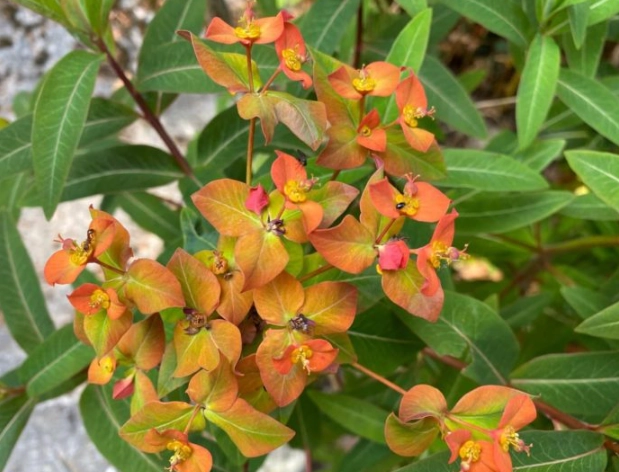
Choosing Your Euphorbia: A Quick-Reference Table
Okay, so you're at the plant shop, or scrolling online, and you see a bunch of different Euphorbias. How do you pick one that won't die on you in a month? This table compares some of the most common types based on what you, as a grower, actually need to know.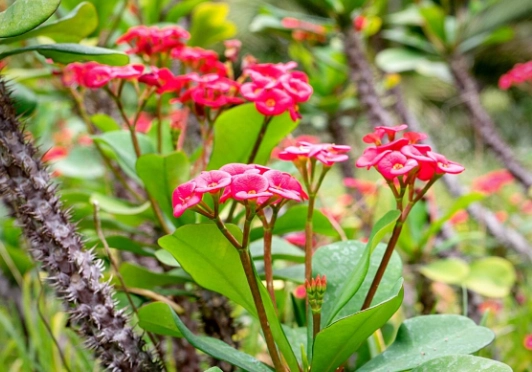
| Common Name & Species | What It Looks Like | Light Needs | Water Needs | Key Trait / Watch Out For |
|---|---|---|---|---|
| Crown of Thorns (E. milii) | Thorny shrub with small leaves & constant red/pink/white flowers. | Full, direct sun. | Let dry out between waterings. | Amazing bloomer. Vicious thorns. Sap is very irritating. |
| African Milk Tree (E. trigona) | Tall, green, triangular stems with small leaves and short spines. | Bright, indirect to direct sun. | Very low. Drought-tolerant. | Fast grower. Classic "looks like a cactus" type. |
| Pencil Cactus / Firestick (E. tirucalli) | Cluster of thin, pencil-like stems. Tips turn red in sun. | Full, direct sun for best color. | Very low. | Extremely toxic sap. Fragile stems break easily. |
| Baseball Plant (E. obesa) | Round, blue-green, barrel-shaped with subtle ridges. No spines. | Bright light, some direct sun. | Extremely low. Easy to overwater. | Slow-growing collector's plant. Looks like a living stone. |
| Poinsettia (E. pulcherrima) | Bushy with large, dark green leaves and colored bracts (red, white, pink). | Bright, indirect light. | Keep consistently moist, not soggy. | Holiday plant. Difficult to re-bloom. Mildly toxic. |
| Cushion Spurge (E. polychroma) | Mounded perennial with bright yellow spring flowers. | Full sun to part shade. | Moderate. Tolerates some drought. | Fantastic garden plant. Dies back in winter. |
See? It's all over the place. A Firestick wants a desert, a Poinsettia wants a tropical greenhouse, and a Cushion Spurge is happy in a temperate flower bed. That's the wild diversity of Euphorbia for you.
Beyond the Looks: What Really Defines a Euphorbia?
If they look so different, what makes a Euphorbia a Euphorbia? It's the flowers. Or, more accurately, the inflorescence. Euphorbias have a unique flower structure called a cyathium (pronounced sigh-ATH-ee-um). It looks like a single, tiny flower, but it's actually a complex cluster of reduced male and female flowers surrounded by a cup-like structure. Often, this cup has showy glands or appendages that look like petals.
This is a key point for identification. If you're ever trying to figure out if that weird succulent is a Euphorbia or a true cactus, check for the cyathium when it blooms. Cacti have large, often showy, typical flowers. Many succulent Euphorbias have small, weird-looking cyathia that emerge from the stem. The Missouri Botanical Garden's plant database is an excellent place to see detailed botanical illustrations of these features.
The other universal trait, as we've beaten to death, is the latex sap. It's a defense mechanism. The sap is under pressure, so when a stem is broken, it oozes out to seal the wound and deter herbivores. Some species, like the African Euphorbia resinifera, have sap so caustic it was historically used as a ingredient in arrow poisons.
Common Questions (The Stuff You're Actually Searching For)
Let's get practical. Here are the questions I had, and the ones I see pop up all the time in gardening forums.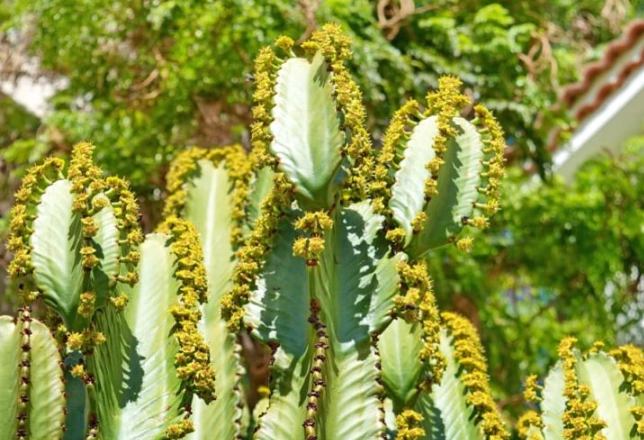
My Personal Top 5 Types of Euphorbia for Beginners
Based on killing a few and keeping many alive, here's my totally subjective list of the easiest, most rewarding types of Euphorbia to start with.
- Euphorbia tirucalli 'Sticks on Fire': The colorful version of the Pencil Cactus. It grows easily, tells you exactly what it wants (tons of sun for red color, less water), and is just cool looking. Just remember the sap.
- Euphorbia milii (Crown of Thorns): If you want a plant that flowers its head off with minimal effort, this is it. Give it sun, don't overwater it, and it will reward you with blooms nearly year-round. The thorns are no joke, though.
- Euphorbia trigona (African Milk Tree): The classic. It's vigorous, forgiving, and has that great architectural shape. It can get huge, but you can easily prune and propagate it.
- Euphorbia polychroma (Cushion Spurge): If you have a garden, this is a no-brainer. It comes back every spring with that shocking burst of yellow, asks for nothing, and then politely disappears in the winter. A perfect perennial.
- Euphorbia amygdaloides 'Purpurea' (Wood Spurge): For shady spots. It has beautiful purple-tinged foliage and greenish-yellow flowers. It spreads gently and fills in dark corners where other plants struggle.
I'd avoid the super slow-growing or finicky ones like Euphorbia obesa or some of the rare Madagascan species until you get a feel for the genus's quirks. Overwatering is the fastest way to kill a succulent Euphorbia.
Wrapping It Up: Embrace the Chaos
Exploring the different types of Euphorbia is a lifelong hobby. There are just so many. The key takeaway is this: don't assume they all want the same thing. Your poinsettia and your pencil cactus are distant cousins who live on different continents and want completely different lifestyles.
Start with one that matches your conditions. Got a blazing sunny windowsill? Try a Crown of Thorns. Got a shady garden corner? Grab a Wood Spurge. Pay attention to the sap, respect its defensive nature, and you'll be fine.
The diversity is what makes them so compelling. From the holiday cheer of a poinsettia to the stark beauty of a desert-dwelling candelabra form, the genus Euphorbia has a plant for almost every situation. It's a reminder of how wonderfully weird and adaptable the plant kingdom can be.
Go find one that speaks to you. Just maybe keep the gloves handy.
Reader Comments