In This Guide
- Botanical Breakdown: The Azalea Family Tree
- A Symphony of Color: Flower Characteristics
- More Than Just Flowers: Foliage and Growth Habits
- The Non-Negotiables: Cultivation Requirements
- Common Problems and Solutions: Reading the Leaves
- Choosing the Right Azalea for You
- Beyond the Basics: Propagation and Special Care
- Evergreen vs. Deciduous: The Two Main Camps
Let's talk about azaleas. You've probably seen them – those bursts of vibrant color that seem to set gardens on fire in spring. Maybe you've admired them in a neighbor's yard or at a botanical garden and wondered if you could grow them yourself. I know I did. The first time I tried, let's just say it didn't go perfectly. The leaves turned yellow, the blooms were sparse. It was a lesson in understanding that these aren't just any shrubs. The specific azaleas characteristics demand a specific approach.
That's what this guide is for. We're going to move past the pretty pictures and get into the nitty-gritty of what makes an azalea an azalea. It's more than just a flower. We'll look at everything from their botanical quirks to the soil they absolutely insist on. By the end, you'll know exactly what you're dealing with, and more importantly, how to make them thrive in your space. Think of it as getting to know a new friend – you need to understand their personality to have a good relationship.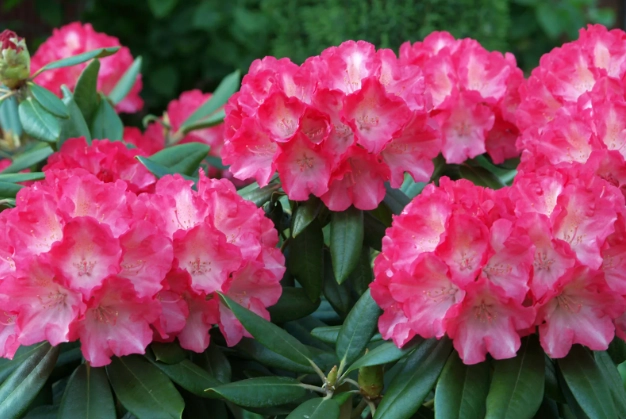
Botanical Breakdown: The Azalea Family Tree
First things first, let's clear up a common point of confusion. All azaleas are rhododendrons, but not all rhododendrons are azaleas. It's a classic category-within-a-genus situation. The American Rhododendron Society groups them together, which makes sense from a scientific standpoint. But for gardeners, the differences in their characteristics are practical and noticeable.
So how do you tell them apart? Generally, rhododendrons are often larger, with bigger, leathery leaves that are evergreen, and their flowers have ten or more stamens. Azaleas tend to be smaller, with smaller leaves, and their flowers typically have five stamens. Azalea leaves can be evergreen or deciduous (meaning they drop in fall). This is a huge distinction that affects how they look in your garden year-round.
I made the mistake early on of planting a sun-loving deciduous azalea in a spot I wanted to be evergreen. Come winter, it was a bunch of sticks. Not the look I was going for. Lesson learned: know your type.
Evergreen vs. Deciduous: The Two Main Camps
This is the first major fork in the road when understanding azalea traits. Your choice here changes the plant's look, hardiness, and even flower style.
Evergreen Azaleas: These are the classic Southern garden staples. They keep their leaves all year, which are usually smaller, darker, and sometimes slightly hairy. The flowers can be single or double, and they often bloom in such profusion that you can barely see the leaves. They tend to be more compact and are frequently used for foundation plantings or low hedges. Most evergreen types are derived from Japanese species and prefer a bit of afternoon shade, especially in hotter climates. They're not always as cold-hardy as their deciduous cousins.
Deciduous Azaleas: These lose their leaves in autumn, but before they do, they often put on a fantastic show of fall color – yellows, reds, and oranges. In my opinion, this gives them multiple seasons of interest, which is a huge win. Their flowers are often fragrant, a trait less common in evergreens. They tend to be taller, more open, and airier in their growth habit. Native North American species like the Florida Flame Azalea or the Pinxterbloom fall into this category. They're generally tougher when it comes to cold winters.
| Characteristic | Evergreen Azaleas | Deciduous Azaleas |
|---|---|---|
| Foliage | Small, dark, leathery leaves retained year-round. | Softer, lighter green leaves that drop in autumn, often with brilliant fall color. |
| Flower Form | Often tighter clusters, can be single or double. Wide color range. | Typically funnel-shaped, fragrant flowers in looser clusters. Vibrant hues common. |
| Growth Habit | Dense, mounding, and compact. Usually shorter. | More open, upright, and spreading. Can grow taller. |
| Cold Hardiness | Varies widely; many are best in zones 7-9. Some newer hybrids are tougher. | Generally more cold-hardy, with many thriving into zone 4 or 5. |
| Sun Tolerance | Prefers dappled shade or morning sun. Afternoon sun can scorch leaves. | Can tolerate more sun, especially in cooler climates, if kept moist. |
| Best Use | Foundation plantings, low hedges, mass plantings in woodland settings. | Naturalistic gardens, shrub borders, as specimen plants where fall color is valued. |
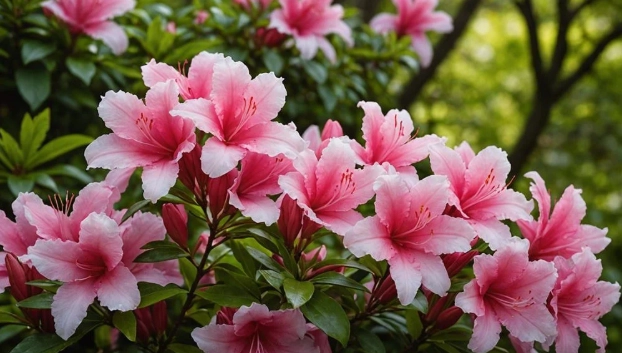
A Symphony of Color: Flower Characteristics
This is why most people fall in love with azaleas. The floral display can be downright breathtaking. But there's variety within that beauty.
The color range is almost absurd. You have pure whites, soft pinks, hot magentas, deep purples, fiery reds, and sunny yellows. Some are even bicolored, with flares or spots in a contrasting color. The flower shapes vary too. Most are single, with five (sometimes more) petals forming a funnel or trumpet. Then you have the "double" varieties, where the petals are so multiplied they look like little roses or peonies. They're gorgeous, though I find they sometimes lack the elegant simplicity of a single bloom.
Bloom time is another critical trait. Not all azaleas bloom at once. We can broadly group them:
- Early Season: Bloom in early to mid-spring. These are the classic spring heralds but can be vulnerable to late frosts.
- Mid-Season: The main event. Most azaleas fall here, blooming in late spring.
- Late Season: Bloom in late spring to early summer. Great for extending the show.
- Re-bloomers: A newer and fantastic development! Varieties like the 'Encore' or 'Bloom-A-Thon' series will give you a heavy spring bloom and then sporadic flowers again in summer and fall. It's a game-changer if you want more than a two-week spectacle.
The size of the flower truss (the cluster) is a key characteristic. Some, like the Kurume hybrids, are covered in small, delicate flowers. Others, like many Southern Indica hybrids, have larger, almost saucer-sized blooms. Bigger isn't always better – a mass of small flowers can create a more cohesive, cloud-like effect.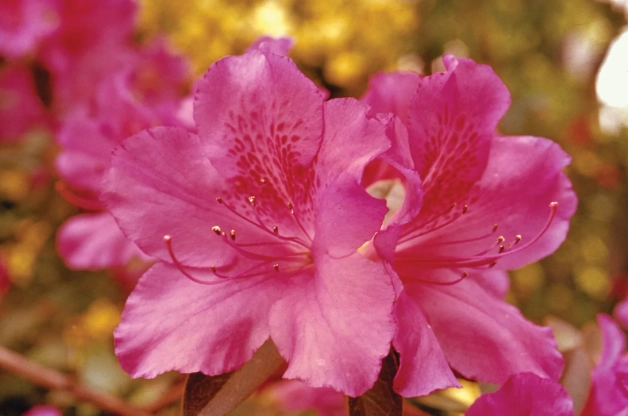
More Than Just Flowers: Foliage and Growth Habits
It's easy to get obsessed with the flowers and forget that the plant lives with its leaves for 90% of the year. The foliage characteristics of azaleas are just as important for garden design.
Evergreen azalea leaves are usually small, oval, and dark green. Some have interesting textures – a slight fuzz or a glossy sheen. In winter, some varieties' leaves may take on a burgundy or bronze tint, which adds subtle winter interest. Deciduous azalea leaves are generally larger, softer, and lighter green. Their grand finale is the fall color, which can rival any maple tree.
Now, let's talk about how they grow. Understanding the growth habit is crucial for placing them in your garden so you don't have to constantly wrestle with them.
Most azaleas have a naturally pleasing, mounded form. They're not stiff or architectural. They're soft and billowy. They also have a very specific, and often troublesome, root characteristic: they're shallow and fibrous. They don't send down a deep taproot. Instead, they spread a network of fine roots close to the soil surface.
Why does this matter? It means three things for care: 1) They dry out quickly and need consistent moisture. 2) They hate competition from grass or other thirsty plants. 3) You should never, ever dig or cultivate around their base. You'll slice through their roots. Always mulch heavily instead.
Their growth rate is generally slow to moderate. You're not going to plant a tiny shrub and have a monster in two years. This is good for low-maintenance gardens – they stay where you put them. But it also means you need patience, or you need to buy a more mature plant to start with.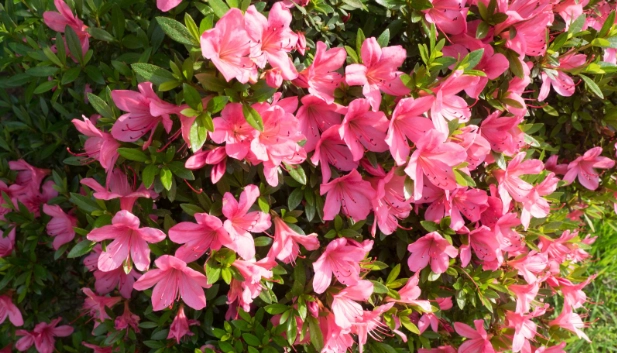
The Non-Negotiables: Cultivation Requirements
This is where the rubber meets the road. You can love everything about their characteristics, but if you don't get these fundamentals right, you'll struggle. I learned this the hard way with that first yellowing plant.
Soil: It's All About the pH
This is the single most important factor. Azaleas are acid-loving plants. They need a soil pH between 4.5 and 6.0, with 5.5 being ideal. If your soil is neutral or alkaline, the plant cannot access certain nutrients, especially iron, leading to chlorosis – those yellow leaves with green veins I experienced.
Don't guess. Get a soil test. Your local cooperative extension office (like the one linked via the USDA) offers cheap tests. It's the best $15 you'll spend. If your pH is too high, you can lower it by incorporating elemental sulfur or acidic organic matter like peat moss (though peat sustainability is a concern) or composted pine bark into the planting bed.
The soil also needs to be well-draining but moisture-retentive. A spongy, humus-rich soil is their happy place. Heavy clay that stays wet will rot their shallow roots. Sandy soil that drains too fast will dry them out.
Light: Dappled is King
The classic advice is "morning sun with afternoon shade." That's a good rule of thumb. In cooler climates (like the Pacific Northwest), many azaleas can handle more sun. In the hot South, they need more protection. Deep, full shade will result in sparse blooms and leggy growth. The ideal is the dappled light you find under tall pine trees. The pine needles also acidify the soil as they decompose – a perfect partnership.
Watering: Consistent, Not Soggy
Remember those shallow roots? They can't reach deep water reserves. Consistent moisture is key, especially in the first two years and during bud formation and bloom. A deep watering once or twice a week is better than a daily sprinkle. Soaker hoses or drip irrigation under a layer of mulch are perfect. Letting them drought-stress will lead to dropped buds, scorched leaves, and a weakened plant.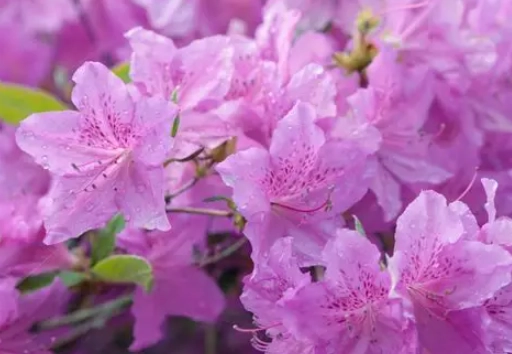
Feeding: Less is More
Azaleas aren't heavy feeders. In fact, over-fertilizing, especially with high-nitrogen or lime-containing fertilizers, can burn roots and kill them. Use a fertilizer formulated for acid-loving plants (like a rhododendron-azalea camellia food). Apply it in early spring as growth begins, and that's often enough. If you have rich, compost-amended soil, you might not need to feed every year.
Pruning: The Right Way and Time
This scares people. It's simple if you remember one rule: prune right after they finish blooming. Azaleas set their flower buds for next year in mid to late summer. If you prune in fall or winter, you're cutting off next spring's show.
Use hand pruners to make cuts just above a set of leaves. You can shape them, reduce their size, or open up the center for better air circulation. Avoid shearing them into tight meatballs – it ruins their natural form and creates a dense outer shell that blocks light from the interior.
Common Problems and Solutions: Reading the Leaves
Azaleas tell you what's wrong. You just have to learn their language.
- Yellow leaves with green veins (Chlorosis): Almost always a soil pH problem or iron deficiency caused by high pH. Test your soil.
- Brown, scorched leaf edges: Usually windburn, fertilizer burn, or drought stress.
- Leaves turning brown and wilting, starting at the tips: Could be Phytophthora root rot, often from poor drainage. Tough to fix; prevention (good soil) is key.
- No flowers: Pruned at the wrong time (buds removed), too much shade, or a late frost killed the buds.
- Lace Bugs: These are the most common pest. You'll see stippling (tiny white dots) on the top of the leaves and nasty black specks (bug excrement) on the underside. Spray the undersides of leaves with insecticidal soap or horticultural oil in early summer when nymphs are active.
Choosing the Right Azalea for You
With thousands of cultivars, where do you even start? Don't just pick the prettiest flower at the nursery. Match the plant's characteristics to your garden's conditions and your goals.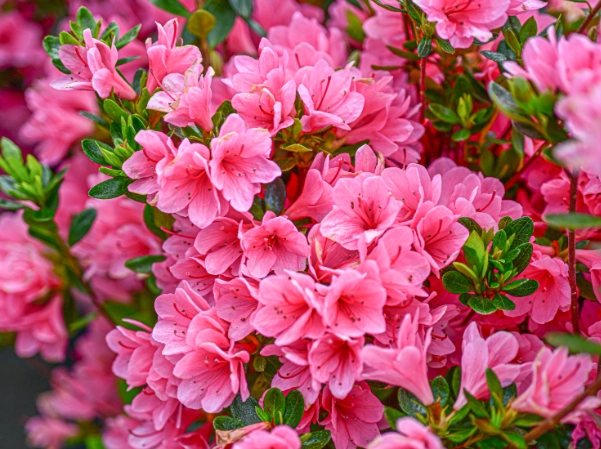
Ask yourself:
- What's my USDA Hardiness Zone? This is non-negotiable. Check the plant tag.
- Sun or shade? Measure the light in your intended spot over a day.
- What size do I need? Check the mature height and width. That tiny gallon pot can become a 6-foot-wide shrub.
- Evergreen or deciduous? Do you need year-round structure or prefer multi-season interest?
- When do I want bloom? Early, mid, or late spring? Do I want a re-bloomer?
- Color scheme? How will it fit with other plants in your garden?
Some stellar, proven performers to look for:
For cold climates (Zone 4-5): The Northern Lights series from the University of Minnesota. Deciduous, incredibly fragrant, and tough as nails.
For hot, humid climates (Zone 7-9): Southern Indica hybrids like 'George L. Taber' (lavender-pink) or 'Formosa' (purple). Large, bold evergreens.
For re-blooming: The Encore Azalea series. They've genuinely expanded where and how you can use azaleas.
For a classic, refined look: Kurume hybrids like 'Coral Bells' (soft pink) or 'Hinodegiri' (vivid red). Dense, small-leaved evergreens covered in small flowers.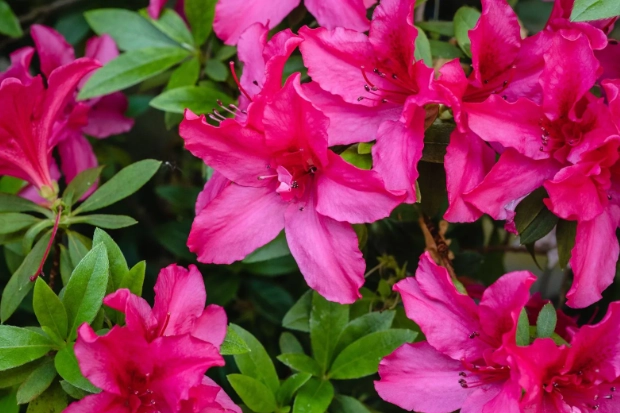
Beyond the Basics: Propagation and Special Care
Once you're hooked, you might want to make more plants. The most reliable method for home gardeners is softwood cuttings taken in early summer. It takes patience (like, months of patience), but it's rewarding. You can find detailed propagation guides from resources like the American Rhododendron Society.
Winter care depends on your climate. In cold zones, protect deciduous azaleas with a thick mulch layer after the ground freezes to prevent frost heaving of those shallow roots. For evergreens in windy, sunny winter areas, anti-desiccant sprays or burlap screens can prevent winter burn, where leaves lose moisture they can't replace from frozen soil.
Understanding these fundamental azaleas characteristics – from their acid-loving roots to their breathtaking but finite bloom period – transforms them from a mysterious, sometimes finicky plant into a predictable and deeply rewarding garden partner. You stop fighting their nature and start working with it. That's when the magic happens, and your garden explodes with that legendary spring color, year after year.
It's not about having a green thumb. It's about having the right information. Now you've got it.
Reader Comments