Quick Overview
- What Exactly Is a Larch Tree?
- The Main Players: A Guide to Common Larch Species
- Why Plant a Larch? The Benefits Are Clear
- How to Grow and Care for Your Larch Tree
- Potential Problems and How to Deal With Them
- Larch vs. Similar Trees: How to Tell Them Apart
- Answering Your Larch Questions
- The Bigger Picture: Larches in the Forest and Climate
Let's talk about a tree that breaks all the rules. You see a tree with needles, you think "evergreen," right? That's what I thought too, until I really got into gardening and forestry. Then I met the larch. The Larix genus is that fascinating group of conifers that has the audacity to drop its needles every single autumn. It's like a pine tree decided to live like a maple. I remember the first time I saw a European larch (Larix decidua) in fall—it was this shocking, brilliant gold that made every other tree look dull. I was hooked.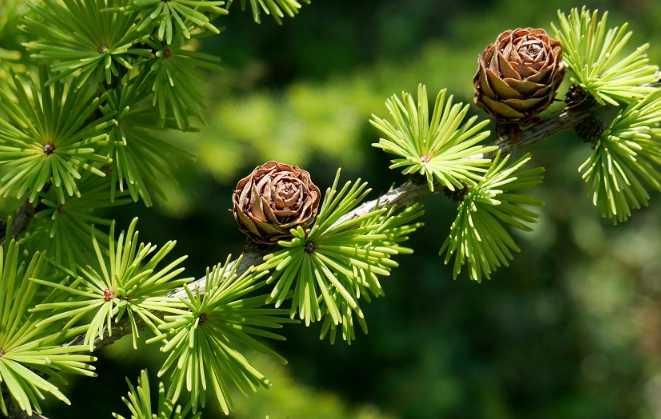
This isn't just a pretty face, though. Larches are tough, useful, and full of surprises. Whether you're a gardener looking for a stunning specimen tree, a woodworker in search of durable timber, or just someone curious about cool trees, understanding the larch is worth your time. They grow in some of the coldest places on earth, their wood is incredibly resilient, and they have a growth habit that's both elegant and rugged. But they're not without their quirks. I've killed one or two by making classic beginner mistakes, which I'll tell you about so you don't have to.
Here's the core paradox: Larches are conifers (they bear cones) but they are deciduous (they lose their leaves/needles). This unique combo makes them a standout in both forests and landscapes. They're part of the pine family (Pinaceae), but they march to the beat of their own drum.
What Exactly Is a Larch Tree?
So, let's get botanical for a minute, but I promise to keep it painless. The genus Larix comprises about 10-12 species (botanists argue about the exact number) native to the cooler temperate regions of the Northern Hemisphere. You'll find them from the mountains of Central Europe, across the vast stretches of Siberia, to the forests of North America and Japan.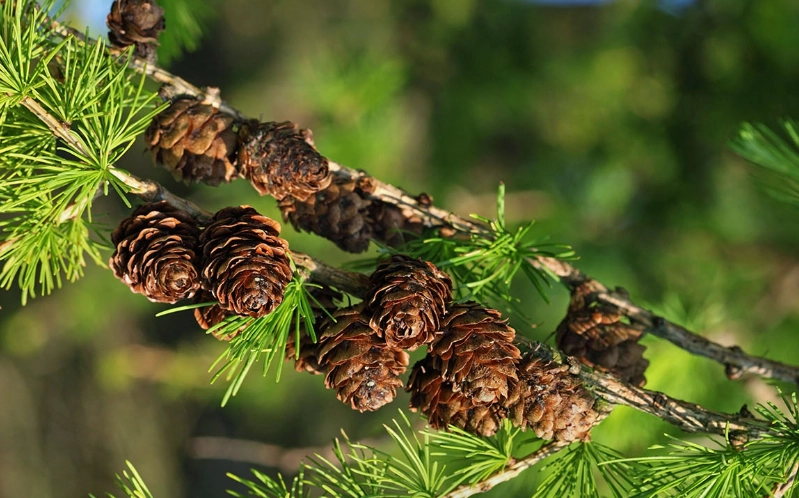
They're pioneers. Larch trees are often some of the first to colonize disturbed ground or poor soils. They grow fast when young, love full sun, and have a remarkable tolerance for brutal cold. I mean, Siberian larch (Larix sibirica) deals with temperatures that would make most trees shatter. Their strategy of dropping needles is actually a genius adaptation to freezing winters—it reduces water loss when the ground is frozen and water is unavailable.
The lifecycle is a beautiful thing to watch. In spring, the bare branches erupt with soft, bright green clusters of new needles. It's a vibrant, almost lime-green color that's incredibly fresh. Through summer, they're a cool, soft green canopy. Then autumn hits, and the show begins. The needles turn a spectrum of gold, orange, and sometimes even fiery red before carpeting the ground. Winter reveals the tree's architecture: a often pyramidal shape with rough, fissured bark and those lovely little cones that can persist for years.
The Main Players: A Guide to Common Larch Species
Not all larches are created equal. Depending on where you live and what you want, one species might be a perfect fit while another could struggle. I've compiled the details of the most common ones you're likely to encounter or consider planting.
| Common Name | Scientific Name | Native Region | Key Characteristics & Uses | Hardiness Zone |
|---|---|---|---|---|
| European Larch | Larix decidua | Mountains of Central Europe | The classic. Pyramidal form, brilliant yellow fall color. Widely planted for timber and ornament. Grows fast. The bark becomes deeply fissured with age, which looks great. | 2-6 |
| Tamarack | Larix laricina | Northern North America | The North American native. Incredibly cold-hardy. Tolerates wet, boggy soils where other trees fail. More irregular form than European larch. Fantastic for naturalizing in wet areas. | 1-5 |
| Japanese Larch | Larix kaempferi | Mountains of Central Japan | Blue-green summer needles, stunning orange-bronze fall color. Branches often have a more weeping habit. Popular in bonsai. Resists larch canker better than European larch. | 4-7 |
| Siberian Larch | Larix sibirica | Western Russia, Siberia | Extreme cold tolerance. Produces exceptionally durable, rot-resistant timber. Used extensively for outdoor construction in Europe (decking, siding). | 1-4 |
| Dunkeld Larch | Larix × marschlinsii | Hybrid (Euro. x Japanese) | A natural hybrid that often exhibits "hybrid vigor." Faster growth and better disease resistance than either parent. Very common in commercial forestry. | 3-6 |
Picking one? For most gardeners in temperate zones, the European or Japanese larch is a spectacular choice. If you have a soggy spot, the Tamarack is your hero. And if you're after wood, the Siberian larch is legendary.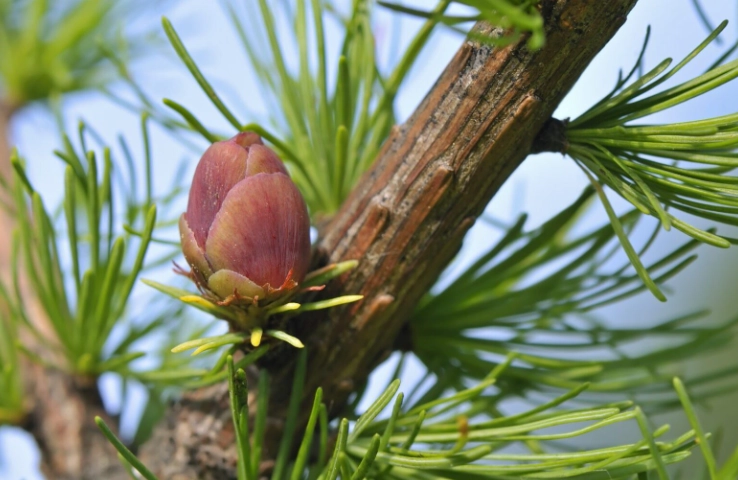
Why Plant a Larch? The Benefits Are Clear
Why bother with a larch when there are so many other trees? Well, let me give you a few compelling reasons, some obvious, some you might not have considered.
First, the ornamental value is through the roof. Few trees offer such a dramatic seasonal change. It's a four-season interest tree. The spring flush, soft summer texture, explosive fall color, and winter silhouette provide constant visual appeal. They make excellent specimen trees or can be planted in groups for a stunning grove effect.
Second, they're wildlife friendly. Birds, like siskins and crossbills, feast on the seeds from the cones. Small mammals use them for cover. They're a living ecosystem.
Third, and this is a big one for sustainable building, larch timber is phenomenal. It's classified as a durable hardwood (even though it's a softwood conifer… told you they break rules). The heartwood has natural resins that make it resistant to rot and insects. That's why you see it used for:
- Outdoor construction: Decking, cladding, fencing, pergolas, and boat building. It weathers to a beautiful silvery-grey if left untreated.
- Interior work: Flooring, paneling, and furniture. It has a warm, reddish-gold color when freshly cut.
- Utility poles and railway sleepers: That's how tough it is.
A piece of larch wood advice from a woodworker friend: "It's fantastic to work with, but it's resinous. Keep your tools clean, and pre-drill for screws. But once it's in place, it's there for generations."
Fourth, they're relatively low-maintenance once established. No constant pruning needed. They're not prone to a huge list of pests (there are a couple, which we'll get to). And they don't have invasive roots that threaten foundations.
How to Grow and Care for Your Larch Tree
Okay, so you're convinced. You want a larch. Here's the real-world, down-and-dirty guide to not killing it. I speak from experience—my first one died because I ignored one critical rule.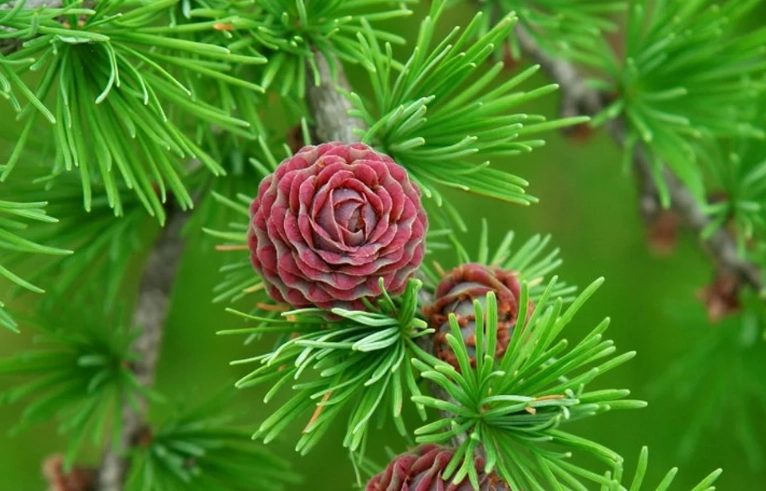
Planting: The Most Critical Step
This is where most failures happen. Larches have a sensitive, fibrous root system that does not like being disturbed. They are almost always best planted as young, container-grown or balled-and-burlapped (B&B) stock in early spring, just as the buds begin to swell. Fall planting can work in milder climates, but spring is safer.
Site selection is key: Full sun. Non-negotiable. They will become leggy and sickly in shade. They prefer moist, well-drained, slightly acidic soil, but they are surprisingly adaptable. Tamaracks will handle wet soil; other species tolerate drier conditions once established. Just avoid heavy, waterlogged clay or completely arid sand.
The planting hole: Dig it twice as wide as the root ball, but no deeper. You want the root flare (where the trunk widens at the base) to be level with or slightly above the soil grade. Planting too deep is a death sentence. Backfill with the native soil, don't use rich potting mix. Water it in deeply to settle the soil and eliminate air pockets. Then, apply a 2-3 inch layer of organic mulch (wood chips, bark) around the base, keeping it away from the trunk itself.
My big mistake: I bought a bare-root larch because it was cheaper. It was a larger tree and seemed like a good deal. Bare-root trees have had most of their soil removed, which is hugely stressful for a larch. It never really recovered, struggled for two years, and finally gave up. Spend the extra money on a pot-grown tree for a much higher chance of success.
Ongoing Care: Water, Food, and the Occasional Trim
Watering: Be diligent for the first two years. Keep the soil consistently moist but not soggy. Deep, infrequent watering is better than frequent sprinkles. Once established, most larches are quite drought-tolerant, but they'll look better with occasional water during long dry spells.
Fertilizing: They're not heavy feeders. If your soil is decent, you might not need to fertilize at all. If growth seems slow or needles are pale, a balanced, slow-release fertilizer applied in early spring can help. Don't overdo it—excess nitrogen can cause weak, sappy growth.
Pruning: Good news—minimal pruning required. The best time is late winter or early spring when the tree is still dormant. You might want to:
- Remove any dead, damaged, or diseased branches.
- Correct any double leaders (two main competing trunks) when the tree is young to establish a strong central leader.
- Do light shaping if needed, but respect the tree's natural form. Avoid heavy topping or shearing.
Larches can also be coppiced or pollarded (cut back hard to generate long, straight shoots), a traditional practice for producing poles and fencing material.
Potential Problems and How to Deal With Them
No tree is bulletproof. Larches are generally robust, but they have a couple of notable enemies.
Larch Canker (Lachnellula willkommii): This is a fungal disease, especially problematic for European larch (Larix decidua). It causes resinous cankers on branches and the main stem, which can girdle and kill parts of the tree. Japanese larch and the hybrid Dunkeld larch show much better resistance. There's no cure, so prevention and sanitation are key. Source healthy trees from reputable nurseries, avoid wounding the tree, and prune out infected branches well back into healthy wood, disinfecting your tools between cuts. The UK Forest Research has extensive information on this pathogen.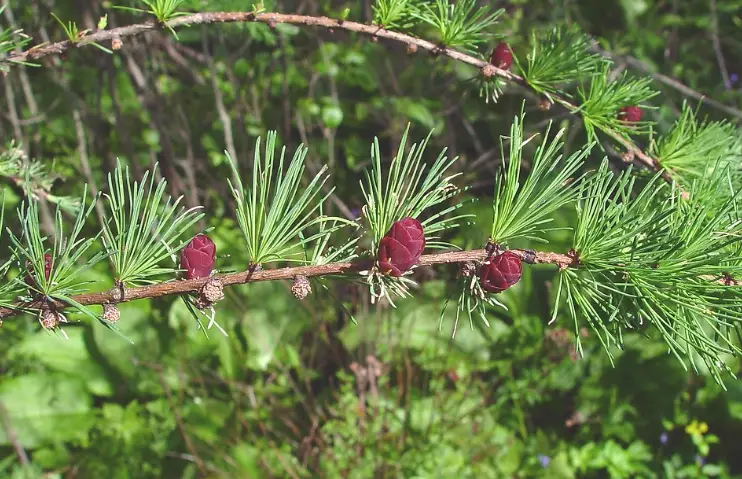
Larch Case-Bearer (Coleophora laricella): A small moth whose larvae mine into and eat the needles, causing browning and defoliation. Severe, repeated attacks can weaken the tree. Natural predators usually keep it in check. In severe cases, insecticidal soaps or Bacillus thuringiensis (Bt) treatments applied when the larvae are active can help.
Poor Planting/Site Issues: As mentioned, this is the #1 cause of failure. Wrong soil, too much shade, planting too deep. Get the start right.
Honestly, in a good site, you might never see any of these. My current Japanese larch has been trouble-free for eight years.
Larch vs. Similar Trees: How to Tell Them Apart
Confused with a bald cypress or a dawn redwood? They're all deciduous conifers! Here’s a quick cheat sheet:
- Larch (Larix): Needles are short (1-2 inches), soft, and grow in dense clusters or rosettes from short, woody spurs on older branches. Cones are small (0.5-1.5 inches), egg-shaped, and sit upright on the branch. Bark is scaly and fissured.
- Bald Cypress (Taxodium): Needles are flat, softer, and arranged in a feather-like pattern along slender green twigs that often fall with the needles. Loves swampy conditions. Has distinctive "knees" (pneumatophores) in wet settings.
- Dawn Redwood (Metasequoia): Needles are flat, arranged opposite each other on the stem (larch needles are arranged in spirals). Cones are on long stalks. Bark is fibrous, reddish, and deeply furrowed.
The cluster of needles on a spur is the larch's dead giveaway.
Answering Your Larch Questions
I get asked these things all the time. Let's clear them up.
How fast does a larch tree grow?
They're moderately fast growers, especially when young. You can expect 1 to 2 feet of height growth per year under good conditions. Growth slows down as the tree matures. A larch can live for 250+ years and reach over 100 feet tall in the wild, though 50-80 feet is more common in landscapes.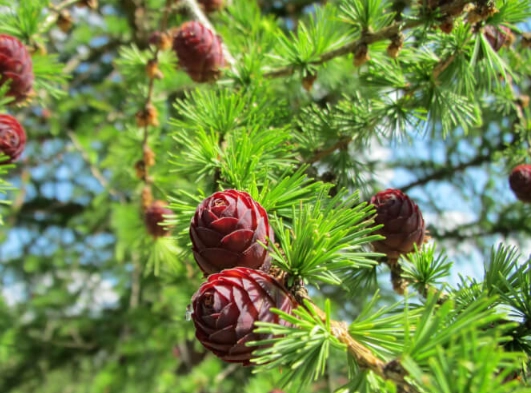
Can I grow a larch tree from seed?
You can, but it's a project for the patient. Larch seeds have dormancy and need a period of cold stratification (a simulated winter) to germinate. You can sow them in pots in fall and leave them outside over winter, or mix the seeds with moist sand in a plastic bag and refrigerate them for 4-6 weeks before sowing in spring. Germination can be erratic. For one tree, it's much easier to buy a young sapling.
Are larch trees good for small gardens?
Some dwarf cultivars are! Look for varieties like Larix decidua 'Pendula' (a weeping form that can be staked to desired height), Larix kaempferi 'Blue Dwarf', or Larix laricina 'Deborah Waxman'. These grow slowly and stay compact. The standard species will get very large and are best for larger properties.
Is larch wood good for firewood?
It burns hot and bright, but it's very resinous. This means it can spark and pop more than other woods, and the resin can build up in your chimney (creosote) faster. It's best seasoned for a long time (2+ years) and mixed with other hardwoods. For outdoor fire pits, it's fine. For indoor wood stoves, use it cautiously and ensure your chimney is cleaned regularly.
Why is my larch not turning yellow in fall?
A few possibilities. First, it might be too young. Seedlings often don't color well. Second, environmental stress—a very dry summer or an early hard freeze can mute the colors. Third, it might not be getting enough sun. Fourth, some individual trees are just less colorful than others. Give it time and ensure its basic needs are met.
The Bigger Picture: Larches in the Forest and Climate
Larches play a vital ecological role. In their native ranges, they are keystone species. In North America, Tamarack bogs provide unique wetland habitats. In Siberia, vast forests of Siberian larch, known as the "taiga," are a massive carbon sink and influence global climate patterns.
They also face challenges. In parts of the UK and Ireland, large-scale die-offs of Japanese and European larch have occurred due to the spread of Phytophthora ramorum (Sudden Oak Death, which also affects larches), leading to significant forestry operations. Keeping an eye on the health of these forests is crucial, as highlighted by resources like those from the USDA Forest Service.
On a personal note, planting a larch is a long-term investment. You're putting a dynamic, beautiful, and resilient piece of nature into your world. It will change with the seasons, host wildlife, and outlive you if cared for properly. It connects you to those vast northern forests and a tree that has been valued for centuries for its strength and beauty.
Start with the right species for your spot, plant it carefully, and give it a little attention in the early years. Then just stand back and enjoy the golden show every autumn. It never gets old.