Quick Navigation
- What Exactly Is a Seven Sons Tree?
- Why You Should Seriously Consider Planting One
- Planting and Care: Your Step-by-Step Guide
- Popular Cultivars to Look For
- Design Ideas: Making It Shine in Your Garden
- Solving Common Problems (Troubleshooting)
- Frequently Asked Questions (The Real Ones Gardeners Ask)
- Final Thoughts: Is the Seven Sons Tree Right for You?
Let's be honest, walking through a garden center can be a bit repetitive. You see the same Japanese maples, the same crape myrtles, the same redbuds. Nice trees, sure, but sometimes you want something that makes your neighbors stop and ask, "What on earth is that?" That's where my friend, the Seven Sons Tree, comes in. Its botanical name is a mouthful—Heptacodium miconioides—but don't let that scare you off.
I first stumbled upon this tree about a decade ago at an arboretum. It was late September, and most trees were just thinking about turning color. But this one? It was covered in clusters of fragrant white flowers, and behind them, the most stunning raspberry-pink calyces were starting to show. I had to know what it was. Since then, I've planted a few in different gardens I've worked on, and it's never failed to impress. It's not perfect—no tree is—but its strengths are so unique they far outweigh its quirks.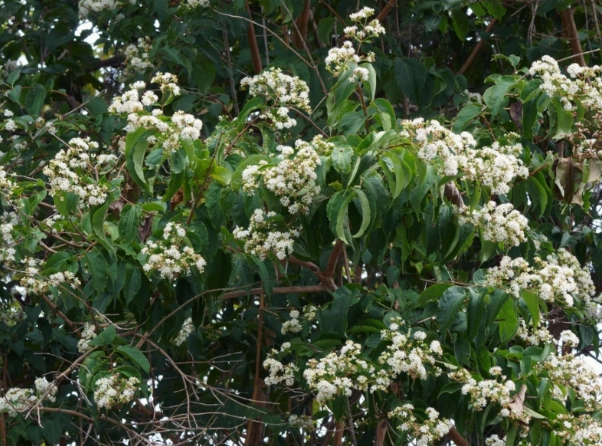
What Exactly Is a Seven Sons Tree?
Okay, so let's get the basics down. The "seven sons" part of its common name comes from the flower clusters. Each cluster typically holds about six to seven small, individual white flowers. Clever, right? It's native to China and was introduced to the Western horticultural world relatively recently. For a long time, it was a rare find, more of a collector's plant. But its toughness and beauty have pushed it into the mainstream, and thank goodness for that.
It's a small to medium-sized deciduous tree or large shrub. In your garden, you can expect it to reach maybe 15 to 20 feet tall and about 10 to 15 feet wide over 15-20 years. It has a nice, multi-stemmed, vase-shaped habit that just looks good in a landscape. The leaves are dark green and glossy through the summer, nothing too flashy. But that's just the calm before the storm.
The real show starts in late summer, often around August or September. That's when the fragrant white flowers appear. They smell sweet, a bit like jasmine or gardenia, and they're a magnet for bees and butterflies. Just when you think the show is over, the magic happens. The white petals fall away, revealing the real stars: the sepals beneath them (called calyces) swell up and turn a vivid, shocking pink to raspberry-red color. These persist for weeks, making it look like the tree is blooming all over again in a completely different hue. It's a trick no other tree in my garden pulls off.
Then, as if that wasn't enough, the leaves often turn a pleasant purplish-bronze in the fall. And in winter, the tan to light brown bark starts to peel and shred in strips, revealing a lighter underbark. It's not as dramatic as a river birch, but it adds nice texture on a gray winter day.
Why You Should Seriously Consider Planting One
I recommend plants based on performance, not just hype. And the Seven Sons Tree performs. Let's break down its report card.
The Good (The Really, Really Good)
Late-Season Lifesaver: Finding a tree that blooms reliably in late summer and fall is a challenge. This one fills that gap beautifully, providing nectar for pollinators when many other sources have dried up. The Missouri Botanical Garden, a top-tier authority, lists it as a superior landscape plant specifically for its late bloom and multi-season interest.
Adaptable and Tough: This isn't a prima donna. Once established, it's surprisingly drought-tolerant. It handles a range of soil types—clay, loam, sand—as long as they drain reasonably well. It's also tolerant of urban pollution, which makes it a great candidate for a city or suburban yard. The USDA Plants Database shows it's hardy from zones 5 through 9, which covers a huge swath of the country.
Pest and Disease Resistant: In my experience, and from what I've heard from other gardeners, it's largely ignored by deer and rabbits (though a starving deer will eat anything). I've never seen any major insect infestations or fungal diseases on mine. That's a huge win for anyone wanting a low-maintenance garden.
The Not-So-Good (Let's Be Real)
No plant is perfect, and it's only fair to mention the potential downsides.
It Can Get Leggy: If planted in too much shade, it will stretch toward the light and can get a bit open and sparse. It really does best in full sun to light shade.
Availability: While it's not as rare as it once was, you might not find it at your big-box garden center. You'll likely have better luck at a serious local nursery or online from a reputable woody plant specialist. Don't settle for a weak-looking specimen; wait for a good one.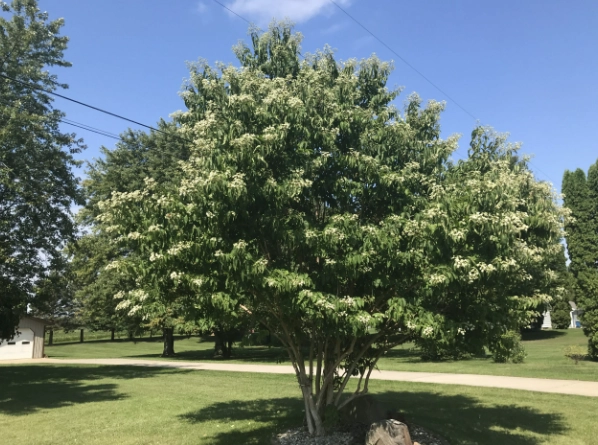
Planting and Care: Your Step-by-Step Guide
Alright, let's say I've convinced you. Here's exactly what you need to do to get your Seven Sons Tree off to a roaring start.
Finding the Perfect Spot
Sunlight is key. Aim for full sun (at least 6 hours of direct sun). More sun equals more flowers, better fall color, and a denser plant. It will tolerate partial shade, but the show won't be as spectacular. Think about its mature size. Give it room to spread its wings—don't cram it right against your house or under a power line. It makes a fantastic focal point, a screen, or a background plant in a large border.
The Planting Hole Ritual
This is the most important thing you'll do for your tree. Don't just dig a hole and plop it in.
- Dig a hole that's two to three times as wide as the root ball, but only as deep as the root ball is tall. Planting too deep is a silent killer of trees.
- If the roots are pot-bound (circling tightly around the pot), gently tease them apart or make a few vertical slices with a knife. This encourages them to grow outward.
- Place the tree in the hole, making sure the root flare (where the trunk starts to widen at the base) is level with or slightly above the surrounding soil.
- Backfill with the native soil you dug out. There's no need for fancy amendments in the hole. In fact, amending just the backfill soil can create a "bathtub effect" where water pools.
- Water deeply to settle the soil and eliminate air pockets. Create a shallow berm of soil around the edge of the planting hole to act as a water basin.
Watering, Feeding, and Pruning
Watering: For the first two years, be diligent. Water deeply once or twice a week, depending on heat and rainfall. The goal is to encourage deep roots. After it's established, it's remarkably drought-tolerant. I've only watered my oldest one during extreme, month-long dry spells.
Fertilizing: Honestly, I rarely fertilize mine. If your soil is decent, it doesn't need much. If you want to give it a boost, a light application of a balanced, slow-release fertilizer in early spring is plenty. More is not better.
Pruning: This is where you decide its fate. Do you want a large, multi-stemmed shrub? Then minimal pruning is needed—just remove any dead, damaged, or crossing branches in late winter. Do you want a single-trunk tree? Choose the strongest, straightest leader and remove competing stems. You'll also need to regularly remove those root suckers to maintain the tree form. Prune for shape right after flowering if needed, but heavy pruning is best done in late winter when the tree is dormant.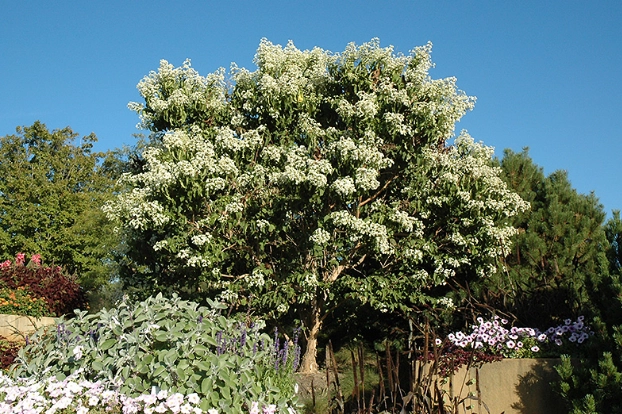
Popular Cultivars to Look For
While the straight species is excellent, plant breeders have introduced a couple of standout varieties. Here’s a quick comparison to help you choose.
| Cultivar Name | Key Features | Best For |
|---|---|---|
| Heptacodium miconioides (Straight Species) | The classic. Reliable white flowers, vibrant pink calyces, good exfoliating bark. | Gardeners who want the authentic, proven performer. |
| 'Tianchi' (Temple of Heaven) | Reported to have larger flower clusters and a more upright, tree-like growth habit. May produce fewer suckers. | Those wanting a clearer single-trunk tree form with a potentially bigger floral display. |
| 'Seven Son Flower' | Often just a marketing name for the species, but sometimes selected for particularly vivid calyx color. | Ensure you're getting a quality plant from a reputable nursery, not just a renamed seedling. |
I've grown the straight species and 'Tianchi'. The 'Tianchi' did seem a bit more upright from the get-go, but both have been fantastic. Don't stress too much about finding a specific cultivar; a healthy standard Seven Sons Tree is a winner.
Design Ideas: Making It Shine in Your Garden
This isn't a tree you hide in the back forty. It's a specimen. Here are some ways I've used it or seen it used brilliantly.
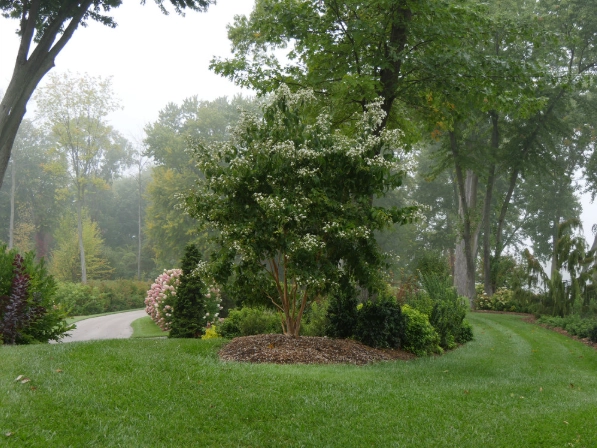
- The Focal Point: Plant one smack-dab in the middle of a lawn or at the end of a garden path. Its multi-season drama demands attention.
- Pollinator Powerhouse: Pair it with other late-season nectar sources. Think about Russian sage (Perovskia), Sedum 'Autumn Joy', Joe-Pye weed (Eutrochium), and tall ornamental grasses. You'll create a late-summer buffet for bees and butterflies.
- Texture and Form Contrast: Its vase-shaped form looks great against the rounded mound of a dwarf blue spruce or the horizontal lines of a spreading juniper. The peeling bark contrasts beautifully with the smooth bark of a dogwood or the rigid structure of an evergreen.
- Moonlight Garden: Those white late-summer flowers are luminous at dusk. Plant it near a patio or a window you use in the evening, alongside other white-flowered plants and silvery foliage.
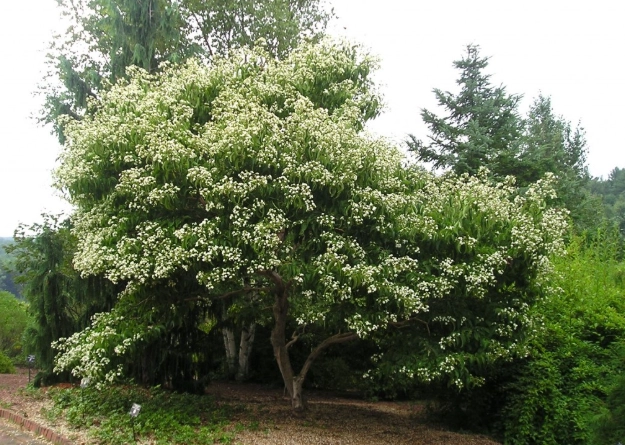 The goal is to let it be the star, then build a supporting cast around it.
Solving Common Problems (Troubleshooting)
Even the tough guys can have a bad day. Here's what to watch for.
Why is my Seven Sons Tree not flowering? The number one reason is not enough sun. If it's in shade, it will prioritize leaf growth over flowers. Age is another factor—a very young tree might take 3-5 years to start blooming reliably. Excessive nitrogen fertilizer (like the kind for your lawn) can also promote leafy growth at the expense of flowers.
Are the leaves looking yellow? Could be chlorosis, often caused by iron deficiency in high-pH (alkaline) soils. While adaptable, it prefers slightly acidic to neutral soil. A soil test can confirm this. You can treat with chelated iron according to product directions.
How do I stop the suckers? You manage them, you don't really stop them. For a tree form, remove them with a sharp pair of pruners or a knife as close to the root as possible when they're young and small. It's a regular maintenance task. Some people have had limited success with careful application of a sucker-growth inhibitor on the fresh cuts, but I've found consistent physical removal works fine.
Is it invasive? This is a crucial question. According to authoritative sources like the Invasive Plant Atlas, Heptacodium miconioides is not currently listed as invasive in North America. Its suckering is contained to the area around the plant and it does not spread widely by seed in most landscapes. However, as with any plant, it's wise to check with your local university extension service for regional specifics.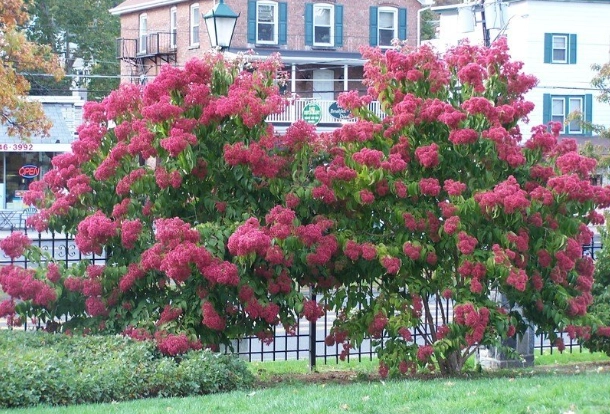
Frequently Asked Questions (The Real Ones Gardeners Ask)
Final Thoughts: Is the Seven Sons Tree Right for You?
Look, gardening is about joy and experimentation. If you want a bulletproof, zero-care tree, maybe go with a native oak. But if you want a conversation piece, a tree that provides three seasons of genuine interest, supports pollinators, and isn't fussy once it settles in, then the Seven Sons Tree is a top contender.
It asks for a sunny spot and a little attention to suckers if you want a single trunk. In return, it gives you a spectacular late-season performance that few other plants can match. In my book, that's a fair trade. It's moved from being a curious oddity in my garden to an indispensable anchor of the autumn landscape.
The biggest mistake you can make is not giving it enough sun or space to shine. Do that, and follow the simple planting steps, and you'll have a unique, beautiful tree that makes your garden stand out for years to come. Honestly, what more could you ask for?
Reader Comments