Quick Guide
You see one skitter across the floor, and the reaction is almost universal—a jump, a shudder, maybe a shout. But what if I told you that knee-jerk fear is based on a mountain of misunderstandings? I used to be that person, the one who'd freeze at the sight of a daddy long-legs. Then I spent a summer helping a friend who's an entomologist (well, an arachnologist, to be precise) with field cataloging. Let's just say my perspective did a complete one-eighty.
Spiders are one of the most successful and misunderstood groups of animals on the planet. They're not insects—that's the first big thing to get out of the way. They're arachnids, with eight legs, two body segments, and no antennae. That fact alone changes the game. This isn't just trivia; it's the key to understanding why they move, hunt, and live the way they do. From the common house spider you find in your basement to the iconic orb-weavers decorating your garden with silk art, each one has a story that's more fascinating than frightening.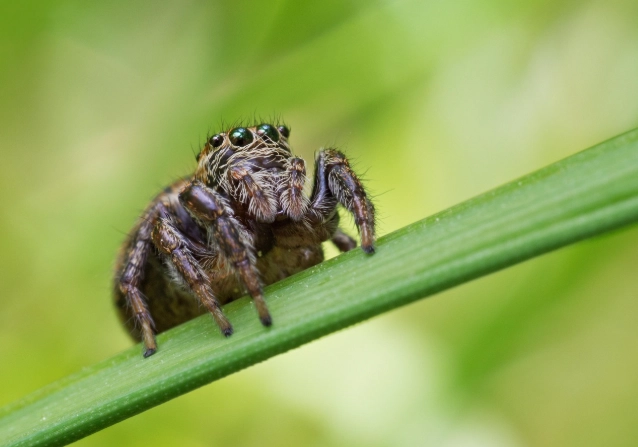
So, let's move past the scream and the shoe. What's the real deal with these eight-legged neighbors of ours?
What Exactly Is a Spider? Breaking Down the Basics
If you want to understand spiders, you have to start with what makes a spider a spider. It's not just the leg count. It's a whole unique biological package.
All spiders are predators. Every single one. They don't eat plants. This is a core part of their identity and their ecological role. To catch their prey, most spiders produce silk from specialized organs called spinnerets at the rear of their abdomen. This silk is a biological marvel—pound for pound, it's stronger than steel and more elastic than nylon. But get this: not all spiders use their silk to spin webs. That was a surprise to me. Some use it as a safety line (a dragline), to wrap eggs, or to create little tripwires to sense vibrations.
Their body plan is elegantly simple. The front part, the cephalothorax, houses the brain, eyes, fangs (called chelicerae), and legs. The rear part, the abdomen, contains the heart, digestive system, silk glands, and reproductive organs. They don't have wings. They don't have chewing mouthparts. They have to liquefy their food outside their bodies before sucking it up. Sounds gross, but it's incredibly efficient.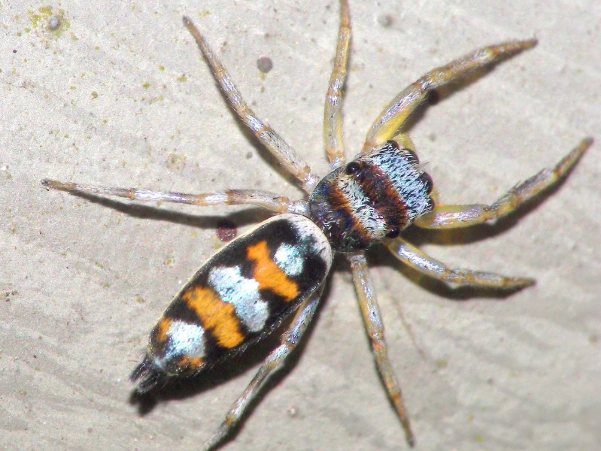
The Silk Symphony: More Than Just Webs
Let's talk about that silk for a second because it's where spiders truly shine. A single spider can produce several different types of silk for different jobs: sticky silk for capturing prey, non-sticky silk for framework, super-strong silk for anchor lines, and soft, fluffy silk for cushioning eggs. The diversity is mind-boggling. The web of an orb-weaving spider is a masterpiece of engineering and patience, built to precise geometric specifications that maximize capture area and structural integrity.
But web-building is just one strategy. Wolf spiders are athletic hunters that chase down their prey. Crab spiders are ambush predators that camouflage themselves on flowers. Trapdoor spiders construct ingenious hidden burrows with a hinged lid. The hunting methods are as varied as the spiders themselves.
Meet the Locals: Common Spider Types You Might Encounter
You don't need to go to the rainforest to find spider diversity. It's right in your home and backyard. Knowing who's who can turn fear into familiarity. Here’s a rundown of some frequent guests, from the utterly harmless to the "give-it-some-space" category.
| Type | Common Name(s) | Key Features & Habitat | Web Type | Danger to Humans? |
|---|---|---|---|---|
| Web Builders | Common House Spider, Orb Weaver | Messy, tangled webs in corners (house spiders); large, circular, geometric webs in gardens (orb weavers). Often brownish or grey. | Irregular tangle (cobweb); Organized orb. | Virtually none. Their venom is not medically significant. |
| Active Hunters | Wolf Spider, Jumping Spider | No permanent web. Wolf spiders are fast, hairy, and ground-dwelling. Jumping spiders are small, compact, incredibly visual, and can leap many times their body length. | None for hunting. May use silk for shelter or draglines. | None. Jumping spiders are considered curious and even "charismatic." |
| Ambush Predators | Crab Spider, Trapdoor Spider | Crab spiders camouflage on flowers, waiting for pollinators. Trapdoor spiders build hidden burrows with a camouflaged lid. | None for hunting. Silk used for burrow lining (trapdoor). | None of concern in North America/Europe. |
| Medically Significant (in some regions) | Black Widow, Brown Recluse | Black Widow: Shiny black with a red hourglass (usually). Brown Recluse: Violin-shaped marking on cephalothorax, six eyes in pairs. Both prefer quiet, undisturbed areas. | Irregular, messy tangle (both). | Yes, potential for medically significant bites. Bites are rare and serious reactions rarer, but caution is advised. Identification is key. |
Looking at that table, the takeaway is clear: the vast majority of spiders you meet pose no threat. The ones that do have very distinct markings. The American Association of Poison Control Centers maintains statistics showing that serious injuries from spider bites are extremely uncommon, far less than from bee stings or common household accidents. For accurate identification guides, especially for recluse and widow spiders, the University of California's Statewide Integrated Pest Management Program has excellent, clear resources.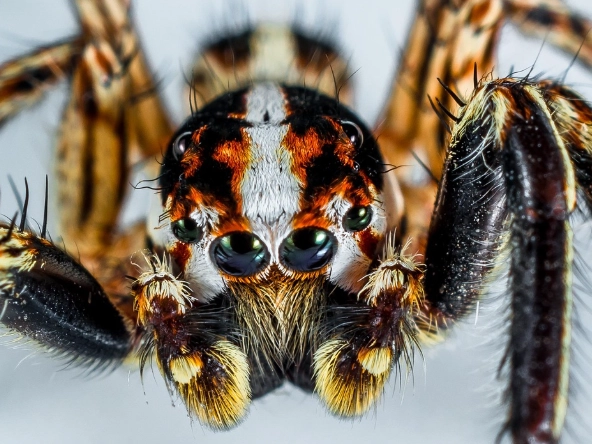
I had a bold jumping spider that took up residence on my windowsill for a week. I named him Bert. He didn't pay rent, but he did a fantastic job patrolling for gnats. It was a fair trade.
Why We Actually Need Spider (Yes, Even in Our Homes)
This is the part where the eco-guilt might kick in, but it's true. Spiders are a critical component of natural and domestic pest control. Think of them as a free, silent, and highly efficient pest management service.
Their diet consists almost entirely of insects and other arthropods. This includes mosquitoes, flies, moths, roaches, and agricultural pests. A single spider can consume hundreds of insects over its lifetime. Studies have estimated the global spider population consumes hundreds of millions of tons of prey every year. That's an astronomical amount of pest biomass removed from our environment. In your garden, spiders help protect your plants. In your home, they're after the same crumbs and moisture that attract ants and flies.
By controlling insect populations, spiders help curb the spread of diseases carried by pests and reduce the need for chemical pesticides. They are a cornerstone species in the food web, serving as prey for birds, lizards, and other small animals. Removing spiders haphazardly can have a subtle but cascading effect on your local ecosystem.
So, that cobweb in the corner?
It's not just dust. It's a functioning pest trap. A messy one, sure, but an effective one.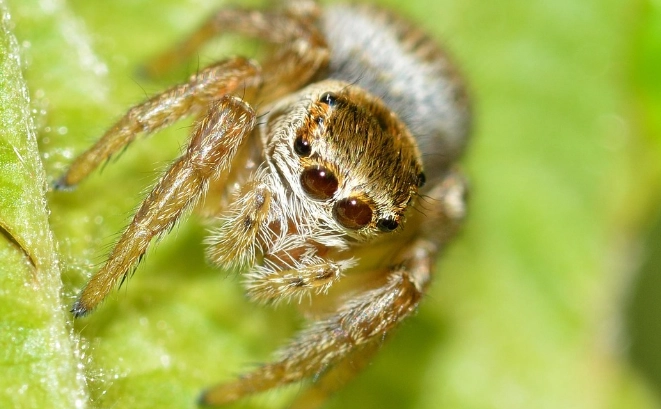
The Human-Spider Interface: Coexistence and Caution
Okay, so they're useful. But what about when they scare us, or worse, bite? Let's get practical.
Spider-Proofing Your Home (The Sensible Way)
If you simply can't stand the idea of cohabitating, the goal isn't genocide—it's making your home less inviting. Spiders come inside looking for two things: prey and shelter.
- Seal it up: Check for cracks around windows, doors, and foundation. Use caulk. Install weather stripping.
- Reduce clutter: Piles of boxes, papers, or clothes in basements and garages are perfect spider condos.
- Turn down the buffet lights: Use yellow insect bulbs for outdoor lighting, which attract fewer night-flying insects, which in turn attract fewer spiders.
- Keep it clean: Regular vacuuming, especially in corners and under furniture, removes spiders, webs, and the egg sacs that would produce the next generation. This is the single most effective thing you can do.
The Truth About Spider Bites
This is a huge source of anxiety and misinformation. First, spiders are not aggressive. They are defensive. A spider has no interest in biting you; you are not food, and you are a giant potential threat. Most so-called "spider bites" are actually bites from other insects (like fleas or bed bugs), or skin infections like MRSA.
A true spider bite usually happens because the spider was pressed against skin—like when putting on a shoe or gardening glove it had crawled into, or rolling over onto one in bed. Even the notorious brown recluse and black widow will almost always choose to flee rather than fight.
I'm not a fan of the brown recluse. Living in an area where they're possible, I'm extra careful shaking out shoes. It's a rational caution, not a phobia. Knowing their habits—that they love cardboard and undisturbed storage—makes avoidance straightforward.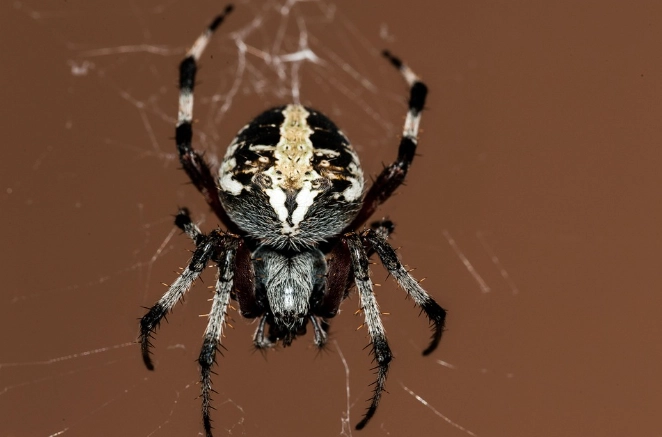
Your Spider Questions, Answered
Are spiders insects?
No. This is the fundamental split. Spiders are arachnids. Insects have six legs, three body parts, and usually wings and antennae. Arachnids have eight legs, two body parts, and no wings or antennae. Other arachnids include scorpions, ticks, and mites.
How many species of spider are there?
Scientists have described over 48,000 species so far, and they estimate there may be many thousands more yet to be discovered. The diversity is staggering.
Can spiders hear?
Not in the way we do. They lack ears. However, they are exquisitely sensitive to vibrations through their legs and bodies, which is how they "feel" the approach of prey or danger on their webs or the ground.
What's the world's biggest/largest spider?
By leg span, it's the Goliath birdeater (Theraphosa blondi), a tarantula from South America, which can reach up to 11 inches across. It's massive and intimidating but, like most tarantulas, its venom is not considered dangerous to humans. The heaviest is likely the same species.
Do spiders sleep or have brains?
They have a central nervous system, including a brain. Research, particularly on jumping spiders, suggests they experience sleep-like states with rapid eye movement (REM) phases, hinting at the potential for dreams. Think about that next time you see one.
How long do spiders live?
It varies wildly. Many common house spiders live about a year. Some tarantulas can live for 20-30 years in captivity. Most of their life cycle is spent as eggs, then spiderlings, with the adult stage being relatively short for many species.
Can I control the spider population in my yard?
You can reduce it by reducing their insect prey (fix standing water, manage waste) and removing harborage like wood piles and dense ground cover right against the house. But eliminating them is neither possible nor desirable. A healthy yard has spiders.
What's the most dangerous spider?
Medically, the Sydney funnel-web spider of Australia is often cited as one of the most dangerous due to potent venom and proximity to humans. However, thanks to effective antivenom, there have been no deaths since its introduction in 1981. Again, context matters—danger is a combination of venom potency, spider behavior, and access to medical care.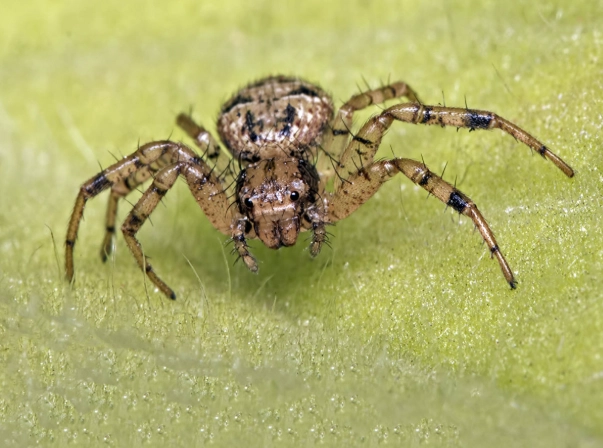
Changing the Narrative: From Fear to Fascination
It's easy to fear what we don't understand. Spiders, with their alien appearance and secretive habits, are prime candidates. But once you start peeling back the layers, the fear often melts away, replaced by a genuine curiosity. These are complex creatures with sophisticated behaviors, playing a non-negotiable role in keeping our world in balance.
You don't have to love them. You don't have to let them crawl on your hand. But you can respect them. Next time you see a spider, instead of reacting, take a moment. Look at the engineering of its web. Watch the careful, deliberate way it moves. Remember that it's a tiny predator holding the line against a world of insects.
Maybe just leave it be. Or gently show it the door. Your home ecosystem will be better for it.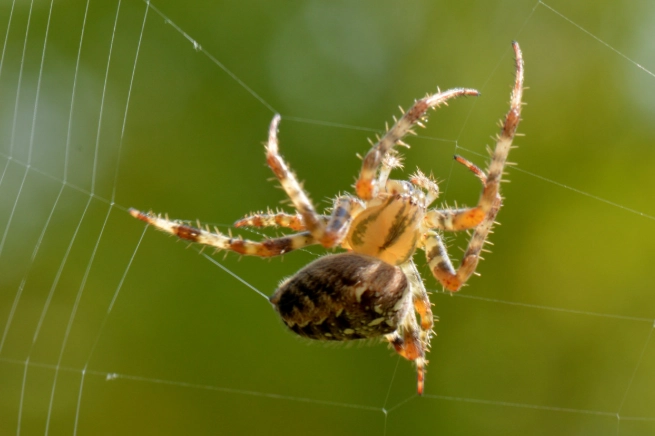
And Bert the jumping spider?
He eventually moved on. But I still check the windowsill, hoping for another tenant.
Reader Comments