Quick Guide
Let's be honest, the first time you heard the word "periwinkle," you probably weren't sure what it referred to. Was it a color? A little flower you saw poking through a neighbor's fence? Maybe it was both. That's the funny thing about periwinkle—it's one of those wonderfully ambiguous terms that lives in a few different worlds. It's a color that sits in that dreamy space between blue and purple, a tough-as-nails garden plant that thrives where others give up, and it carries a suitcase full of history and symbolism. I remember trying to describe the color of my bedroom walls as a kid and landing on "light purply-blue," only to have my mom say, "Oh, you mean periwinkle?" That was my first real introduction.
This guide is for anyone who's ever been curious. Whether you're a gardener looking for a reliable ground cover, a designer searching for the perfect calming hue, or just someone who likes knowing the stories behind everyday things, we're going to dig into all of it. We'll get our hands dirty with plant care, talk color theory without the jargon, and unravel some of the meanings woven into this unassuming little thing called periwinkle.
Here's the thing: Most articles talk about the color or the plant. They rarely connect the dots. But the connection is the best part. The plant gave the color its name, and the color helps us understand the plant's quiet charm. We're going to cover both, plus a whole lot more that you might not find in a typical search result.
The Color Periwinkle: A Slice of Sky and Twilight
Ask ten people to point to periwinkle on a color wheel, and you might get ten slightly different answers. And that's okay. It's not a primary color with rigid borders; it's a mood. Periwinkle is essentially a pale tint of indigo or a pastel blue-violet. Imagine taking a classic blue and softening it with a generous dollop of white and just a hint of red (which is what creates purple). The result is soothing, nostalgic, and a little bit magical.
It doesn't scream for attention like a neon yellow. Instead, it whispers. It's the color of a hazy sky just before dusk, or the delicate inside of a certain seashell. In the world of standardized colors, Pantone has its own specific formula for it (a useful reference for designers), but in everyday life, its boundaries are pleasantly fuzzy.
Where You've Seen Periwinkle (Probably)
This color gets around. It's a favorite in certain design circles for very good reasons.
- Nurseries and Bedrooms: Its calming, non-aggressive nature makes it a top pick for spaces meant for rest. It's less stark than baby blue and less sugary than lavender.
- Spring Fashion: You'll see it everywhere when the seasons change. Periwinkle sweaters, dresses, and scarves have a classic, preppy vibe that feels fresh and optimistic.
- Wedding Palettes: It pairs beautifully with dusty rose, sage green, silver, and gray. It offers a soft, romantic alternative to the more traditional pastels.
- Website and Brand Design: Tech and wellness companies sometimes use it to convey trust, calm, and creativity without being too cold (like a pure blue can be) or too whimsical (like a pure purple).
I used it once for a client's meditation app logo. They wanted something that felt peaceful but also a bit uplifting. A true blue felt too corporate, lavender felt too feminine for their broad target audience. Periwinkle was the perfect, nuanced middle ground.
So, is it blue? Is it purple? The answer is yes. And that's its superpower.
The Psychology of Periwinkle: Why It Feels So Calming
Colors talk to our brains without using words. Periwinkle, blending the stability of blue with the spirituality and creativity of purple, sends a specific message. Blue is known to lower heart rate and reduce feelings of anxiety. Purple is often linked to imagination and introspection. Mash them together and dilute them with white, and you get a color that promotes mental clarity, serene contemplation, and a gentle sense of hope.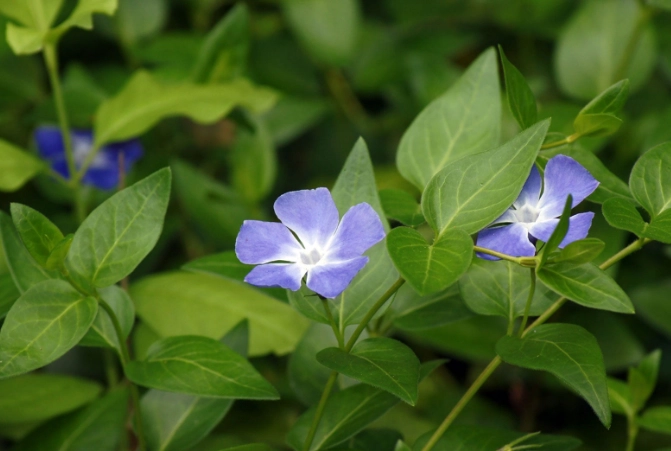
It's not a stimulating color. You wouldn't paint a gymnasium or a fast-food restaurant periwinkle. But for a home office, a reading nook, or a bedroom? It's practically a visual sedative. It creates a backdrop that lets you focus or unwind without the color itself dominating the space.
The Periwinkle Plant: The Garden's Tough Little Trooper
Now, let's step into the garden. This is where the color got its name. The common periwinkle plant, whose scientific name is Vinca minor, is a European native that has made itself at home all over the world. And I mean at home. Once established, it's famously hard to get rid of, which is either its greatest strength or its most annoying flaw, depending on your perspective.
We're talking about an evergreen perennial vine. It doesn't climb like ivy; it creeps along the ground, sending out roots from its stems as it goes, forming a dense, mat-like carpet. In spring, it produces lovely five-petaled flowers that are, you guessed it, a perfect periwinkle blue (sometimes edging into violet). The leaves are glossy, dark green, and oval-shaped, looking tidy year-round.
Quick Tip: There's also Vinca major, or "bigleaf periwinkle." It's similar but larger in every way—bigger leaves, bigger flowers, and a much more aggressive spreading habit. For most home gardens, Vinca minor is the more manageable choice.
I have a love-hate relationship with my own periwinkle patch. I planted it years ago in a shady, dry, rocky spot under some large trees where grass refused to grow. It was a last resort. To my amazement, it not only survived but thrived, covering the ugly bare earth with a neat green blanket and giving me those sweet little blue flowers every April. The "hate" part? I have to ruthlessly pull it back from the flower bed edges every fall because, left unchecked, it would swallow my hostas whole. It's vigorous. You've been warned.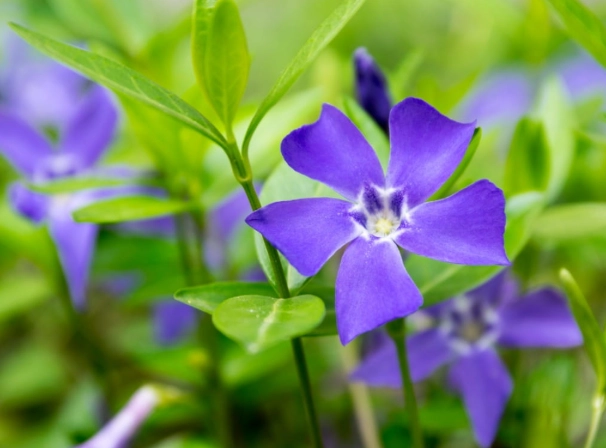
Why Gardeners Love (and Sometimes Loathe) Periwinkle
Let's break down its pros and cons, because no plant is perfect.
| Advantages (The Love) | Disadvantages (The Loathe) |
|---|---|
| Extremely Low Maintenance: Once established, it needs almost no care. Forget to water it? It shrugs. Poor soil? No problem. | Can Be Invasive: In many regions, especially in North America, it's considered an invasive species. It spreads rapidly and can crowd out native woodland plants. Check with your local extension service before planting. |
| Grows in Tough Spots: It's legendary for growing in deep shade and dry soil—conditions that defeat most other groundcovers. | Difficult to Eradicate: If you change your mind, removing it completely is a multi-season battle of digging and pulling. |
| Excellent Erosion Control: Its dense mat of roots holds soil perfectly on slopes. | Can Be a "Bully": It will spread into lawns and flower beds if not contained with physical barriers. |
| Evergreen Foliage: Provides year-round visual interest, even under snow. | Limited Seasonal Bloom: While the leaves are always there, the charming periwinkle-colored flowers typically only appear for a few weeks in spring. |
See what I mean? It's a plant that demands respect. You don't just casually toss periwinkle into a garden bed. You make a strategic decision, knowing its power.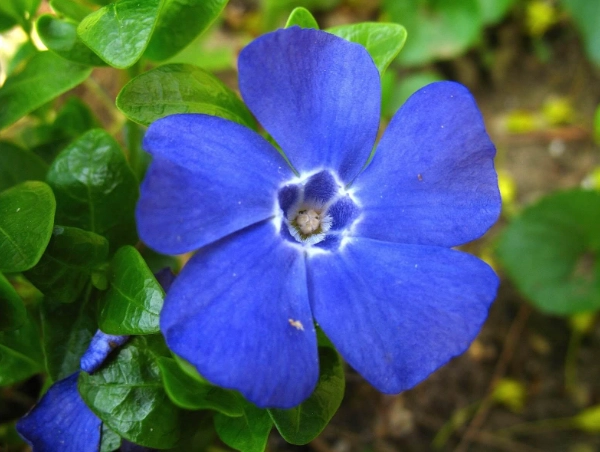
How to Grow Periwinkle (If You Decide To)
If you've checked the invasive species lists and gotten the green light, or if you're gardening in a pot/container, here's the down-and-dirty on care. It's almost embarrassingly simple.
- Light: Partial to full shade is ideal. It can tolerate some morning sun, but hot afternoon sun will scorch the leaves.
- Soil: Honestly, it's not picky. Well-draining is best, but it adapts to clay, sand, you name it.
- Water: Water regularly to get it established in its first season. After that, it's remarkably drought-tolerant.
- Planting: Space small plants ("plugs") about 12 inches apart. They'll fill in the gaps within a year or two.
- Containment: Seriously, think about this upfront. Plant it where it's bounded by sidewalks, driveways, or regular mowing lines. Or use deep garden edging.
A Personal Note of Caution: I live in an area where it's not officially classified as invasive, but it's certainly "enthusiastic." I would never, ever plant it near a natural woodland area or a wild space. The risk of it escaping and harming local ecosystems is too real. In my confined, urban backyard, it's a controlled solution. Context is everything.
Symbolism and Stories: What Periwinkle Means
Plants and colors aren't just physical things; they collect meanings over centuries. Periwinkle is no exception. Its symbolism is a mixed bag, reflecting both its delicate appearance and its tenacious nature.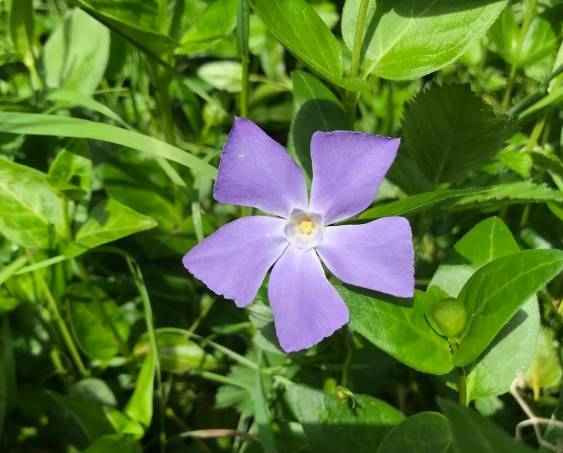
In the language of flowers (floriography), which was huge in the Victorian era, periwinkle often symbolized sweet memories, enduring friendship, and fond recollection. Giving someone a bouquet with periwinkle in it was a way of saying, "I cherish our past together." This makes sense when you think of it as an evergreen—always there, always remembering.
But there's a darker, more folkloric side too. In some European traditions, it was considered a flower of death and was often planted on graves. This wasn't necessarily morbid; it was a symbol of everlasting life and memory, again playing on its evergreen quality. It was also thought to have protective powers against evil spirits.
Today, I think its symbolism is simpler. To me, it represents resilience with grace. It's a plant that survives in the shadows, puts down deep roots, and still manages to produce something beautiful and gentle-looking every spring. That's a pretty powerful metaphor for getting through tough times.
From graves to gardens to graphic design—periwinkle gets around in our collective imagination.
Your Periwinkle Questions, Answered
After talking to fellow gardeners and designers, here are the questions that come up again and again. Let's tackle them head-on.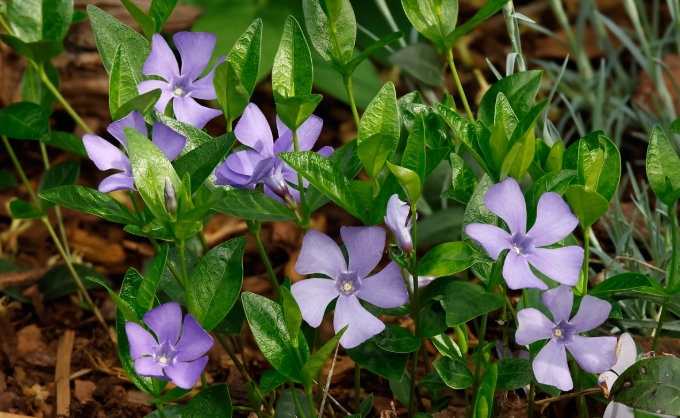
- Periwinkle & Cream/White: Classic, clean, and airy. Makes the periwinkle pop gently.
- Periwinkle & Sage Green: A natural, calming pairing straight out of a spring garden.
- Periwinkle & Charcoal Gray/Navy: Adds depth and a modern, sophisticated edge.
- Periwinkle & Gold or Brass: Introduces a touch of warmth and luxury.
- Periwinkle & Coral or Peach: A vibrant, cheerful, and complementary contrast (they sit opposite each other on a color wheel).
Wrapping It All Up
So, what is periwinkle? It's a chameleon. A color that calms a room. A plant that conquers the shadiest corner of your yard. A symbol of memory that's tough enough to be forgotten and still come back thriving.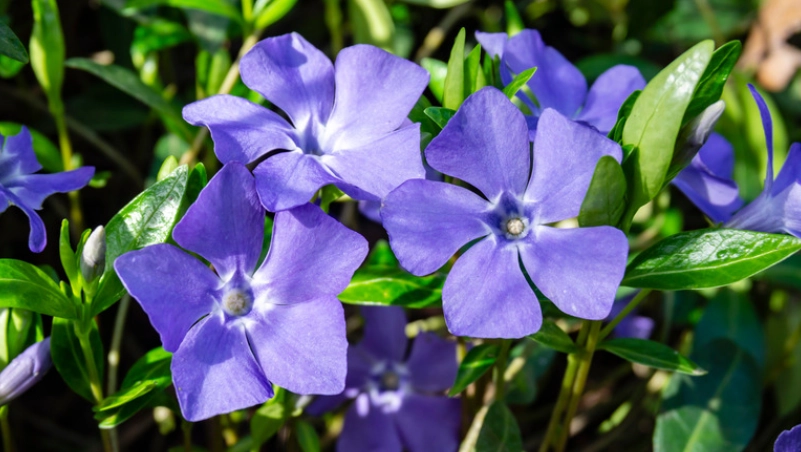
My final thought? Appreciate it for its duality. The periwinkle color is soft, but the plant is strong. The flower is fleeting, but the foliage is forever. It teaches you that something can be delicate in appearance and incredibly resilient in nature. Whether you're choosing a paint swatch, solving a landscaping problem, or just enjoying the sight of its little blue faces in spring, you're interacting with something that has a rich, layered story.
Just please, for the sake of local ecosystems, know what you're planting and where. That's the most important takeaway of all. Enjoy the beauty of periwinkle, but respect its power.