Quick Navigation
- What Exactly Is a Styrax Japonica?
- Picking the Right Japanese Snowbell for Your Space
- How to Plant and Care for Your Japanese Snowbell (The Right Way)
- Designing With Styrax Japonica in Your Landscape
- Troubleshooting: Common Questions and Problems
- Beyond the Basics: Propagation and Sourcing
- The Final Verdict on Styrax Japonica
I remember the first time I saw a mature Styrax japonica in full bloom. It wasn't in a fancy botanical garden, but tucked away in a neighbor's backyard. I was just walking by, and this cloud of delicate, white, bell-shaped flowers stopped me in my tracks. The branches were layered, almost horizontal, and covered in these pendulous blossoms that looked like they were made of porcelain. I had to know what it was. That search led me down a rabbit hole, and now, after years of growing a few myself and talking to other gardeners, I want to save you some of that legwork. Let's talk about the Japanese Snowbell.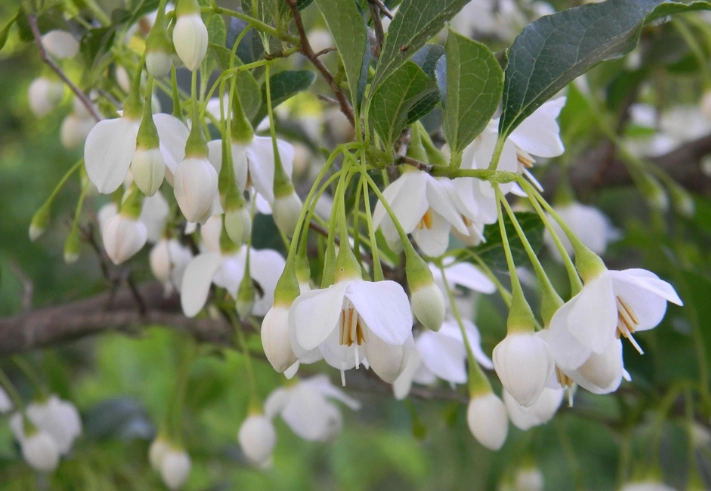
If you're looking for a small to medium-sized ornamental tree that delivers elegance without the massive footprint of an oak or maple, you're in the right place. This isn't just another plant profile. We're going to get into the dirt—literally—about what makes this tree special, where it often goes wrong for people, and how you can succeed with it. I'll share what I've learned the hard way, so you don't have to.
What Exactly Is a Styrax Japonica?
Let's start with the basics. Styrax japonica is the botanical name for the Japanese Snowbell tree. It's native to—you guessed it—Japan, as well as Korea and parts of China. It belongs to the Styracaceae family, which includes other interesting plants like the Silverbell tree (Halesia).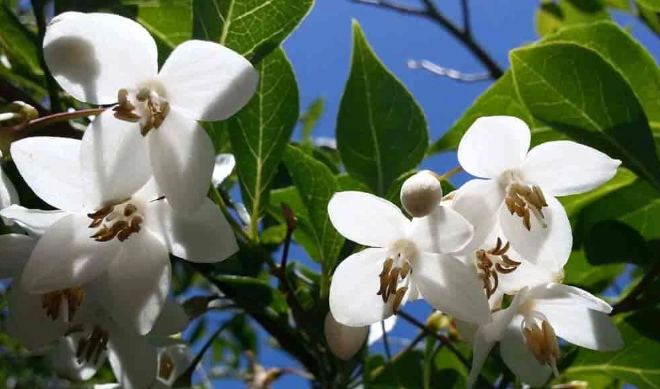
What you're getting is a deciduous tree, meaning it loses its leaves in winter. But don't let that fool you into thinking it's boring for half the year. Its performance is beautifully staged.
- Spring: Fresh, green leaves emerge. They're simple, alternate, and have a nice, clean look.
- Late Spring to Early Summer: The main event. Clusters of sweetly-scented, white, bell-shaped flowers (hence the common name) dangle from the undersides of the branches. This is its claim to fame. The flowers aren't huge, but there are so many of them that the effect is stunning.
- Summer: After the flowers fade, you might get small, olive-shaped drupes (fruits) if pollination was successful. The foliage forms a pleasant, bright green canopy.
- Fall: A surprise bonus! The leaves often turn a pretty yellow or sometimes a reddish-purple before they drop, giving you a second shot of seasonal color.
- Winter: The bare structure is attractive, with a smooth, gray bark that sometimes develops interesting textures as it ages.
Mature size is a big question for gardeners. You'll often see it listed as 20-30 feet tall and wide. In perfect conditions, it can get bigger, but in most home landscapes, it happily stays in that range, making it perfect for smaller yards or as an understory tree.
Picking the Right Japanese Snowbell for Your Space
Not all Styrax japonica trees are created equal. Nurseries have selected specific varieties (cultivars) that emphasize certain traits. Choosing the right one can make a huge difference in your satisfaction. Here’s a breakdown of the most common ones you’ll find.
| Cultivar Name | Key Features | Mature Size (Approx.) | Best For |
|---|---|---|---|
| Styrax japonica (Species) | The classic. Pure white flowers, green leaves, excellent yellow fall color. | 20-30' H & W | Garden purists, naturalistic landscapes. |
| 'Carillon' (aka 'Pendula') | Weeping form. Branches cascade down dramatically. A real specimen plant. | 10-15' H, 15-20' W | A focal point, over a wall, or near water. |
| 'Emerald Pagoda' | Larger flowers (reportedly twice the size!), thicker leaves. A robust selection. | 20-25' H & W | Those who want maximum floral impact. |
| 'Pink Chimes' | Soft pink flowers. A delicate and lovely alternative to white. | 15-20' H & W | Adding a touch of soft color to the garden palette. |
| 'Snow Cone' | Compact, dwarf habit. Very slow growing. | 6-10' H & W | Small gardens, containers (for a while), patios. |
My personal favorite is the straight species. There's something about its simple elegance that I love. But I've seen 'Carillon' used beside a pond, and it was absolutely magical—the weeping branches almost kissing the water's surface. 'Emerald Pagoda' does have impressively larger flowers, but it can be harder to find and a bit pricier.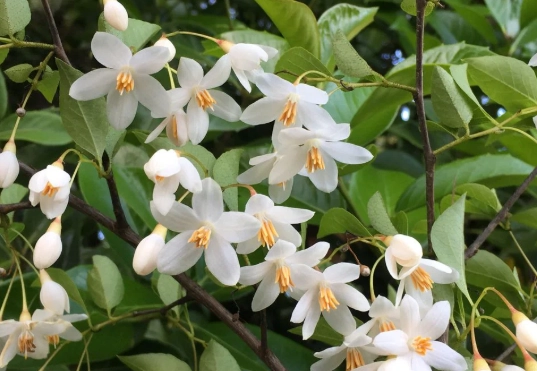
How to Plant and Care for Your Japanese Snowbell (The Right Way)
This is where we separate success from disappointment. Getting the start right is 90% of the battle with Styrax japonica.
Location, Location, Location
Think about where this tree lives in nature: forest edges, stream banks, sloping woodlands. It likes light, but not blazing, all-day desert sun. It likes moisture, but not soggy, stagnant feet.
- Sun: Partial shade to full sun. In hotter climates (USDA zone 7 and above), afternoon shade is a godsend and prevents leaf scorch. In cooler climates, full sun is fine and promotes the best flowering.
- Soil: This is the big one. Styrax japonica demands well-drained soil. It loves soil that is rich in organic matter, moist but never waterlogged. Think of the forest floor—spongy with decaying leaves. Heavy clay is its nemesis (as I learned). If you have clay, you must amend it heavily with compost and maybe even plant on a slight mound to improve drainage.
- Space: Give it room to reach its natural, layered shape. Don't cram it against a house or under power lines. Appreciate its width.
Ongoing Care: It's Not High Maintenance
Once established, a Styrax japonica is surprisingly low-fuss.
Watering: Consistent moisture, especially in the first two to three years and during dry spells. A deep soaking once a week is better than frequent sprinkles. The goal is to encourage deep roots.
Fertilizing: Not a heavy feeder. An application of a balanced, slow-release fertilizer or a top-dressing of compost in early spring is plenty. More is not better here.
Pruning: Minimal! This is the best part. The tree naturally forms a lovely shape. Prune only to remove dead, damaged, or crossing branches. Do this in late winter or right after flowering. If you must shape it, do so lightly and remember that you're cutting off next year's flower buds if you prune too late.
Mulching: A 2-3 inch layer of organic mulch (shredded bark, wood chips) around the root zone is fantastic. It keeps the soil cool, retains moisture, and slowly feeds the soil as it breaks down. Just keep the mulch a few inches away from the trunk itself to prevent rot.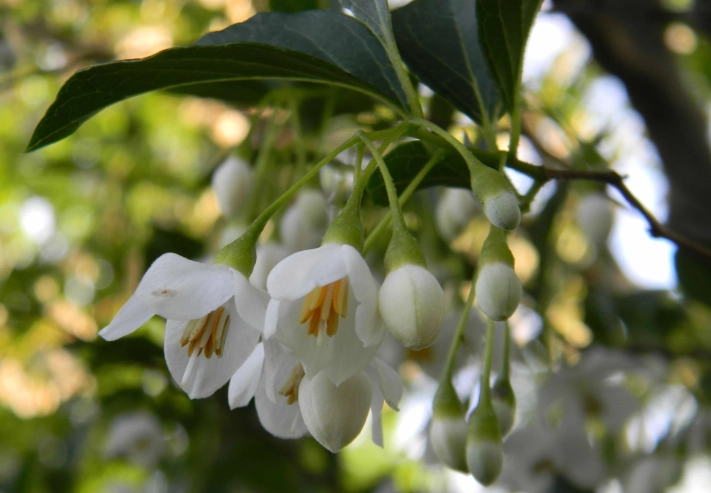
Designing With Styrax Japonica in Your Landscape
This tree is a designer's dream because of its versatility. It's not a brutish focal point; it's a graceful contributor.
- As a Specimen: Plant one where you can admire it from a window or a patio. The weeping form ('Carillon') is perfect for this.
- In a Woodland Garden: This is its natural habitat. Underplant with shade-tolerant perennials like hostas, ferns, hellebores, or hakonechloa grass. The contrast in textures is beautiful.
- Near Water: Since it likes consistent moisture, planting near a pond, stream, or rain garden is ideal. The reflection of the flowers in water is breathtaking.
- In a Mixed Border: Use it as the taller anchor in a shrub border. It pairs wonderfully with azaleas, rhododendrons, and hydrangeas, which share similar soil preferences.
I have mine planted where the late afternoon sun shines through the branches. When it's in bloom, the backlit flowers practically glow. It's a simple effect, but it never gets old.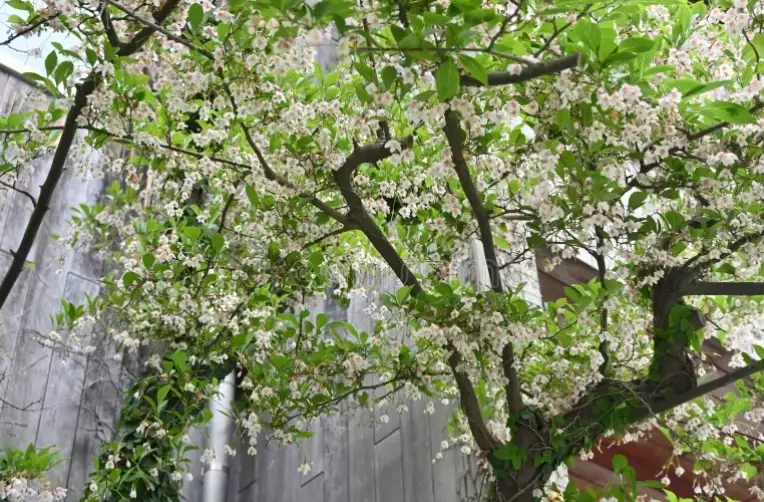
Troubleshooting: Common Questions and Problems
Let's get real. Things don't always go perfectly. Here are answers to the questions I get asked most often.
Why isn't my Styrax Japonica flowering?
This is the #1 complaint. Usually, it's one of three things: 1) Too much shade. It needs adequate light to set buds. 2) It's too young. Patience! It might take 4-5 years from planting to really hit its flowering stride. 3) Late frost. A hard frost just as flower buds are forming can zap them. There's not much you can do about this except hope for a milder spring next year.
Are there any serious pest or disease issues?
Honestly, this is a major plus for Styrax japonica. It's remarkably pest and disease-resistant. You might occasionally see aphids or Japanese beetles nibbling, but rarely to a damaging degree. Good cultural practices (healthy soil, proper spacing) keep it strong. The University of Florida IFAS Extension lists it as having few significant problems, which is a great sign for any gardener.
How fast does it grow?
Don't expect a skyrocket. It has a moderate growth rate, maybe 1-2 feet per year under good conditions. I think this is a benefit—it gives you time to adjust your landscape around it, and it means less frantic pruning. You're planting a legacy, not an instant screen.
Is it deer resistant?
Moderately. Deer might browse on young, tender shoots, especially if other food is scarce. But an established Styrax japonica is not typically their first choice. It's not a deer magnet like hostas or roses.
Beyond the Basics: Propagation and Sourcing
Want to make more of these lovely trees? Propagation is usually done by seed (which requires a long, cold stratification period) or by softwood cuttings taken in early summer. To be honest, for most home gardeners, it's easier to buy a young tree from a reputable nursery. This ensures you get the specific cultivar you want and a plant with a strong root system.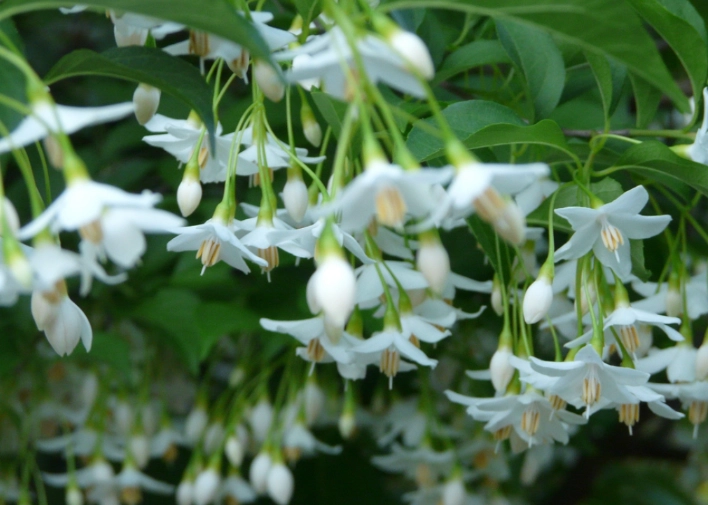
When sourcing, look for nurseries that specialize in native or ornamental trees. Ask about their growing practices. A healthy Styrax japonica in a pot should have good leaf color and no signs of root circling excessively at the drainage holes. For authoritative information on its classification and native range, resources like the Plants of the World Online by Kew are invaluable for the botany-curious.
The Final Verdict on Styrax Japonica
Is the Japanese Snowbell tree right for everyone? No. If you have heavy, poorly drained clay and aren't willing to amend it extensively, you'll both be frustrated. If you need a fast-growing windbreak or instant privacy, look elsewhere.
But if you have a spot with decent, fertile soil that drains well, and you're looking for a tree that offers four-season interest with a peak of breathtaking beauty in late spring, then Styrax japonica is a top-tier contender. It's elegant, manageable, and relatively trouble-free once you get it settled.
It rewards thoughtful placement and basic care with years of quiet beauty. In a world of flashy, over-hyped plants, the Japanese Snowbell is a classic for a reason. It doesn't shout; it whispers. And sometimes, that's exactly what a garden needs.
For detailed, science-based information on hardiness and cultivation, the Missouri Botanical Garden's Plant Finder is an excellent, trusted resource that I consult regularly. It confirms what practice teaches: give this tree the right foundation, and it will thrive.