In This Guide
- Vinca Minor vs. Vinca Major: Knowing Which One You're Really Getting
- How to Plant Perennial Vinca and Get It Off to a Strong Start
- The Real Deal on Caring for Established Perennial Vinca
- Troubleshooting: Solving Common Perennial Vinca Problems
- Final Thoughts: Is Perennial Vinca Right for Your Garden?
Let's talk about perennial vinca. You know, that plant you often see thriving under trees where nothing else seems to want to grow? The one with the glossy leaves and cheerful little flowers that just keeps going, year after year? That's the one. If you're tired of battling with bare patches in shady spots or want a lawn alternative that doesn't demand constant mowing, you're in the right place. I've grown these plants for years, made my share of mistakes (like planting the wrong type in a tiny space – more on that later), and learned what truly makes them tick.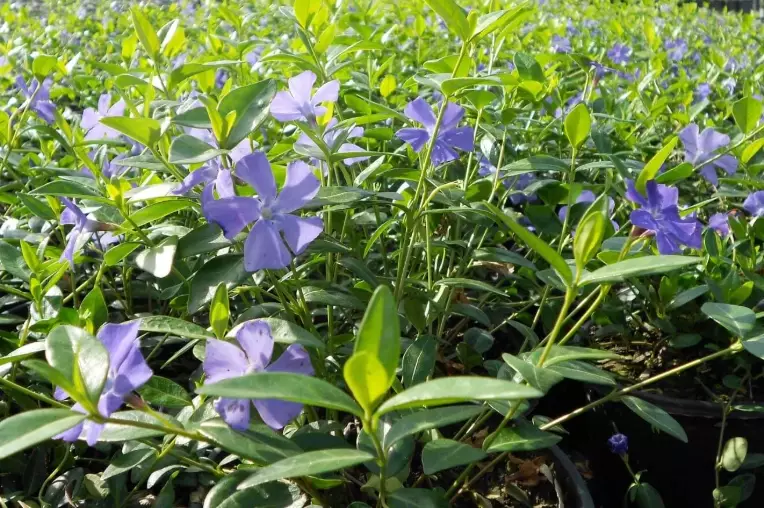
This isn't just another generic plant profile. We're going deep. We'll untangle the confusion between the different types, get real about their pros and cons (yes, they have a couple of significant downsides), and walk through exactly how to get them established and keep them looking good without turning it into a part-time job. By the end, you'll know if perennial vinca is the problem-solver for your garden or if you should keep looking.
Vinca Minor vs. Vinca Major: Knowing Which One You're Really Getting
This is where most people get tripped up right from the start. You go to the nursery, see a pot labeled "vinca" or "periwinkle," and buy it. But there are two main perennial players here, and they're not the same. Choosing the wrong one can lead to a gardening headache.
Vinca minor, often called common periwinkle or creeping myrtle, is the smaller, more restrained cousin. Its leaves are about an inch long, it grows only 3 to 6 inches tall, and it spreads by sending out runners that root as they go. It's the classic, dense ground cover you see in formal landscapes.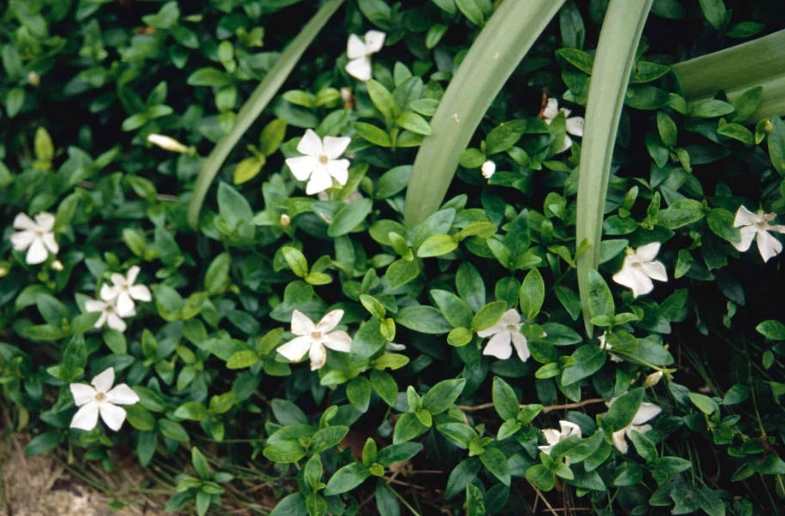
Then there's Vinca major, or bigleaf periwinkle. The name says it all. Everything about it is bigger – leaves can be 2 to 3 inches long, the stems are more upright (though still trailing), and it grows faster and more vigorously. Some gardeners I know call it "the enthusiastic one," which is a polite way of saying it can be a bit of a thug if you're not careful.
Here’s a quick comparison I put together because seeing them side-by-side really helps:
| Feature | Vinca Minor (Lesser Periwinkle) | Vinca Major (Greater Periwinkle) |
|---|---|---|
| Mature Height | 3-6 inches (7-15 cm) | 6-18 inches (15-45 cm) |
| Leaf Size | Small, ~1 inch, narrow | Large, 2-3 inches, broad |
| Growth Speed | Moderate, well-behaved spreader | Fast, can be aggressive/ invasive |
| Cold Hardiness (USDA Zones) | 4-9 (More cold-tolerant) | 7-10 (Less cold-tolerant) |
| Best For | Smaller areas, precise edging, controlled carpets | Large, tough areas, slopes, quick coverage |
| Flower Size | Smaller, about 1 inch across | Larger, about 1.5-2 inches across |
My personal rule of thumb? For most suburban gardens and planting beds, Vinca minor is the safer, more manageable bet. I made the mistake of planting Vinca major near a small flower bed once, and I spent the next two summers pulling its adventurous runners out of my astilbes. It was a lesson learned. The Royal Horticultural Society, a fantastic resource for plant information, also notes the vigorous nature of Vinca major and recommends it primarily for large, wilder areas where it can roam without causing issues. You can check their detailed plant profile for Vinca species to see their cultivation advice.
A Word on Invasiveness: This is the big, necessary conversation about perennial vinca. In many regions, particularly in North America, both types—but especially Vinca major—are listed as invasive species. They can escape gardens and spread into natural woodlands, outcompeting native wildflowers. Before you plant, please check with your local extension service or a resource like the Invasive Plant Atlas to see its status in your area. Responsible gardening matters.
How to Plant Perennial Vinca and Get It Off to a Strong Start
Okay, so you've decided which perennial vinca is right for your situation. Now, let's get it in the ground. The good news is they're not fussy, but doing a few key things right at the beginning pays off for years.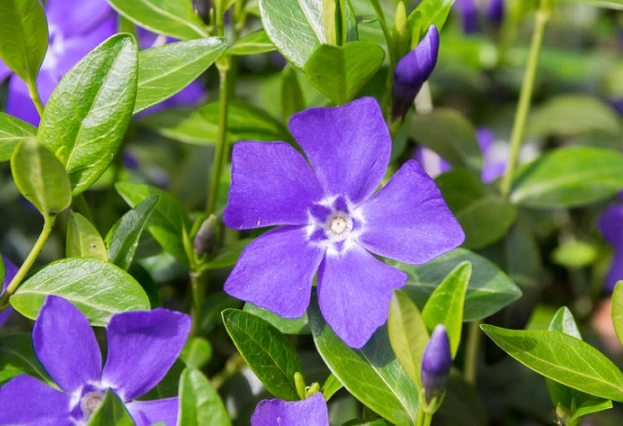
The Right Spot: Light and Soil
Here's the classic advice: perennial vinca loves shade. And that's true – it's a superstar in full to partial shade. But what often gets left out is that Vinca minor can handle quite a bit of sun, too, especially in cooler climates, as long as the soil doesn't dry out completely. I have a patch in morning sun/ afternoon shade, and it's lush. Vinca major is more particular about shade in hot areas; its larger leaves can scorch.
Light Requirements Summary: Ideal is partial to full shade (2-4 hours of dappled sun). Tolerates deep shade (fewer flowers). Tolerates morning sun in cool climates. Avoid hot, baking afternoon sun for best results.
Soil is the other big factor. They famously tolerate poor soil, but "tolerate" and "thrive" are different. For a thick, healthy mat, give them what they secretly want: well-drained soil rich in organic matter. They hate soggy, waterlogged roots. If you have heavy clay, mix in a generous amount of compost or leaf mold. A soil pH that's slightly acidic to neutral (6.0 to 7.0) is perfect.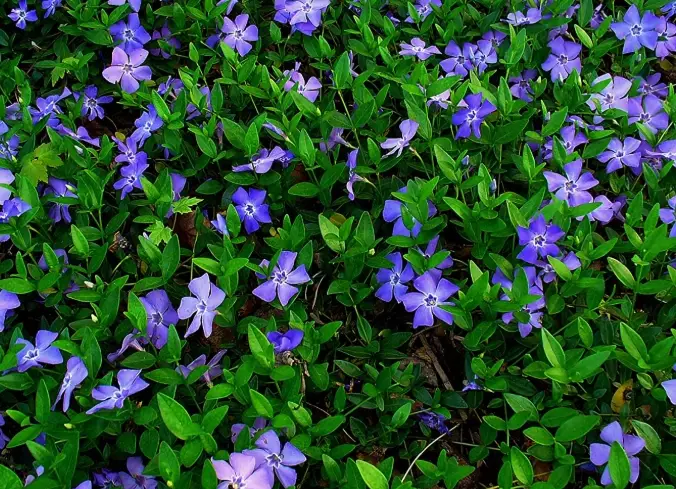
The Planting Process, Step-by-Step
- Timing is Everything: Early spring or early fall are the best times. The cool, moist weather lets the roots settle in without the stress of summer heat or winter freeze.
- Prep the Ground: Clear the area of weeds and grass. I mean really clear it. Weeding later, once the vinca is woven together, is a nightmare. Loosen the soil about 8-12 inches deep.
- Spacing: This depends on your patience and budget. For a quick fill, plant Vinca minor 8-12 inches apart. For Vinca major, go for 12-18 inches. You can stretch it further if you're willing to wait an extra season for coverage.
- The Hole: Dig a hole just a bit larger than the root ball. Place the plant so the top of the root ball is level with the soil surface. Backfill, firm gently, and water deeply.
That initial deep watering is crucial. Keep the soil consistently moist (not wet) for the first growing season. After that, your perennial vinca will show its true drought-tolerant nature.
My biggest planting tip? Don't skimp on the initial weeding. I did, once, thinking I could just pull the odd weed later. The perennial vinca grew, the creeping Charlie weeds grew with it, and untangling them was a back-breaking, frustrating mess. Start clean.
The Real Deal on Caring for Established Perennial Vinca
This is where the "low-maintenance" reputation is earned. Once established, a patch of perennial vinca asks for very little. But a tiny bit of attention can make it look much better.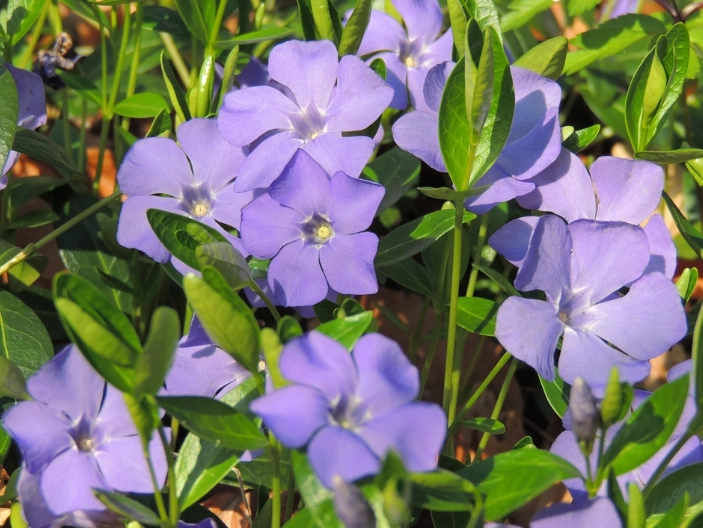
Watering and Feeding: Less is More
Established plants are remarkably drought-tolerant. I rarely water mine, even during dry spells, unless I see the leaves starting to curl or look limp. They bounce back quickly with a drink. Overwatering is a bigger risk than underwatering, as it can encourage root rot.
Fertilizer? Honestly, you can usually skip it. If your soil is very poor or you want to encourage more vigorous growth and flowering, a single application of a balanced, slow-release fertilizer in early spring is plenty. Something like a 10-10-10 scratched lightly into the soil around the plants will do. More than that, and you're just feeding the weeds or making the vinca grow faster than you might want.
Pruning and Controlling the Spread
This is the main "care" task. Perennial vinca doesn't need pruning for health, but it benefits from it for looks and control.
- For Tidiness: Once a year, in late winter or very early spring before new growth starts, go over the patch with a lawn mower set on its highest setting, or use hedge trimmers. This shears off old, tattered leaves and winter-damaged stems, encouraging a flush of fresh, bright green growth and more flowers. It makes a huge visual difference.
- For Control: Keep an eye on the edges. Once or twice a season, use a sharp spade to slice through the runners at the boundary where you want the patch to stop. Lift and remove the excess. It's easy if you do it regularly.
Why is my perennial vinca not flowering as much as I'd like? The most common culprits are too much deep shade (it needs some light to bloom), too much nitrogen fertilizer (which pushes leaf growth over flowers), or simply that the foliage is too old and dense. That annual trim I mentioned works wonders for stimulating blooms.
Propagation: Making More for Free
This is incredibly easy. In spring or early fall, simply cut a 4-6 inch piece of stem, remove the leaves from the bottom half, and stick it in a pot of moist potting mix or directly into a prepared spot in the garden. Keep it watered, and it will root in a few weeks. You can also dig up a small, rooted section of a runner and transplant it. It's a great way to fill in gaps or share with friends.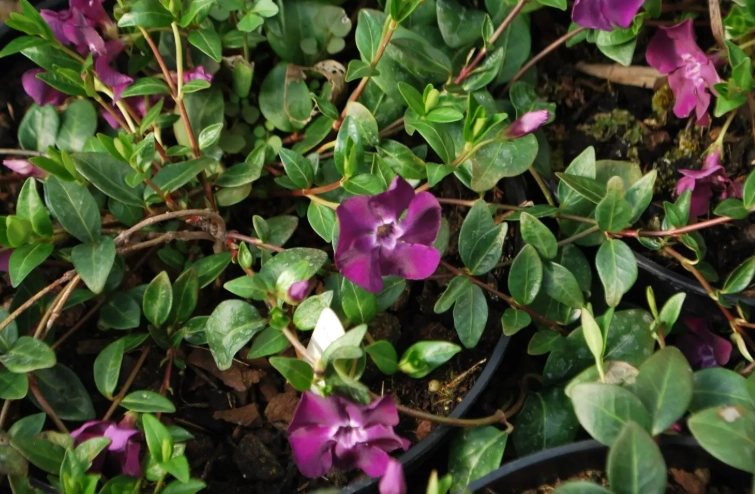
Troubleshooting: Solving Common Perennial Vinca Problems
No plant is completely bulletproof. Here are the issues you might run into, from my experience and from common gardener reports.
Yellowing Leaves: Usually a sign of too much water or poor drainage. Check that the soil isn't soggy. Can also be a sign of a nutrient deficiency in very poor soil, but that's less common.
Bare Patches in the Center (Dieback): This happens sometimes, especially in very dense, old mats. The center gets too thick, lacks light and air circulation, and dies out. The fix is to dig up the entire patch in early spring, divide it, discard the dead center, and replant the healthy outer pieces. It's a bit of work, but it rejuvenates the planting for another decade.
Pests and Diseases: Thankfully, perennial vinca has few serious issues. Slugs and snails might nibble new growth in wet springs. The most significant disease is a fungal stem blight or canker, which causes individual stems to wilt and die back. The best action is to prune out and destroy affected stems, avoid overhead watering, and improve air circulation. The University of Maryland Extension has a good resource on vinca diseases with photos to help diagnose issues.
Final Thoughts: Is Perennial Vinca Right for Your Garden?
So, after all this, where do we land? Perennial vinca is a fantastic, tough, and beautiful plant for specific situations. It's a problem-solver for dry shade, a lawn alternative for tricky spots, and a reliable evergreen presence. The key is to go in with your eyes open.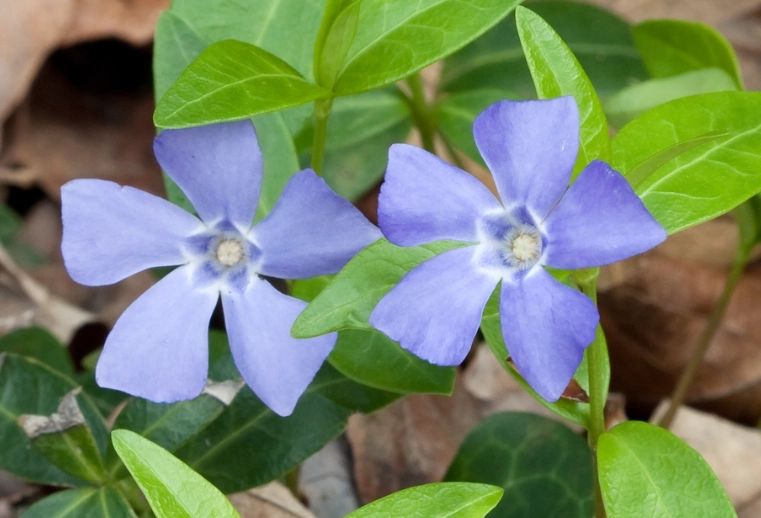
Choose Vinca minor for most controlled garden settings. Be vigilant about checking its invasive potential in your region. Plant it well, give it that first-year care, and then mostly enjoy it and trim it once a year.
It won't give you the floral drama of a peony or the architectural punch of a yucca. But for creating a calm, green, cohesive carpet that ties a shady garden together and asks for almost nothing in return, it's hard to beat. In my own garden, it's the quiet, reliable workhorse in the background, and sometimes, that's exactly what you need.
Just promise me you'll weed that area thoroughly first.