
You put the crate in the corner. The puppy screams like you are pulling teeth. I have been there. Three puppies in, I still flinch at that first night. The steps below are not from a textbook. They come from sitting on the kitchen floor at 2 a.m., wondering if the neighbors will call the cops.
Crate training is not about locking a dog up. It is about building a bedroom they choose to walk into. Get the order wrong, and you get a dog that panics every time the door clicks. Get it right, and you get a dog that naps in there while you vacuum.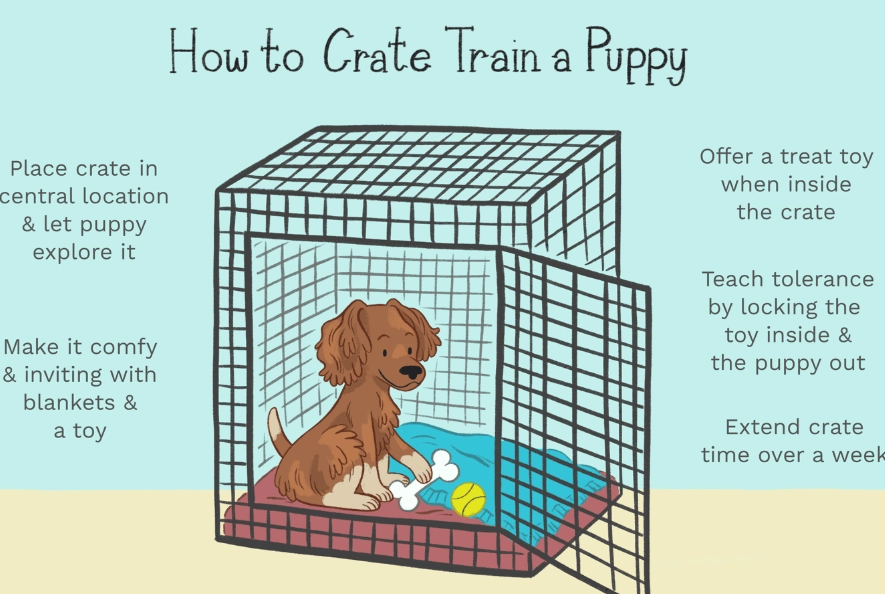
Jump to What You Need
Crate Size and Setup (The Part Most People Rush)
I once bought a crate that was two sizes too big. The puppy peed in one corner, slept in the other. A crate that is too large teaches a dog to soil their bed. The rule is simple: enough room to stand up, turn around, and lie down flat. No more.
Measure your dog from nose to tail base while standing. Add two inches. That is your crate length. Height should be just above the head when standing. If your dog is still growing, use a divider panel.
Location matters more than people think. Put the crate in the room where you spend most evenings. Not the garage. Not the basement. My first puppy cried for an hour because I put the crate in the laundry room. Next night, I moved it next to the couch. Whining dropped by half.
Step-by-Step Crate Training (Do This Order)
Most guides say “introduce the crate slowly.” That is vague. Here is the actual sequence I use. Each step takes one to three days. Do not skip ahead.
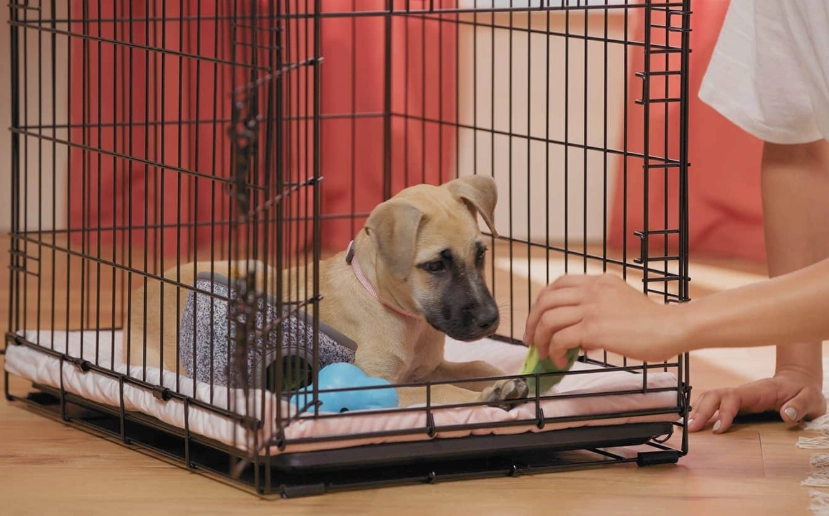
Feed every meal inside the crate with the door open. Toss a treat in. Let the dog walk in and out. Do not close the door. Do this for two days. I put the food bowl just inside the entrance first, then move it to the back. No pressure.
Close the door for five seconds while the dog eats. Open it before they finish. The goal is that the door opening predicts good things. If the dog whines, you went too fast. Go back to step one for a day.
Close the door. Sit next to the crate. Count ten seconds. Open. Toss a treat inside. Repeat five times. I do this after a long walk when the dog is tired. A tired dog learns faster. My current puppy, Max, got this in one afternoon because I timed it after the dog park.
Close the door. Walk to the kitchen. Come back. Open. Build up to two minutes of you being out of sight. This is where most people mess up—they leave for an hour on day three. Then the dog panics. One minute of calm is better than one hour of screaming.
Wait for the dog to get sleepy (after play or food). Guide them into the crate with a treat. Close the door. Stay in the room. Read a book. The first nap should be 20 minutes. Next day, 40 minutes. By day five, my dogs nap for two hours in the crate while I work.
At night, put the crate next to your bed for the first week. Puppies need to hear you breathe. I learned this after a sleepless night with a howling puppy in the kitchen. Moved the crate to my bedroom floor. Silence in ten minutes. You can move the crate to its permanent spot after two weeks.
Crate Training Schedule for Puppies (Hour by Hour)
Puppies under six months cannot hold their bladder for more than a few hours. Here is the schedule I used for a 10-week-old puppy. Adjust times based on your wake-up.
| Time | Action | Duration in Crate |
|---|---|---|
| 6:30 AM | Potty outside, then breakfast inside crate (door open) | 10 minutes |
| 7:00 AM | Play, potty again | 0 |
| 7:30 AM | Crate nap with door closed | 45 minutes |
| 8:15 AM | Potty break, water | 0 |
| 9:00 AM | Chew toy in crate, door closed | 30 minutes |
| 9:30 AM | Potty, play | 0 |
| 10:30 AM | Crate nap | 1 hour |
| 11:30 AM | Potty, lunch in crate (door open) | 10 minutes |
| 12:30 PM | Crate rest | 1 hour |
| 1:30 PM | Potty, training session | 0 |
| 3:00 PM | Crate nap | 1.5 hours |
| 4:30 PM | Potty, dinner in crate (door open) | 10 minutes |
| 6:00 PM | Crate rest while family eats | 45 minutes |
| 7:00 PM | Potty, play, chew time outside crate | 0 |
| 9:30 PM | Potty, then bedtime in crate (next to bed) | Overnight, with one potty break at 1 AM |
That 1 AM potty break is not optional for young puppies. I set an alarm. No talking, no play. Leash on, potty, back in crate. The puppy learns nighttime is boring.
Common Mistakes That Make Dogs Hate the Crate
Some of these are not in the standard guides.
- Feeding right before crate time. A full belly plus a closed door equals a nervous dog. Wait 30 minutes after a meal before locking the door.
- Using a crate that rattles. Wire crates can shake when the dog moves. Put a towel under the crate to stop the noise. Small thing. Big difference.
- Ignoring the “quiet” moment. If the dog stops whining for two seconds, that is your window to open the door. Not when they are screaming. If you open during screaming, you teach them that screaming works.
- Not covering the crate at night. A dark crate helps dogs sleep. But leave the front open for airflow. I use a breathable sheet, not a heavy blanket.
One more thing. If your dog drools heavily or pants in the crate, stop. That is not stubbornness. That is panic. Go back to step one. Crate training steps are not a race. A dog that is forced will take longer than a dog that is coaxed.
FAQ: Real Problems, Real Answers
How long can a puppy cry in the crate before I should let them out?
Five minutes of real distress (pacing, drooling, trying to bite the bars) means you moved too fast. Go back to shorter sessions. But if it is just a protest whine with pauses, wait for a two-second gap of silence, then open. Do not let a puppy cry for 30 minutes. That is not training. That is flooding.
My dog sleeps in the crate fine at night but screams during the day. Why?
Daytime crating means you are awake and moving around. The dog hears you and wants to join. Nighttime works because everyone is quiet. Fix: practice daytime crate time while you sit in the same room. Then move to another room for two minutes. Slowly add time. The dog learns you always come back.
Should I put water in the crate?
For a young puppy or a dog that pants, yes. Use a clip-on bowl with just an inch of water. For adult dogs that spill, offer water before crate time and after. I had a puppy tip the bowl and soak the bedding. Switched to a hamster bottle. Took two days to teach. No more wet crate.
What if my dog pees in the crate every single time?
Check the size first. Too big equals a potty corner. Second, take the dog out right before crating—not five minutes before, but 30 seconds before. Third, the dog might have a urinary tract infection. That is vet territory. Do not punish. Clean with an enzyme cleaner. If the crate smells like pee, the dog will pee there again.
These dog crate training steps are what I use for every foster dog that comes through my door. No fancy equipment. No magic. Just timing and patience. If you hit a wall, shorten the session. That is the whole secret.
This article was fact-checked against the American Veterinary Society of Animal Behavior’s crate training position statement and the Humane Society of the United States’ crate training guidelines.

Comments