Your Plant Care Roadmap
- Watering: The Number One Plant Killer (Yes, Really)
- Let There Be (The Right) Light
- Soil and Potting: It's More Than Just Dirt
- Food, Humidity, and Cleanliness: The Supporting Cast
- The Problem-Solving Clinic: Reading Your Plant's SOS Signals
- Propagation: Making More Plant Babies
- Common Plant Care Questions, Straight Up
- Wrapping It Up: Your Plant Care Mindset
Let's be honest. We've all been there. You bring home a beautiful, lush plant, full of hope. You give it a cute name. You put it in what you think is the perfect spot. And then, slowly, sometimes quickly, it starts to look... sad. Leaves turn yellow. Tips go brown. It droops. You panic, water it more, move it around, maybe talk to it a little desperately. But the decline continues. Finally, you're left with a pot of soil and a deep sense of botanical failure.
I've killed my share. A fern that turned to dust, a succulent that melted into mush from over-love (read: overwatering). It happens. But here's the thing: basic plant care isn't rocket science. It's more like learning a new friend's language. They can't tell you they're thirsty or sunburned, but they show you. Once you learn to read the signs, everything changes.
This guide is for anyone who wants to break the cycle. We're going to move past the vague advice and get into the *why* and *how*. This isn't about having a perfect, Instagram-ready jungle overnight. It's about building confidence. It's about understanding the core needs of your green roommates so you can help them thrive, not just survive.
Think of this as your plant care translation manual. We'll decode the signals, simplify the science, and give you actionable steps that actually work. Forget complex schedules; we're focusing on observation and response.
Watering: The Number One Plant Killer (Yes, Really)
If I had to bet, I'd say overwatering is responsible for more plant deaths than neglect. We mean well! We see a sad leaf and think, "Oh no, it needs a drink!" But often, that sad leaf is drowning. The roots need oxygen as much as they need water. Soggy soil suffocates them, leading to root rot—a nasty, often fatal condition.
So, how do you water correctly? Ditch the calendar.
Seriously. Watering every Saturday because that's what you've always done is a recipe for disaster. Your plant's thirst depends on a million things: the season (plants drink less in winter), the light it gets, the humidity in your home, the type of pot it's in (terracotta dries out faster than plastic).
The Finger Test & Other Moisture Checks
This is the oldest trick in the book because it works. Stick your finger about an inch or two into the soil. For most common houseplants, if it feels dry at that depth, it's time to water. If it feels moist or cool, wait.
For larger pots, a wooden chopstick or skewer can be your moisture meter. Stick it in, leave it for a minute, pull it out. If it comes out clean and dry, water. If it has damp soil sticking to it, hold off.
You can also learn the weight of your pot. Lift it right after you water. Feel how heavy it is. Lift it again a few days later. When it feels significantly lighter, that's a good cue.
Biggest Watering Mistake: Giving little sips frequently. This only wets the top layer of soil, encouraging roots to grow shallowly. Instead, when you water, water thoroughly. Pour slowly until you see water running freely out of the drainage holes at the bottom of the pot. This ensures the entire root ball gets hydrated. Let the pot drain completely—never let it sit in a saucer full of water.
What Kind of Water?
Tap water is usually fine for most plants. But if you have very hard water or heavily chlorinated water, some sensitive plants (like calatheas, spider plants, or dracaenas) can get brown leaf tips. If you notice this, try using filtered water, rainwater, or just fill your watering can and let it sit out overnight so some of the chlorine can dissipate. It's a small thing that can make a big difference for fussy foliage.
Here’s a quick reference for some popular plants and their thirst levels. Remember, this is a starting point—always check the soil!
| Plant | Watering Style | Key Sign It's Thirsty |
|---|---|---|
| Snake Plant | Very Low. Let soil dry out completely between waterings. Loves neglect. | Soil is bone dry for weeks. Leaves may wrinkle slightly. |
| ZZ Plant | Very Low. Similar to snake plant. Drought-tolerant champion. | Pot feels very light. Can go weeks without water. |
| Pothos & Philodendron | Moderate. Let top 1-2 inches of soil dry out. | Leaves start to droop or look slightly limp. |
| Spider Plant | Moderate. Likes to dry out a bit between waterings. | Leaves lose their bright green color, may turn pale. |
| Peace Lily | Moderate to High. Likes consistently moist (not wet) soil. | Dramatic drooping. It will tell you very clearly. |
| Ferns (e.g., Boston Fern) | High. Prefers soil that never dries out completely. | Fronds turn crispy and brown at the tips. |
| Fiddle Leaf Fig | Moderate. Let top 2 inches dry. Very sensitive to overwatering. | Top soil is dry. New growth may slow. |
See? It varies. A one-size-fits-all approach to plant care is where most problems begin.
Let There Be (The Right) Light
Light is food for plants. They use it for photosynthesis. No light, no growth. But just like us with sunburn, too much of the wrong kind of light can hurt.
Those little tags that say "low light" are often misleading. "Low light" does not mean "no light." It usually means no direct sunbeams hitting the leaves, but still a decent amount of ambient brightness. A plant placed in a dark corner, far from any window, is probably getting "no light" and will slowly decline.
Decoding Light Levels
- Bright Direct Light: A sunny south or west-facing window where the sun's rays directly hit the plant for several hours a day. Great for cacti, succulents, fiddle leaf figs (acclimated), and many flowering plants.
- Bright Indirect Light: The gold standard for most tropical houseplants. This is a very bright room where the plant is near a window but the sun's rays never directly touch its leaves (think filtered through a sheer curtain, or the plant is off to the side of the window). Monsteras, pothos, philodendrons, snake plants, and ZZ plants adore this.
- Medium Light: Areas a few feet back from a bright window, or in a room with an east-facing window that gets gentle morning sun. Still good light for many plants.
- Low Light: North-facing windows or spots several feet back from any other window. Only a few truly tough plants (like snake plants, ZZ plants, and some pothos) can tolerate this long-term, and they won't grow quickly.
Pro Observation Tip: Can you comfortably read a book in that spot during the day without turning on a light? If yes, it's probably at least medium light. If it's too dim to read, it's likely too dark for most plants.
Plants will tell you about their light situation, too. Leggy growth with long spaces between leaves? It's stretching desperately for more light. Leaves looking pale or washed out? Might be too much direct sun, bleaching them. Leaves turning yellow and dropping? Could be not enough light.
For truly in-depth, science-backed information on how light affects plant growth, resources from university agricultural extensions are invaluable. The University of Minnesota Extension, for example, has excellent articles on indoor plant lighting that explain concepts like foot-candles and photoperiod without the fluff.
Soil and Potting: It's More Than Just Dirt
That stuff in the pot is your plant's home. It provides anchorage, nutrients, and, critically, the balance of air and water for the roots. Using the wrong soil is like making someone live in shoes that don't fit.
Bagged potting mix from the garden center is a start, but it's often too dense and moisture-retentive on its own for long-term indoor plant care. Many houseplants, especially those prone to root rot, benefit from a mix that drains faster.
I often make my own simple mix: two parts regular potting soil, one part perlite (those little white balls that look like styrofoam—they aerate the soil), and one part orchid bark (for chunkiness and drainage). This creates an airy, well-draining environment that most roots love. For succulents and cacti, I'll add even more perlite or some coarse sand.
Here’s a breakdown of common soil amendment components:
| Component | What It Does | Best For |
|---|---|---|
| Perlite | Improves aeration and drainage. Prevents compaction. | Almost all houseplants to prevent soggy soil. |
| Orchid Bark/Pine Fines | Adds chunkiness, improves drainage, mimics forest floor. | Aroids (Monstera, Philodendron), epiphytes, orchids. |
| Coco Coir | Peat moss alternative. Retains moisture but is renewable. | A sustainable choice for moisture-loving plants. |
| Vermiculite | Holds water and nutrients, then releases them slowly. | Seed starting, plants that like consistent moisture. |
| Horticultural Charcoal | Helps filter impurities, can deter microbes. | Often used in terrariums or closed systems. |
When and How to Repot
Repotting isn't an annual chore. Repot when the plant is root-bound (roots are circling tightly at the bottom of the pot or growing out the drainage holes) or when the soil is exhausted and breaks down. Spring or early summer is the best time, when the plant is entering its active growth phase.
Only go up one pot size (1-2 inches larger in diameter). A pot that's too big holds too much wet soil around a small root ball, inviting rot. Always use a pot with drainage holes. I don't care how cute the ceramic pot without a hole is—it's a death trap. Use it as a decorative cache pot and keep your plant in a plastic nursery pot inside it.
Food, Humidity, and Cleanliness: The Supporting Cast
Fertilizing: Don't Overthink It
Plants in pots use up the nutrients in their soil. Fertilizer replenishes them. But more is not better. Over-fertilizing can "burn" roots and cause sudden leaf drop or crispy edges.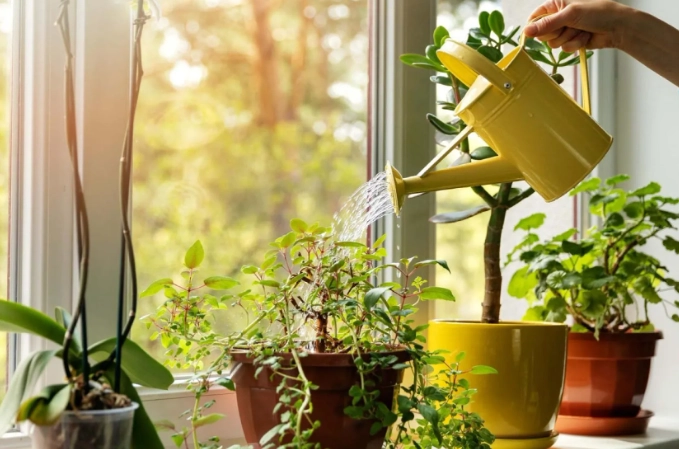
A simple rule: fertilize during the growing season (spring and summer) and take a break in fall and winter when growth slows. Use a balanced, water-soluble fertilizer (look for an NPK ratio like 10-10-10 or 20-20-20) and dilute it to half the strength recommended on the bottle. I feed my plants maybe once a month, if I remember. It's better to under-fertilize than overdo it.
Humidity: A Big Deal for Some
Most homes have lower humidity than tropical rainforests (shocking, I know). This is why plants like ferns, calatheas, and some philodendrons get crispy leaf tips. They're craving moist air.
You don't need a whole-house humidifier. Grouping plants together creates a little microclimate. Placing pots on a tray filled with pebbles and water (keep the pot above the water line) helps. Misting? It provides a temporary boost, but it's not a long-term solution and can encourage fungal issues on some leaves. A small humidifier near your plant collection is the most effective fix.
Dust Those Leaves!
Dust on leaves blocks light. Gently wipe large leaves with a damp cloth every few weeks. For smaller-leaved plants, a gentle shower in the sink or outside can do wonders. It also helps prevent pest infestations.
The Problem-Solving Clinic: Reading Your Plant's SOS Signals
This is where practical plant care gets real. Let's diagnose some common issues.
Yellow Leaves: The most common cry for help. It can mean almost anything, but context is key.
- Older leaves yellowing slowly: Could be natural aging.
- Many leaves yellowing, especially with wet soil: Classic overwatering/root rot.
- Yellowing all over, with dry soil: Underwatering.
- Yellowing with poor growth: Possibly not enough light or need for fertilizer.
Brown Crispy Leaf Tips:
Usually low humidity or inconsistent watering (letting the plant get too dry, then over-compensating). Can also be from fluoride/chlorine in tap water or salt buildup from fertilizer. Try flushing the soil with water every few months to leach out excess salts.
Dropping Leaves:
Sudden leaf drop is often a stress response. Did you just move it? Is there a draft (hot or cold)? Dramatic temperature change? Fiddle leaf figs are notorious for this. Sometimes it's also a sign of overwatering. Check the roots—if they're brown and mushy, it's root rot.
Leggy, Stretched Growth:
Not enough light. The plant is elongating its stems to reach for a light source. Move it closer to a window.
Pests?
Check the undersides of leaves and stems. Tiny webs (spider mites), little white cottony blobs (mealybugs), small immobile bumps (scale). Isolate the affected plant immediately. Wipe leaves with insecticidal soap or a solution of water with a few drops of mild dish soap. Neem oil is a popular organic option. Persistence is key.
For reliable, detailed pest identification and management strategies, the Royal Horticultural Society (RHS) website is a fantastic, trustworthy resource. They provide clear photos and control methods.
Propagation: Making More Plant Babies
This is the most rewarding part of plant care! Taking a piece of your plant and growing a whole new one feels like magic. It's also a safety net—if your main plant has a bad accident, you have its offspring.
The easiest method for many common vining plants (pothos, philodendron, tradescantia) is stem cuttings in water.
- Cut a piece of stem with at least one node (that little bump where a leaf meets the stem, or where roots will emerge).
- Remove any leaves that would be submerged.
- Place the cutting in a jar of water, ensuring the node is under water.
- Put it in bright, indirect light.
- Change the water every week or so.
- Wait for roots to grow a couple of inches long, then pot it up in soil.
Some plants, like snake plants and ZZ plants, can be propagated from leaf cuttings. Others, like spider plants, do the work for you and produce little plantlets on runners. It's fun to experiment.
Common Plant Care Questions, Straight Up
Wrapping It Up: Your Plant Care Mindset
At the end of the day, successful plant care is about paying attention. It's a relationship. You're not following a rigid set of rules, but responding to what your plant is telling you. Start with one or two easy plants. Master their language. Learn what dry soil feels like for them. See how they react to their spot in your home.
Don't be afraid to make mistakes. I've killed plants that "everyone" says are easy. It happens. Each failure teaches you something. Maybe that particular spot is draftier than you thought. Maybe that beautiful glazed pot without a hole is a bad idea (it is).
The goal isn't perfection. It's having a bit of green life in your space that you understand and can care for with confidence. It's about the quiet satisfaction of seeing a new leaf unfurl, knowing you provided the right conditions for it to happen. That's the real joy of being a plant parent. Now go check on your plants—use the finger test!
Reader Comments