You bring home a gorgeous bouquet, trim the stems, plop them in a vase with water, and... it just looks okay. Maybe a bit messy, like the flowers are fighting each other for space. I've been there. The gap between having beautiful flowers and creating a beautiful flower arrangement feels wide when you're starting out. But here's the secret: it's not about innate talent. It's about understanding a handful of foundational techniques that professional florists use every single day. This guide strips away the mystery. We'll walk through the real, practical steps—the tools, the common blunders, the simple rules of structure—that will transform how you handle flowers, whether they're from the farmers market or your own backyard.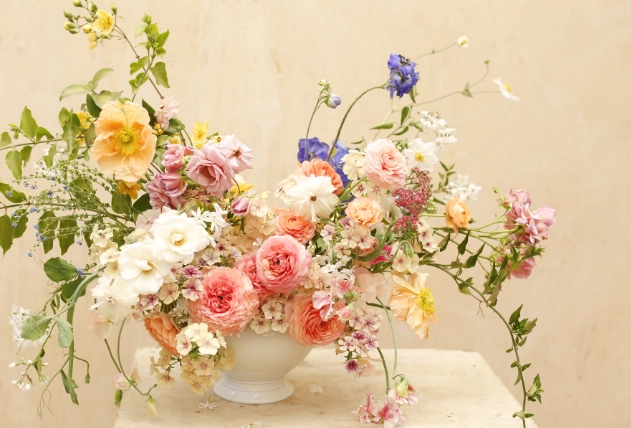
What You'll Learn in This Guide
Essential Tools for Flower Arranging (You Don't Need Much)
Forget the fancy catalogs. You can create 90% of stunning arrangements with a very basic kit. The goal is clean cuts and control.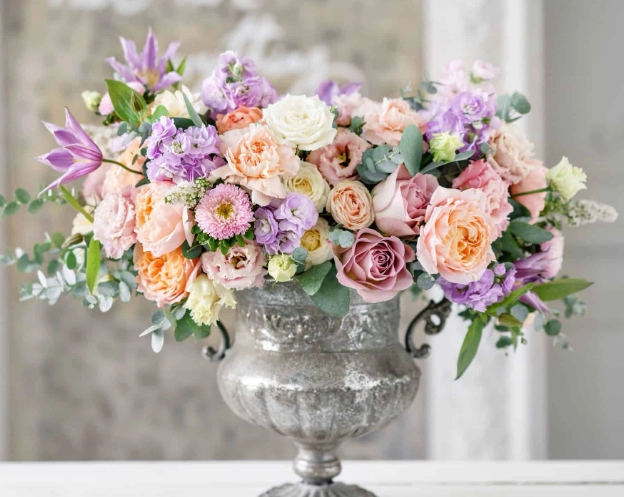
| Tool | Why It's Essential | Budget-Friendly Alternative |
|---|---|---|
| Floral Shears / Snips | Provides a sharp, clean cut that doesn't crush stems. Crucial for hydration. The American Institute of Floral Designers emphasizes proper cutting tools for longevity. | A very sharp, dedicated pair of bypass pruners from the garden center. |
| A Clean Vase | Bacteria from old arrangements is the #1 cause of premature wilting. Shape dictates design—a cylinder offers modern simplicity, a bowl suits garden-style. | Any thoroughly washed container. Mason jars, pitchers, even ceramic mugs can work. |
| Floral Tape (Waterproof) or Rubber Bands | Creates a grid or binds stems at the neck of the vase for control. This is the hidden trick to keeping stems where you want them. | Clear scotch tape in a pinch (applied above the waterline), or simple rubber bands. |
| Floral Frog (Kenzan) or Foam | Essential for low, wide bowls or intricate designs where stems need anchor points at specific angles. | For a beginner, start with tall vases where you don't need these. Criss-crossed clear tape over the vase mouth works as a makeshift grid. |
Conditioning Your Flowers: The Step Everyone Skips
Conditioning is preparing flowers to drink deeply and last. Skipping this is like expecting an athlete to perform without hydration. Here's the non-negotiable process:
- Strip Lower Foliage: Remove any leaves that will sit below the waterline. Leaves rot, breed bacteria, and stink.
- Cut at a 45-Degree Angle: Do this under lukewarm running water if possible. The angle increases the surface area for drinking and prevents the stem from sitting flat on the vase bottom.
- Use Warm Water (Initially): Warm water has less oxygen and moves up stems faster than icy water, giving your flowers an initial hydration boost. Let it cool naturally.
- Let Them Drink Deeply: Place your prepped stems in a deep bucket or clean sink of water for at least 2-4 hours, ideally overnight, in a cool, dark place. This is their beauty sleep.
How to Arrange Flowers: A Step-by-Step Guide for Your First Design
Let's build a classic, rounded arrangement in a medium-height vase. Grab 15-20 stems: 5 focal flowers (like roses or tulips), 7-8 secondary flowers (spray roses, ranunculus), and 5-7 stems of filler (baby's breath, solidago) and greenery (eucalyptus, ruscus).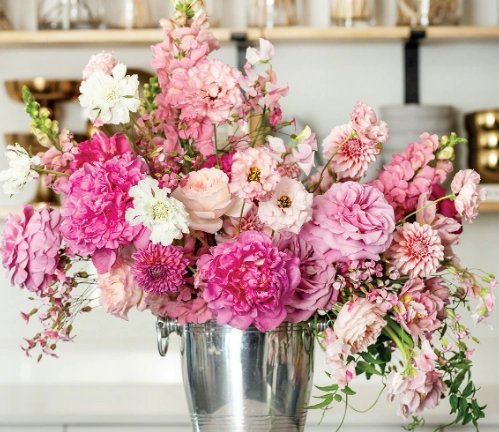
Step 1: Create Your Green Foundation
Start with your greenery. It builds the shape and hides the mechanics. Place a few taller pieces in the back for height, then create a "skirt" around the rim of the vase. Don't just circle it—aim for a loose, asymmetric triangle shape. This feels more natural.
Step 2: Place Your Focal Flowers
Add your largest, most beautiful blooms. Place one in the center, slightly lower than the greenery height. Then place the others at key points—left, right, and slightly forward. They should be at different heights but within the general dome shape you're creating. Turn the vase as you work.
Step 3: Fill in with Secondary Blooms and Texture
Use your smaller flowers to fill gaps between the focal flowers. Let some peek out, others nestle deeper. This adds volume and color layers. Finally, tuck in the airy filler. Its job is to add lightness and cover any remaining mechanics, not to dominate.
Step 4: The Final Check & Hydration
Walk away for five minutes. Come back and look from all sides. Is there a glaring hole? Does it look balanced but not boring? Adjust a stem or two. Then, ensure your water is clean and topped up. Add flower food if you have it.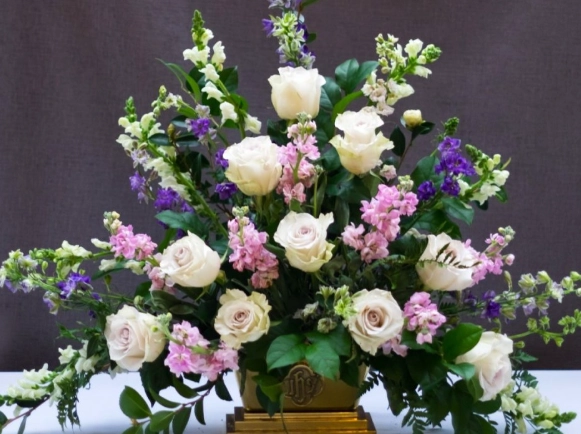
3 Professional Secrets to Transform Your Results
These aren't just tips; they're mindset shifts that solve the most common frustrations.
1. Work with Odd Numbers. The human eye finds odd-numbered groupings (3, 5, 7) more pleasing and natural than even numbers. When placing your focal flowers, think in clusters of three. It automatically creates better rhythm.
2. Respect Negative Space. This is the big one. The space between the flowers is part of the design. It's where light plays and each bloom can breathe. Overcrowding is the hallmark of a beginner. Give each stem a little room. If your arrangement looks tense, you probably need to remove 2-3 stems, not add more.
3. Think in Terms of Shape, Not Just Flowers. Before you put a single stem in water, decide on a shape: a dome, a vertical line, a loose horizontal cascade. Let that shape guide every placement. Your greenery outlines it, your flowers fill it. This intentionality is what separates a "bunch in a vase" from an arrangement.
From Theory to Practice: A Week of Table Arrangements
Let's apply this to a real-life scenario. You buy a mixed bouquet on Sunday. How can you make it last and feel fresh all week?
Monday: Create your main, full arrangement for the dining table using the steps above. Use about 60% of your flowers.
Wednesday: The main arrangement might be looking a little tired. Don't just top up the water. Edit it. Pull out any flowers that are past their prime. Recut the remaining stems and refresh the water. Take the still-good flowers you removed and combine them with any leftover greenery from Sunday to make a small, low arrangement for the kitchen windowsill or bathroom. A tiny bud vase with a single rose and a sprig of eucalyptus can be stunning.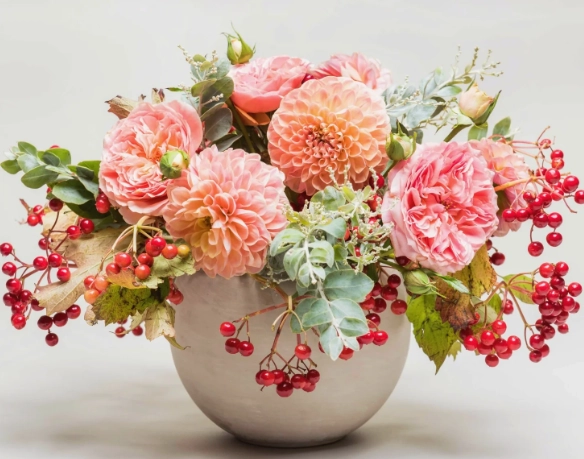
Friday: By now, you might be down to the hardiest blooms (like alstroemeria or chrysanthemums) and the greenery. Strip the greenery of any remaining flowers. Place the greenery alone in a slender vase. It creates a minimalist, sculptural look that's perfect for the weekend. You've maximized every bit of your initial purchase.
Your Flower Arranging Questions, Answered
The real joy of flower arranging isn't in achieving perfection. It's in the process—the quiet focus of conditioning stems, the playful problem-solving of balancing colors and shapes, the small daily ritual of changing the water. It's a skill that slows you down and rewards you with beauty. Start simple. Buy one type of flower and a bunch of greenery. Practice the steps. Notice what works. Your eye will develop faster than you think, and soon, that gap between having flowers and creating an arrangement will disappear completely.