Your Quick Guide
- A Story in Every Petal: The History and Meaning of Carnations
- Not All Carnations Are Created Equal: Understanding the Types
- The Secret to Carnations That Last (Almost) Forever: Care Guide
- Carnations in Action: From Weddings to Your Dining Table
- Answering Your Carnation Questions (The Stuff You Actually Google)
- The Final Word: Giving Carnations a Second Chance
Let's be honest. For a lot of people, carnations get a bad rap. They're the filler flower, the budget option, the "default" choice that lacks the glamour of roses or the trendiness of peonies. I used to think that way too. Then, a friend who's a professional floral designer sat me down with a bunch of stunning, ruffled, bi-colored carnations that smelled faintly of cloves. My perspective completely changed.
There's a whole universe of carnation flowers that most of us never see. We're talking about centuries of history, a language of colors more nuanced than you'd expect, and a toughness that makes them a beginner gardener's best friend. This isn't just about the red or white ones you see on holidays. It's about understanding why they've persisted for so long and how to get the most out of them, whether in your garden or your vase.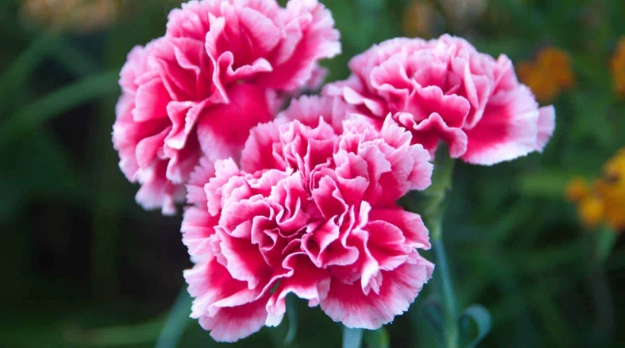
So, why should you care about carnations? Maybe you're tired of buying cut flowers that wilt in two days. Maybe you want a garden flower that won't give up at the first sign of heat. Or perhaps you're choosing a bouquet and want to know if a pink carnation sends the right message. That's what we're diving into here. This is the stuff I had to piece together from old gardening books, florist forums, and a bit of trial and error in my own backyard.
The Core Truth: Carnations (Dianthus caryophyllus) are arguably one of the most misunderstood and undervalued flowers in the world. Their commonness hides an incredible story of resilience, variety, and symbolism.
A Story in Every Petal: The History and Meaning of Carnations
You can't really appreciate carnation flowers without knowing where they've been. The name "carnation" might come from "coronation" or "corone" (flower garlands), but its scientific name, Dianthus, given by the Greek philosopher Theophrastus, tells a more romantic story. It translates to "divine flower" (dios) or "flower of the gods" (a nod to Zeus). Not bad for a plant often dismissed as cheap.
They've been cultivated for over 2,000 years. Imagine that. Romans and Greeks used them in art and ceremonies. Fast forward to the Victorian era, when the whole "language of flowers" thing was huge, and carnations became a texting system before phones existed. The color you chose was your entire message.
This symbolism is still relevant today, especially when you're picking a bouquet. Getting it wrong can send mixed signals. Here’s the breakdown that most florists work with:
- Light Pink Carnations: This is the big one. They symbolize a mother's undying love. This is why they exploded in popularity for Mother's Day. It's a specific, heartfelt meaning.
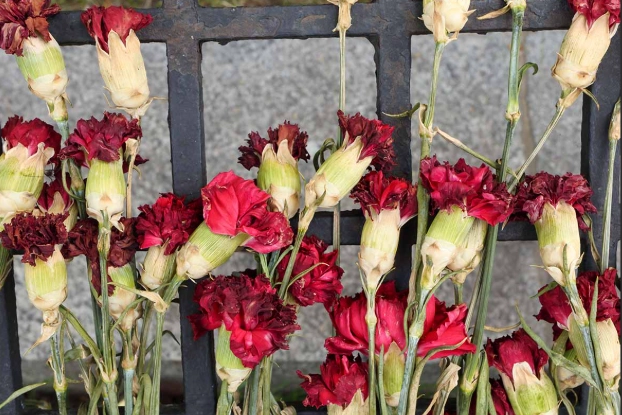
- Deep Red Carnations: Here's where it gets tricky. Deep red means admiration, affection, and longing. It's passionate but not quite the "deep romantic love" of a red rose. It's a "I adore you" versus "I am *in* love with you." A subtle but important difference.
- White Carnations: Pure love, innocence, good luck. They're also, sadly, associated with remembrance, making them a common choice for sympathetic bouquets. A pure, versatile meaning.
- Solid Pink Carnations: Gratitude. A simple "thank you." Perfect for a teacher, a mentor, or a friend who helped you out.
- Yellow Carnations: Ah, the controversial one. Historically, yellow meant rejection or disappointment. Modern floristry has tried to soften this to friendship and joy, but the old meaning lingers. I'd be cautious giving these unless you know the recipient sees them the new way. Some people, especially older generations, might still get the wrong idea.
- Purple Carnations: Capriciousness, unpredictability. The rarest of the common colors, they're for when you want to send something unique and a bit mysterious.
See what I mean? There's a depth here. Choosing a striped or bi-colored carnation adds another layer, often seen as a refusal or a "sorry, I can't be with you" in the Victorian language. Today, we just think they look cool.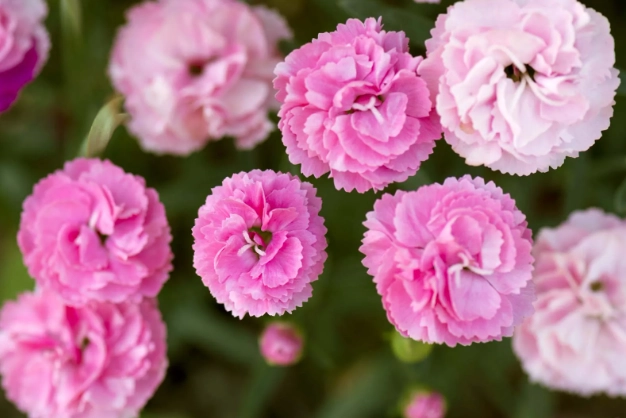
I made the yellow carnation mistake once. Sent a cheerful yellow bouquet to a friend for her new job. Her grandmother saw it and was mildly horrified, asking if someone was sending a message of disdain. We laughed it off, but it taught me that flower history runs deep.
Not All Carnations Are Created Equal: Understanding the Types
This is where most generic articles stop. They talk about color meaning and basic care. But if you walk into a specialty nursery or a high-end flower market, you'll realize there are distinct classes of carnation flowers. Knowing these helps you buy smarter and grow better.
Commercial florists categorize them mainly by stem length and bloom size, which directly relates to their use.
The Florist's Carnation (Standard Carnations)
These are the ones you know. Single, large bloom on a long, sturdy stem (often 24 inches or more). They're bred for durability, vase life, and uniformity. Perfect for formal arrangements and bouquets where each flower is a star. The downside? Some varieties bred purely for looks and shipping have lost that lovely, spicy clove scent. A real shame, in my opinion.
Spray Carnations (Mini Carnations)
My personal favorite for home vases. One stem produces a burst of smaller blooms—anywhere from 3 to 7 flowers. They create instant fullness and a more casual, garden-style look. They're often more affordable than standards and, in my experience, sometimes last even longer. They're fantastic for mixed arrangements, centerpieces, or just a cheerful bunch in a mason jar.
Dwarf Border Carnations
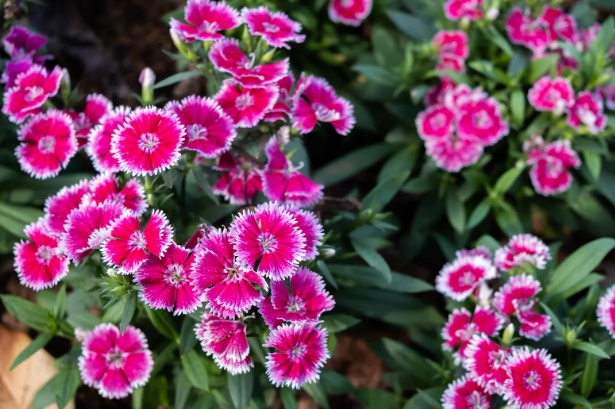
This is the gardener's domain. These are compact, bushy plants meant for the front of flower beds, edges, or containers. They have multiple smaller stems with proportionally sized blooms. They lack the long stems for cutting but make up for it with prolific flowering and charm. If you want carnation flowers in your garden for color and fragrance, not for cutting, these are your go-to.
Then there are the fancy cultivars. The ones that make you say, "Wait, *that's* a carnation?"
- Novelty or 'Fancy' Carnations: These have exotic patterns—deep burgundy edges on white, vibrant stripes, or freckles. They're stunning and command higher prices.
- Clove-Scented Heirlooms: Some specialty growers and heirloom seed companies offer varieties prized specifically for their intense, nostalgic fragrance. It's worth seeking these out.
To make it easier to choose, here’s a quick guide:
| Type | Best For | Stem Length | Bloom Style | My Take |
|---|---|---|---|---|
| Standard Carnation | Formal bouquets, corsages, single-stem displays | Very Long (20"+) | One large bloom per stem | Classic and reliable, but can lack personality. |
| Spray Carnation | Mixed arrangements, budget-friendly bunches, casual decor | Medium to Long | Multiple smaller blooms per stem | More bang for your buck, lasts forever in a vase. |
| Dwarf/Border Carnation | Garden borders, containers, fragrant ground cover | Short | Many small blooms on a bushy plant | The unsung hero for easy, colorful garden beds. |
The Secret to Carnations That Last (Almost) Forever: Care Guide
Here's the practical stuff you actually need. The reputation of carnation flowers for longevity isn't a myth—it's a fact, but only if you treat them right. I've had spray carnations look fresh for over three weeks. Here’s how.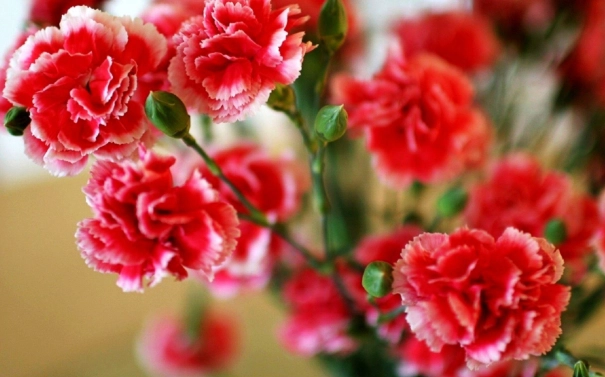
For Cut Carnation Flowers in a Vase
Most people just plop them in water. Don't do that. You're wasting their potential.
- Prep the Water: Use a clean vase. Fill it with lukewarm water and add the flower food packet that comes with the bouquet. This isn't just sugar; it has biocides to keep bacteria down, which is the #1 killer of cut flowers. If you have no packet, a tiny drop of bleach (like 1/4 teaspoon per gallon) and a spoon of sugar can be a DIY substitute, but commercial food is better.
- Recut the Stems: This is non-negotiable. With sharp shears or a knife, cut about 1-2 inches off the bottom of each stem at a 45-degree angle. Do this under running water or with the stem submerged if possible. Why? It prevents an air bubble from blocking the stem's water uptake. Do it right before placing them in the prepared vase.
- Strip the Leaves: Remove any leaves that will sit below the waterline. They'll rot and foul the water.
- Location is Key: Keep them away from direct sunlight, heating vents, ripening fruit (ethylene gas makes them age faster), and drafts. A cool room is their best friend.
- Maintenance: Change the water completely every 2-3 days. Each time you change it, re-trim the stems by another half inch. Wipe out the vase to remove any slime. This simple routine doubles or triples their life.
Pro Tip I Learned the Hard Way: If your carnations start to droop at the head prematurely, it's often a stem blockage. Try re-cutting the stem under water and placing them in warm (not hot) water for an hour. They can often perk right back up. They're that tough.
For Carnation Plants in Your Garden
Want to grow your own? They're surprisingly easy, which is why they're a staple for community gardens and beginners.
What They Love:
- Sun: Full sun. At least 6 hours. More is better.
- Soil: Well-draining soil is CRITICAL. They hate wet feet. If you have heavy clay, plant them in a raised bed or container. They prefer a neutral to slightly alkaline soil pH.
- Watering: Water deeply but infrequently, allowing the soil to dry out a bit between waterings. They are drought-tolerant once established. Overwatering will cause root rot faster than anything.
What They Hate:
- Constant moisture around the stems.
- High humidity with poor air circulation (can lead to fungal issues).
- Being planted too deep.
Getting More Blooms: The magic word is "deadheading." This means snipping off the spent flower heads right down to the next set of leaves. This tells the plant to stop making seeds and put energy into more flowers instead. If you're growing the tall cutting types, you might need to support them with a thin stake.
I've found perennial carnation varieties to be hardy, but they don't like being crowded. Give them space for air to move. Every few years, you can divide clumps in early spring to rejuvenate them and get new plants for free.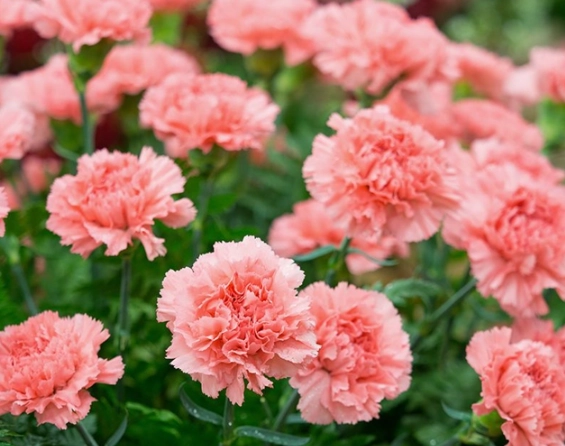
Carnations in Action: From Weddings to Your Dining Table
Let's squash the idea that carnations are "cheap" or "not elegant." It's all about how you use them. Floral designers are increasingly using them in high-end designs for texture, color, and reliability.
- Weddings: Their longevity makes them a bride's secret weapon. They won't wilt during a long ceremony or a warm reception. Spray carnations are perfect for bridesmaids' bouquets, boutonnieres, and dense centerpieces. The cost savings compared to, say, garden roses, is massive, allowing for bigger, lusher arrangements.
- Home Decor: A monochromatic bunch of peach or lavender carnations in a sleek vase looks incredibly modern. Mix spray carnations with greenery like eucalyptus or rosemary for a simple, fragrant table setting.
- Drying: Carnations are one of the best flowers for air-drying. Hang a bunch upside-down in a dark, dry, well-ventilated place. They retain their color and form beautifully for dried arrangements that last years.
The key is presentation. Ditch the tight, plastic-wrapped supermarket bunch. Loosen them up, combine colors and types, and treat them like the versatile flowers they are.
Answering Your Carnation Questions (The Stuff You Actually Google)
The Final Word: Giving Carnations a Second Chance
Look, I get it. We're all drawn to the exotic and the new. But there's a reason carnation flowers have been cultivated for two millennia. They're resilient, expressive, long-lasting, and incredibly diverse once you look past the most basic varieties.
Their value isn't just in their low cost; it's in their high performance. In a world where sustainability matters, a flower that doesn't need to be flown across the globe and lasts for weeks in a vase has a lot going for it. When you choose carnations, you're choosing a flower with history, a coded language, and an almost stubborn will to live and bring joy.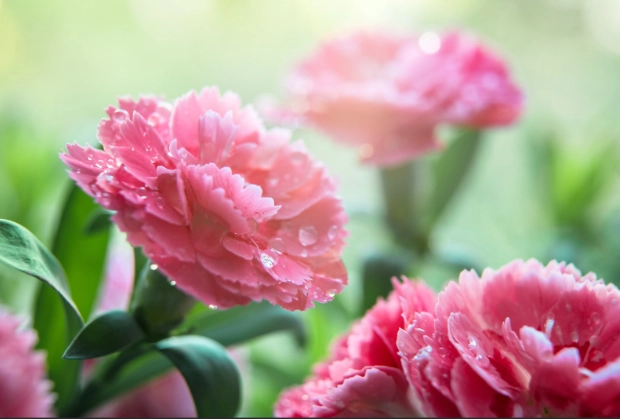
Next time you see them, don't just walk by. Take a closer look. Smell them. Notice the intricate ruffles on the petals. Think about the message their color might send. You might just find, like I did, that the most fascinating flower isn't always the rarest or most expensive one—it's the one with the best story to tell and the toughest spirit. And that, in my book, is what makes carnations truly special.