Quick Guide
- What Exactly Is an Espalier Apple Tree?
- Getting Started: Your First Steps
- Selecting Your Espalier Apple Tree
- The Planting Process: Setting the Stage
- Training and Pruning: The Heart of the Craft
- Ongoing Care: Beyond the Pruners
- Popular Espalier Patterns to Try
- Common Questions (And Straight Answers)
- A Final Thought from My Garden
Let's be honest. The dream of having your own apple tree often crashes into the reality of a small backyard, a tiny patio, or just not wanting a giant tree taking over the garden. I get it. For years, I thought growing apples was off the table for me. Then I stumbled upon the ancient art of espalier apple training, and honestly, it felt like discovering a gardening superpower.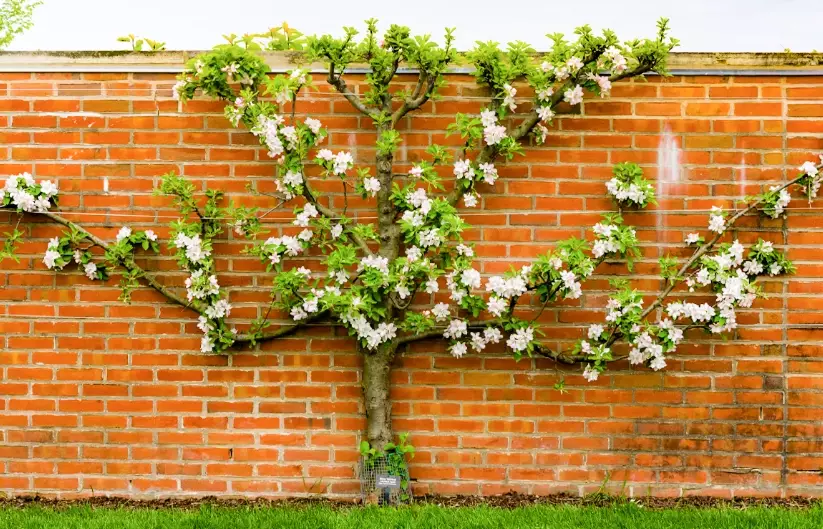
It's not some fancy, impossible technique reserved for grand European estates. It's a practical, space-saving method that lets you grow beautiful, productive apple trees flat against a wall or fence. Think of it as a living fruit fence. You get all the joy of homegrown apples—the crisp bite, the unbeatable flavor—without needing an orchard.
This guide is everything I wish I'd had when I started. We'll walk through the whole process, from picking the right tree to training those first branches. I'll share my wins and my mistakes (there were plenty) so you can skip the frustrating parts.
What Exactly Is an Espalier Apple Tree?
At its core, espalier is a method of pruning and training a tree to grow in a flat, two-dimensional plane. The word itself comes from the Italian spalliera, meaning "something to rest the shoulder against," which hints at its traditional use against walls.
An espalier apple tree isn't a special dwarf variety. It's a regular apple tree whose growth is meticulously directed. By selectively pruning and tying new shoots to a support structure, you create a living sculpture that's as decorative as it is fruitful. It's perfect for lining a garden path, covering a bare wall, or defining a boundary.
Why bother? The benefits are surprisingly many.
First, space. You can grow an apple tree in a strip of land just a couple feet wide. For urban and suburban gardeners, this is a game-changer. Second, the formal structure is stunning. A mature espalier adds instant, year-round elegance to a garden. Third, it makes care easier. Pruning, pest inspection, and harvesting are all done at arm's reach—no ladders needed. And because the tree is open and airy, sunlight penetrates evenly, which can mean better color and flavor in the fruit and fewer disease problems.
Getting Started: Your First Steps
Jumping in without a plan is the quickest way to get discouraged. Setting up correctly from the start makes all the difference.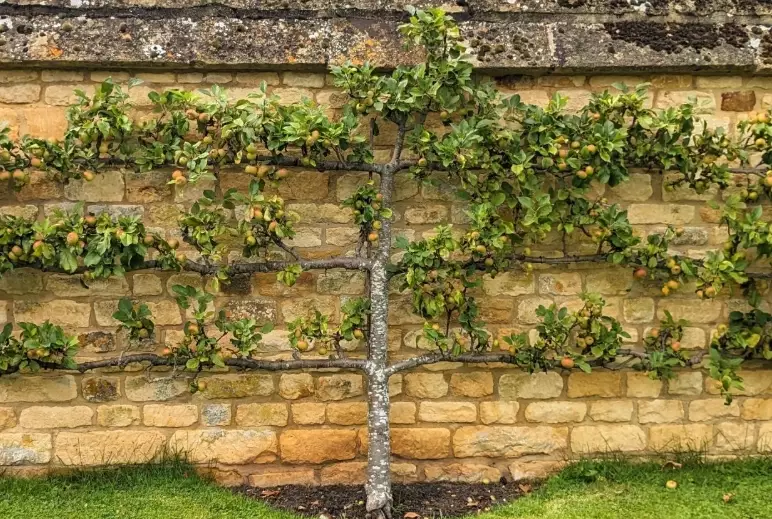
Choosing the Perfect Spot
Sunlight is non-negotiable. Apple trees need a minimum of 6-8 hours of direct sun daily to produce good fruit. A south or southwest-facing wall is ideal, as it absorbs heat during the day and radiates it at night, creating a microclimate that can help fruit ripen. An open fence in full sun works brilliantly too.
Consider what's behind the wall. Is it your house? A garden shed? Make sure the area has good air circulation and isn't a damp, stagnant corner. Also, think about soil. It needs to be well-draining. If you have heavy clay, you'll want to amend it generously with compost or consider building a raised bed.
The Support System: Don't Skimp Here
This is where I made an early mistake. I used flimsy wire that sagged under the weight of growing branches. Your support needs to be permanent and sturdy enough to hold the mature weight of the tree, which can be substantial when laden with fruit.
You have two main options: a trellis or wires. A wooden or metal trellis is quick to install. The better, more traditional method is to install horizontal wires. Use heavy-gauge galvanized wire (12-gauge is good) strung between strong eye bolts or vine eyes screwed into the wall or sturdy posts. Space the wires about 12-16 inches apart vertically.
Selecting Your Espalier Apple Tree
Not every apple tree is equally suited to the disciplined life of an espalier. Your choice here is critical.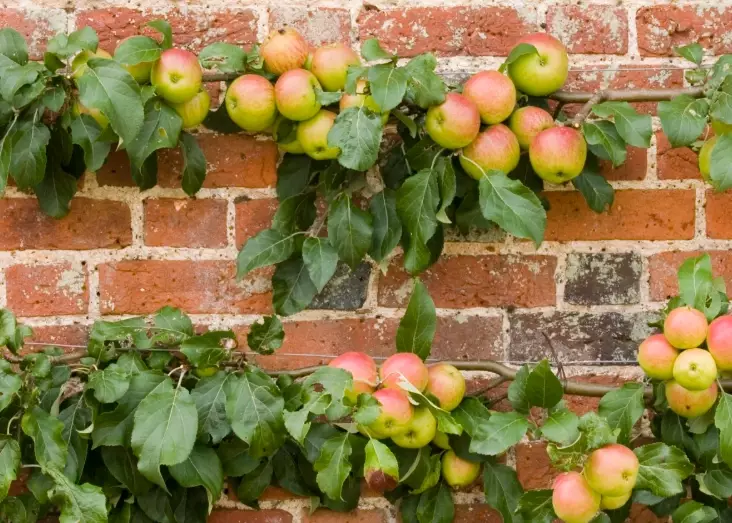
You want a tree on a dwarfing or semi-dwarfing rootstock. This controls the ultimate size and vigor of the tree, making it much more manageable. For espalier, M.9 (very dwarfing) or M.26 (dwarfing) rootstocks are excellent choices. They keep the tree small and encourage early fruiting. Avoid standard or vigorous rootstocks; they'll fight you every step of the way with excessive growth.
The next big question: what variety? You need to consider flavor, use, and—crucially—pollination.
Most apple trees are not self-fertile. They need pollen from a different apple variety blooming at the same time to produce fruit. If you only have space for one espalier, you must choose a self-fertile variety. If you're planning multiple trees, you can mix and match.
Here’s a look at some of the best apple varieties for espalier, based on flavor, growth habit, and reliability.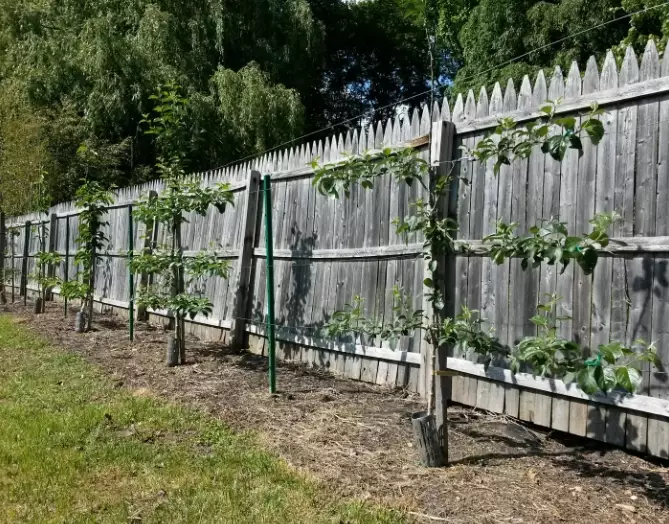
| Variety | Flavor & Best Use | Harvest Period | Pollination Notes | Why It's Good for Espalier |
|---|---|---|---|---|
| Braeburn | Crisp, tart-sweet. Great for eating fresh and baking. | Mid to Late Season | Not self-fertile. Needs a partner like Gala or Fuji. | Stores incredibly well. Strong, manageable growth. |
| Gala | Sweet, aromatic, and mild. Perfect snacking apple. | Early to Mid Season | Partially self-fertile, but crops better with a partner. | Reliable cropper. One of the easier varieties to train. |
| Fuji | Super sweet, very crisp. Excellent fresh. | Late Season | Not self-fertile. Plant with Gala or Granny Smith. | Vigorous grower that fills a space quickly. Long storage. |
| Granny Smith | Classic tart, crisp. Ideal for pies and cooking. | Late Season | Self-fertile (a great solo choice). | Very hardy and disease-resistant. A forgiving choice for beginners. |
| Honeycrisp | Explosively crisp, juicy, balanced sweet-tart. | Mid Season | Not self-fertile. Needs a pollinator like Gala or Fuji. | The flavor is unbeatable. Requires more precise care but worth it. |
| Liberty | Tangy and sweet. Good all-purpose apple. | Mid Season | Self-fertile. | Top-notch disease resistance (especially to scab). Low-maintenance. |
When you buy, look for a "maiden" whip—a single-stemmed, one-year-old tree. It looks unimpressive, like a stick with roots, but it's the perfect blank canvas. It's cheaper and easier to train from this stage than to try and correct an older, branched tree.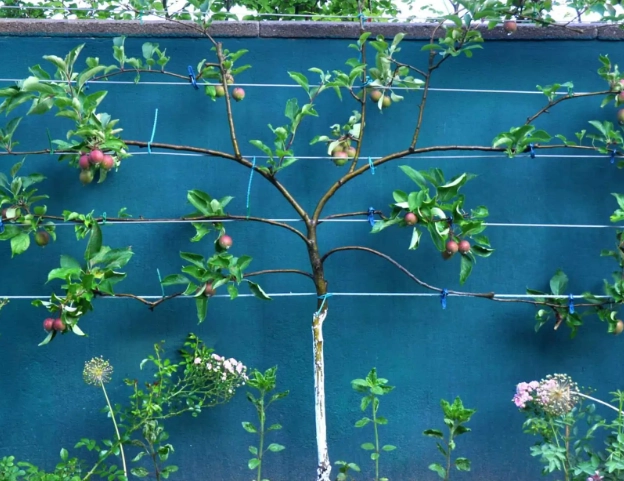
The Planting Process: Setting the Stage
Planting an espalier apple tree is slightly different from planting a regular tree. The goal is to position it so the trunk is centered in front of your support system.
Dig a hole twice as wide as the root ball and just as deep. Mix the excavated soil with plenty of well-rotted compost or manure. Place the tree in the hole so the graft union (the knobby bump near the base) is about 2-3 inches above the final soil line. This prevents the scion (the fruiting variety) from rooting and negating the dwarfing effect of the rootstock.
Backfill the hole, firming the soil gently as you go to eliminate air pockets. Water deeply to settle the soil. Now, the first critical step: prune that maiden whip.
Cut back the central stem to just above the height of your bottom wire. This seems brutal, but it forces the tree to send out side shoots at that point, which will become your first tier of horizontal branches. If there are any small side branches below that point, remove them completely.
Training and Pruning: The Heart of the Craft
This is where you become a sculptor. Pruning is done primarily in late winter (dormant season) and summer. Winter pruning manages the structure and encourages growth. Summer pruning controls vigor and directs energy into fruit buds.
Creating the First Tier (The Hardest Part)
After that initial hard prune, your tree will respond in spring by sending out several new shoots near the cut. Select the two strongest, most vigorous shoots growing in opposite directions along the line of your bottom wire. Gently tie them to the wire using soft, stretchy tie material (like nursery tape or专用 tree ties). Don't use wire or string that can cut into the bark.
Let these two shoots grow along the wire. Any other vigorous shoots growing vertically or in the wrong direction should be pinched back or removed in summer. The goal is to channel all energy into extending those two horizontal arms.
Building Subsequent Tiers
The following winter, you'll repeat the process. Prune the new central leader (the upward-growing shoot) to just above the height of your second wire. Again, select two new side shoots to become the second tier of horizontal branches, and tie them in. Continue this process until you have the number of tiers you want. A classic three-tier espalier is a beautiful and manageable goal.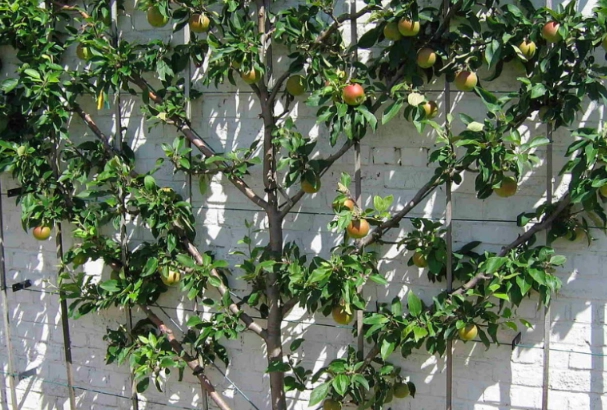
Summer Pruning: The Secret to Control
This is the key to keeping your espalier apple neat and productive. In mid to late summer, once the new lateral shoots (the ones growing perpendicularly off your main horizontal branches) have developed a woody base but are still flexible, cut them back to about 3-4 leaves from their base. This stops them from growing long and messy, and encourages the formation of fruiting spurs—those knobby clusters that will bear fruit for years to come.
Ongoing Care: Beyond the Pruners
A well-trained tree still needs the basics.
Watering: Young trees need consistent moisture, especially in their first few seasons. Deep, infrequent watering is better than frequent sprinkles. Mulching around the base with wood chips or compost helps retain moisture and suppress weeds.
Feeding: In early spring, apply a balanced, slow-release fertilizer or a top dressing of compost. Don't over-feed, especially with nitrogen, as it promotes excessive leafy growth at the expense of fruit.
Pest and Disease Watch: The open form of an espalier makes inspection easy. Keep an eye out for common issues like aphids, codling moth, and fungal diseases like powdery mildew or apple scab. Often, simply removing and destroying affected leaves or fruit is enough. For reliable, science-backed information on identifying and managing apple tree problems organically, a resource like the University of Minnesota Extension website is invaluable. Their fruit pages are detailed and practical.
Popular Espalier Patterns to Try
The horizontal tier (or "cordon") we've discussed is the most common, but it's not the only pattern. Each has a different look and skill level.
- Horizontal Cordon: The classic. Multiple horizontal tiers. Best for long walls or fences. My personal favorite for simplicity and yield.
- Belgian Fence: A stunning pattern where multiple trees are planted in a line and trained to create a diagonal lattice. Advanced, but breathtaking.
- Fan: Branches are trained to radiate out from a short trunk like a fan. Good for less vigorous varieties or a corner placement.
- Candelabra: Similar to the horizontal cordon, but each tier has a central vertical with two horizontal arms, resembling a candelabra. Adds more vertical interest.
Stick with the horizontal cordon for your first project. Master it, then get fancy.
Common Questions (And Straight Answers)
A Final Thought from My Garden
The first time I tried the horizontal cordon, I pruned too aggressively in summer and set back my tree a whole season. Lesson learned! Gardening is like that. You try, you watch, you learn. The beauty of an espalier apple project is that it unfolds over years. There's no instant gratification, but that makes the first harvest of perfect, sun-warmed apples from a tree you shaped with your own hands all the sweeter.
It turns a blank wall into a story. It brings order and abundance to a small space. If you've been dreaming of fruit trees but thought you didn't have the room, this is your sign to give it a go. Start with a simple design, a good dwarf tree, and a sunny wall. The rest is just a conversation between you, your pruners, and the growing tree.
For further deep dives into specific apple varieties, rootstock science, or advanced organic care protocols, institutions like The Royal Horticultural Society (RHS) offer incredibly detailed, research-based advice that can take your espalier practice to the next level.