In This Guide
- First Things First: Picking Your Persimmon Partner
- Planting Your Persimmon Tree: Don't Just Dig a Hole
- The Year-Round Rhythm of Persimmon Tree Care
- The Art and Science of Pruning a Persimmon Tree
- Pests, Problems, and How to Solve Them (The Real-World Stuff)
- The Grand Finale: Flowering, Fruit Set, and Harvest
- Persimmon Tree Care: Your Questions, Answered
So you're thinking about growing a persimmon tree. Or maybe you've already got one in your backyard that's looking a bit... confused. I get it. When I planted my first Fuyu years ago, I was so excited for those sweet, orange fruits I'd seen at the market. What I got instead was a lanky tree that dropped all its hard, bitter fruit before Halloween. Turns out, I was doing almost everything wrong. Persimmon tree care isn't rocket science, but it does have its quirks. Skip a few key steps, and you'll be wondering why your tree is more of a decorative stick than a fruit factory.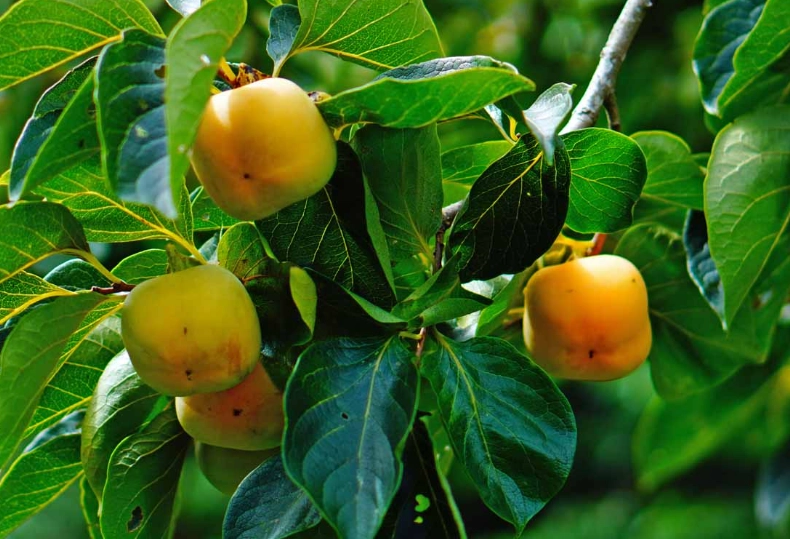
This guide is everything I wish I'd known back then. We're going to dig deep into the real-world, nitty-gritty of keeping these beautiful trees healthy and productive. Forget the overly technical jargon. We'll talk about the stuff that actually matters: picking the right type for your taste buds (astringent vs. non-astringent is a game-changer), where to plant it so it doesn't sulk, how to prune without butchering it, and the secret to actually getting those fruits to ripen into sugary perfection instead of rock-hard disappointments.
Good persimmon tree care transforms a finicky plant into one of the most low-maintenance and rewarding fruit trees you can own. Let's get into it.
First Things First: Picking Your Persimmon Partner
This is the single most important decision. Get it wrong, and you might be stuck with fruit you can't stand. Persimmons mainly fall into two camps, and your climate dictates which camp you should join.
The Asian varieties (Diospyros kaki) are the ones you commonly see in groceries. They're further split into two personality types:
- Non-Astringent (or PCNA - Pollination Constant Non-Astringent): These are the "eat-it-like-an-apple" crowd. Fruits are sweet and firm when crisp, straight off the tree. The Fuyu is the superstar here. Perfect for impatient snackers and salads.
- Astringent: This group includes classics like Hachiya. The fruit is mouth-puckeringly bitter until it becomes utterly, jelly-soft ripe. Then it's like sweet, spiced pudding. Requires patience and tolerance for mushy texture.
Then you have the American persimmon (Diospyros virginiana), a native tree that's incredibly tough and cold-hardy. The fruits are smaller, packed with intense flavor, and almost always astringent until fully ripe. They're a forager's delight and a great choice for naturalized landscapes.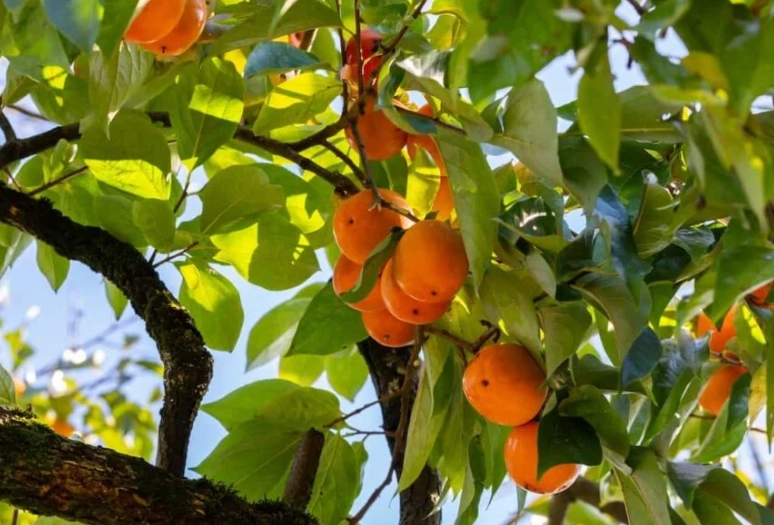
Here’s a quick cheat sheet to help you decide:
| Variety Type | Best For Climates Like... | Fruit Texture When Ready | Chill Hours Needed | My Personal Take |
|---|---|---|---|---|
| Fuyu (Non-Astringent) | Zones 7-10 (California, Southeast, Pacific Northwest) | Firm & Crisp | Low (100-200) | The reliable workhorse. Almost never fails. |
| Hachiya (Astringent) | Zones 7-9 | Very Soft & Jelly-like | Low-Medium | Superior for baking, but you MUST wait for full softness. |
| American Persimmon | Zones 4-9 (Extremely cold tolerant) | Soft | High | A tough, flavorful native—best for foraging or naturalizing. |
For detailed, science-backed variety descriptions tailored to different regions, the University of California's Division of Agriculture and Natural Resources has an excellent, in-depth resource on persimmon varieties and their characteristics. It's a bit academic, but the information is gold for making an informed choice.
Planting Your Persimmon Tree: Don't Just Dig a Hole
Planting is where you set the stage for decades of growth. A little extra effort here saves years of corrective persimmon tree care later.
The Golden Rules of Location
Sunlight is non-negotiable. Persimmons need a minimum of 6-8 hours of direct, unfiltered sun daily. More is better. Less sun equals fewer flowers, fewer fruits, and weaker growth. Don't try to squeeze it into a shady corner.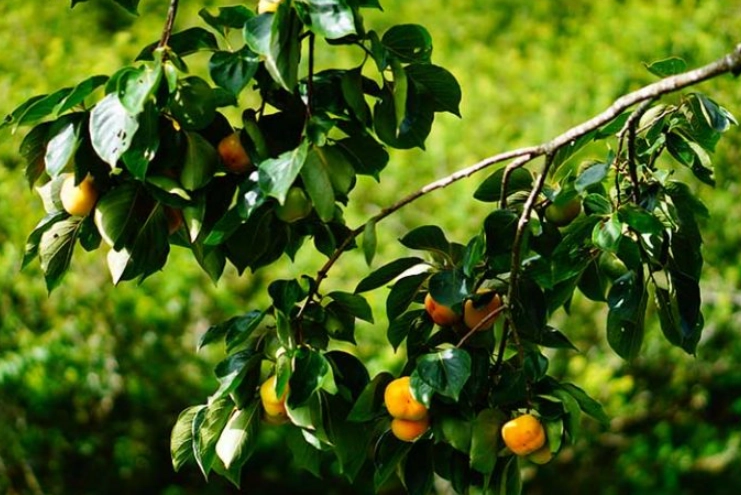
Soil and Drainage are the Silent Killers. Persimmons hate "wet feet." Their roots will rot in soggy, poorly-drained soil. If your yard has heavy clay or a high water table, you must plant on a mound or in a raised bed. The ideal soil is deep, loamy, and well-draining. A simple percolation test: dig a hole about a foot deep, fill it with water. If it drains away in a few hours, you're good. If it sits overnight, you have a drainage problem.
Soil pH matters, but they're somewhat adaptable. A slightly acidic to neutral pH (6.0 to 7.5) is ideal. You can get a soil test kit or send a sample to your local cooperative extension office. The USDA Natural Resources Conservation Service provides a great overview of soil fundamentals and drainage if you want to really understand what's happening under your feet.
The Step-by-Step Planting Process
- Dig a Wide, Not Deep, Hole: Make the hole about three times as wide as the root ball, but only as deep as the root ball itself. This encourages roots to spread horizontally. I once dug a deep, narrow "post hole" for a tree. It never grew well—the roots just circled in that pit.
- Inspect and Tease Roots: If the tree is pot-bound (roots circling tightly), gently tease them apart with your fingers or make a few vertical slices with a clean knife. This seems harsh, but it prevents girdling roots that can strangle the tree later.
- Plant at the Right Depth: This is critical. The root flare (where the trunk widens at the base) must be visible above the final soil line. Planting too deep is a common, fatal mistake. Place the tree in the hole and lay a tool handle across it to check the level.
- Backfill with Native Soil: Don't amend the backfill soil with a bunch of compost or potting mix. You want the roots to adapt to the native soil, not stay confined in a rich pocket. Just break up any large clods.
- Water Deeply and Mulch: Water slowly and thoroughly to settle the soil and eliminate air pockets. Then, apply a 2-4 inch layer of organic mulch (wood chips, shredded bark) in a wide circle around the tree, keeping it a few inches away from the trunk. Mulch is a miracle worker—it conserves moisture, suppresses weeds, and regulates soil temperature.
The Year-Round Rhythm of Persimmon Tree Care
Once established, persimmons are surprisingly drought-tolerant and low-fuss. But "low-fuss" isn't "no-fuss." Here's the seasonal cadence.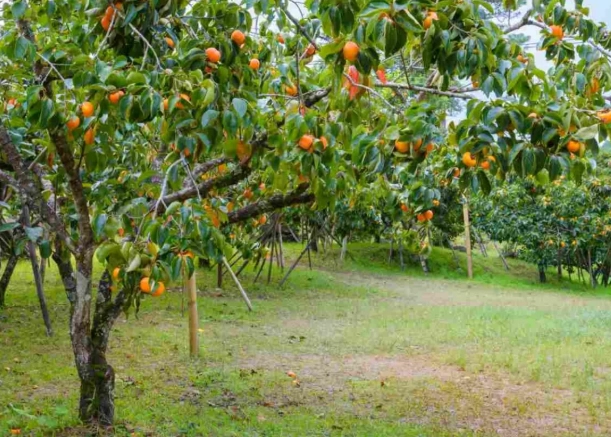
Watering: Deep Soaks Beat Frequent Sips
Young trees (first 2-3 years) need consistent moisture. Water deeply once or twice a week, depending on heat and rainfall. The goal is to encourage deep root growth.
Mature trees are much more resilient. They'll need deep watering during prolonged droughts, especially when fruits are swelling in late summer. A good rule of thumb: if the top 2-3 inches of soil are dry, it's time to water. Overwatering is a bigger threat than underwatering for an established tree.
Feeding: Less is Often More
Persimmons aren't heavy feeders. Over-fertilizing, especially with high-nitrogen fertilizers, leads to lots of leafy growth at the expense of flowers and fruit, and makes the tree more susceptible to pests.
- Early Spring: A balanced, slow-release fertilizer (like a 10-10-10) applied according to package directions is plenty. Alternatively, a top-dressing of well-rotted compost or aged manure around the drip line works wonders.
- Mid-Summer: If growth seems stunted or leaves are pale, a light side-dressing of compost can help. Otherwise, skip it.
- Late Fall/Winter: No fertilizer. You don't want to encourage tender new growth just before frost.
Mulching and Weed Control
Keep that mulch layer refreshed. It decomposes over time. Maintaining a wide, weed-free area around the base reduces competition for water and nutrients. Hand-pull weeds near the trunk to avoid damaging shallow roots.
The Art and Science of Pruning a Persimmon Tree
Pruning scares people. It shouldn't. For persimmon tree care, think of it as guiding, not chopping. The goals are to maintain a strong structure, allow light and air into the canopy, and manage size.
When to Prune: Late winter or very early spring, while the tree is still dormant but before new growth starts. This minimizes stress and disease entry points. You can also do very light cleanup in summer to remove dead or crossing branches.
Pruning a Young Tree (The First 3-4 Years)
You're building the scaffold—the main permanent branches.
- At planting, if the tree is a whip (single stem), cut it back to about 30-36 inches tall to encourage low branching.
- Select 3-5 strong, well-spaced branches with wide angles (not narrow, weak crotches) to be your main scaffold limbs. Remove others.
- In subsequent years, tip-prune these scaffold branches to encourage further branching and a bushy, strong form.
Pruning a Mature Bearing Tree
Now it's about maintenance and harvest ease.
- Remove the 3 D's: Dead, Diseased, and Damaged wood. Always.
- Thin for Light: Remove branches that are growing straight up through the center (water sprouts) or straight down. Cut out any branches that are rubbing or crossing. You want dappled sunlight to reach the inner branches.
- Manage Height: If the tree is getting too tall, you can carefully reduce the height by cutting back a tall leader to a lower, outward-facing side branch. Don't just "top" the tree—that creates a mess of weak regrowth.
- Fruit Wood: Persimmons fruit on new growth that arises from one-year-old wood. Your pruning encourages a steady supply of this new, productive wood.
For visual learners, universities with strong agricultural programs often have the best guides. The Purdue University Extension service, for example, has clear, illustrated publications on basic principles of pruning fruit trees that apply perfectly to persimmons.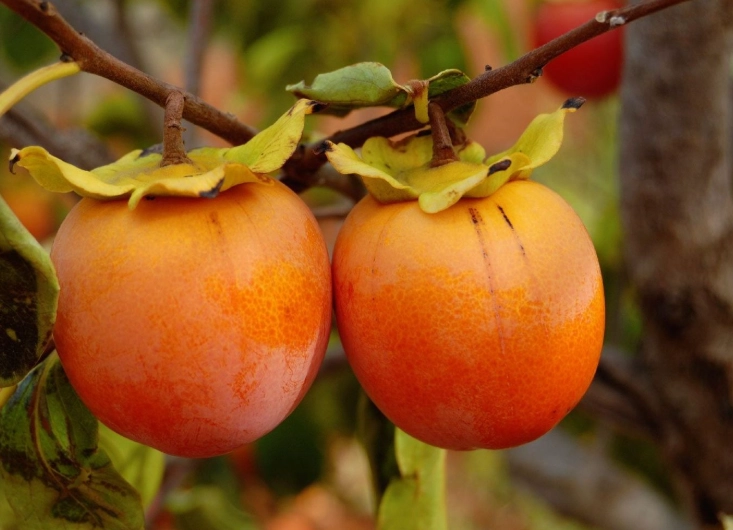
Pests, Problems, and How to Solve Them (The Real-World Stuff)
Persimmons are relatively pest-free, but they're not immune. Here are the usual suspects.
| Problem | Symptoms | Organic/Mechanical Solution |
|---|---|---|
| Persimmon Psyllid | Tiny, jumping insects; leaves curl and pucker, may have sooty mold. | Usually minor. Blast with water hose. Encourage ladybugs and lacewings. Severe cases: insecticidal soap. |
| Scale Insects | Small, immobile bumps on branches/leaves; sticky honeydew. | Dormant oil spray in late winter smothers overwintering scales. Rub off with cloth in summer. |
| Fruit Drop (Physiological) | Tree drops many small, immature fruits in early summer. | This is often natural thinning. Ensure consistent watering and avoid high-nitrogen fertilizer to minimize it. |
| Leaf Spot | Brown or black spots on leaves. | Improve air circulation via pruning. Rake and dispose of fallen leaves in autumn. Fungicides are rarely needed. |
| Animal Pests (Squirrels, Birds) | Half-eaten fruit! The ultimate frustration. | Netting is the most effective solution. Apply just as fruits begin to color. Scare tactics (reflective tape, fake owls) have limited, temporary effect. |
The key to pest management in persimmon tree care is a healthy tree. A stressed tree sends out signals that attract pests. Proper watering, feeding, and pruning are your first and best lines of defense.
The Grand Finale: Flowering, Fruit Set, and Harvest
This is why you put in all the work. Persimmons have a unique flowering habit. Most common varieties (like Fuyu and Hachiya) are parthenocarpic, meaning they can set fruit without pollination. These fruits will be seedless. Pollinated fruits will have seeds and may be slightly larger.
When do they flower? Late spring, after the leaves have emerged. The flowers are small, creamy, and bell-shaped, often hidden by the foliage.
The Long Wait to Harvest: Patience is the ultimate virtue. Persimmons ripen very late in the season, often after the leaves have fallen. Don't rush it!
- Non-Astringent (Fuyu): Harvest when the fruit is fully colored (deep orange) but still firm. They will ripen a bit more off the tree. You can eat them crisp or let them soften.
- Astringent (Hachiya): You MUST wait until the fruit is completely soft, almost to the point of feeling like a water balloon. Skin will be translucent. Picking it firm is a recipe for misery. If frost threatens, you can pick firm fruits and freeze them for 24 hours to remove astringency, then thaw and let them soften.
Harvesting tip: Use pruning shears to cut the stem, leaving the calyx (leafy cap) attached. Pulling can damage the branch and the fruit spur, reducing next year's crop.
Storage: Firm, non-astringent types store well in the fridge for weeks. Soft, ripe persimmons are perishable—eat them quickly or pulp and freeze the flesh for baking.
Persimmon Tree Care: Your Questions, Answered
Yes, but choose a dwarf variety (like 'Izu' or a dwarf Fuyu). Use a very large pot (at least 20-25 gallons) with excellent drainage. Container trees need more frequent watering and feeding. They'll also be less cold-hardy because the roots are exposed. It's a commitment, but doable for a decade or so.
The top reasons, in order: 1) It's too young. Trees often take 3-5 years to bear. 2) Not enough sun. This is huge. 3) Over-fertilization with nitrogen (all leaves, no flowers). 4) Late frost damaged the flower buds. 5) Extreme drought stress during flower formation.
No! Persimmons are deciduous. They put on a fantastic show of yellow, orange, and red foliage before dropping every leaf. A bare tree in winter with plump, orange fruit clinging to the branches is its normal, beautiful state.
"Persimmon" can refer to the American species (Diospyros virginiana). "Japanese persimmon" or "Kaki" refers to the Asian species (Diospyros kaki), which is the one most commonly cultivated for the large fruits we eat. When people talk about general persimmon tree care, they're usually referring to the Asian types.
A balanced, all-purpose fruit tree fertilizer is perfect. I lean towards organic options like Espoma Tree-tone or similar, as they release nutrients slowly and improve soil biology. The numbers on the bag (like 5-5-5) are less important than applying it moderately and at the right time (early spring).
In cold climates (Zones 5-6), the main threat is to young trees. Use a tree guard or wrap the lower trunk with commercial tree wrap or burlap to prevent sunscald and rodent damage. A thick layer of mulch over the root zone (pulled back from the trunk) insulates the roots. Established trees of hardy varieties are remarkably tough. Your local university extension office is the best source for winter protection guides specific to your area.
This is almost always caused by irregular watering—a long dry period followed by heavy rain or irrigation as the fruits are maturing. The fruit expands too quickly and the skin splits. The solution is consistent, deep watering during dry spells in the late summer/fall.
With good persimmon tree care, they are incredibly long-lived. It's not uncommon for healthy Asian persimmon trees to be productive for 50-75 years. American persimmons can live for centuries. You're planting a legacy.
At the end of the day, persimmon tree care is about understanding the tree's language. Dropping some fruit? It's probably fine. Leaves turning glorious colors in autumn? Perfectly normal. Not fruiting yet? Give it time and sun. Once you get past the initial learning curve, you'll find it's one of the most graceful, forgiving, and generous trees you can have in your landscape. The reward—biting into a sweet, sun-warmed persimmon you grew yourself—is absolutely worth the wait.
Got a persimmon puzzle I didn't cover? Drop a comment below—I'm always learning from other gardeners' experiences too. Happy growing!
Reader Comments