
What’s Inside (Skip Ahead)
My 11-year-old lab mix, Cooper, started hesitating on the stairs last winter. Not limping exactly—just… pausing. A two-second pause before each step. That pause turned into a full stop within a month. I’ve spent the last three years testing senior dog joint care strategies on him and dozens of foster seniors since. Here’s what genuinely moved the needle, and what was a waste of money.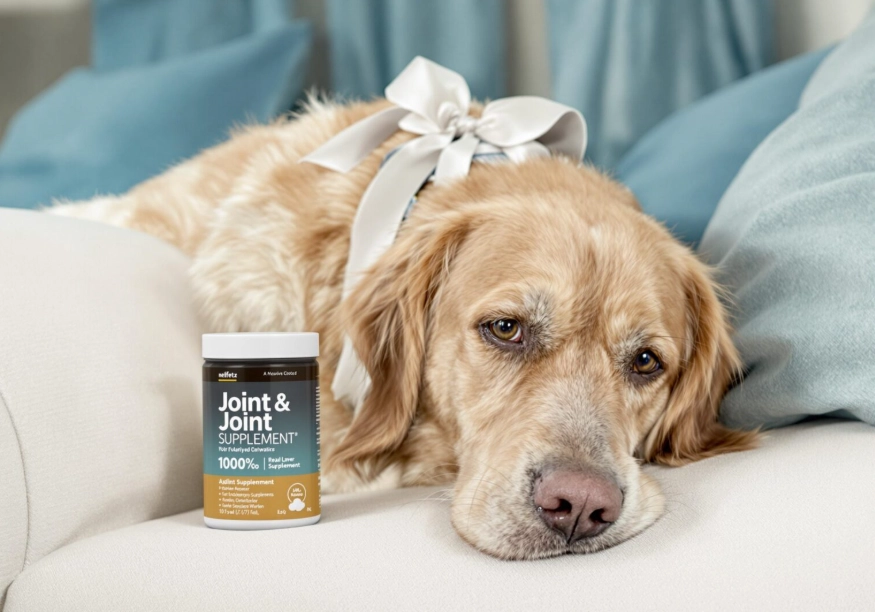
Why Do Old Dog Joints Hurt So Much?
Cartilage wears down. Synovial fluid thins out. Low-grade inflammation becomes chronic. That’s the textbook version. The part most vets don’t spell out during a rushed exam: muscle loss is the silent accelerant. Senior dogs lose lean muscle mass faster than young dogs, and weaker muscles mean more load dumped directly onto deteriorating joints. It becomes a loop—pain reduces movement, less movement worsens muscle wasting, weaker muscles increase joint strain.
I learned this the hard way with Cooper. His bloodwork was fine, X-rays showed moderate arthritis, but the real problem was his hind-end muscle was almost gone. No supplement fixes that alone.
What’s the Best Joint Supplement for Senior Dogs?
There is no single “best” supplement—anyone who tells you otherwise is selling something. But after running through glucosamine, chondroitin, MSM, green-lipped mussel, CBD, and eggshell membrane with Cooper, here’s what the evidence and my own trial-and-error point to.
| Supplement | What It Does | My Verdict for Senior Dogs | Typical Monthly Cost (USD) |
|---|---|---|---|
| Glucosamine + Chondroitin | Supports cartilage structure; modest pain relief | Worth trying first—cheap, safe, but effects are subtle | $25–$45 |
| Green-Lipped Mussel | Natural anti-inflammatory; omega-3s | Best non-prescription option I’ve seen for stiffness | $30–$55 |
| CBD Oil (full-spectrum) | Pain modulation; reduces anxiety around movement | Mixed results—helped Cooper’s nighttime restlessness, not his stairs | $40–$80 |
| Eggshell Membrane | Provides collagen and hyaluronic acid | Promising but expensive; hard to source reliably | $50–$90 |
| Omega-3 Fish Oil (high EPA) | Systemic anti-inflammatory | Non-negotiable baseline—cheap and genuinely helps | $15–$30 |
One non-consensus observation: most owners start supplements too late. They wait until the dog is visibly limping. By then, cartilage loss is advanced. If your dog is a large breed over age 7 or any breed over 9, start omega-3s and glucosamine now, before symptoms. I wish I had.
6 Home Fixes That Help Senior Dog Joints
Supplements are background noise compared to your home environment. Here’s what I actually changed in my house—and what I’d skip.
- Ramps, not stairs. A 12-inch-high foam ramp to the couch (I got mine from Chewy for about $60) eliminated Cooper’s evening hesitation entirely. Measure the height of your couch or bed before buying. Too steep defeats the purpose.
- Yoga mat runners on hard floors. Slick tile and hardwood force senior dogs to grip with splayed toes, which torques arthritic wrists. Cheap yoga mats cut down slipping. I bought three for $20 total.
- Raised food and water bowls. A 4-inch elevation reduced Cooper’s front-leg strain during meals. Not for every dog—if your dog has cervical spine issues, skip this and ask your vet.
- Orthopedic bed with a low lip. Memory foam is great, but a 4-inch lip means a senior dog has to step over it. Look for beds under 3 inches tall on the entry side. I returned two before finding one.
- Night lights along the potty path. Senior dogs with cloudy eyes (nuclear sclerosis) navigate poorly in dim light. A $12 pack of plug-in LEDs reduced nighttime accidents for my foster beagle.
- Warm water therapy at home. A 10-minute warm (not hot) compress on hips before walks loosens stiff muscles. Use a microwaveable rice bag wrapped in a towel—test on your wrist first.
Weight and Exercise: The Non-Negotiables
Every extra pound on a senior dog translates to roughly 4 pounds of force across the joints during movement. Cooper was 8 pounds overweight at his worst. My vet put it bluntly: “You can buy every supplement on the market, but if he stays fat, none of it matters.” She was right.
Weight loss for senior dogs is slow—aim for 1–2% of body weight per week, no faster. I measured Cooper’s kibble with a kitchen scale (not a scoop—scoops vary wildly). Reduced his portion by 15% and swapped half his kibble for canned green beans. He lost 6 pounds in three months. His stair hesitation dropped by half. No supplement did that.
Exercise needs modification, not elimination. Three 10-minute walks beat one 30-minute walk for arthritic joints. Swimming is gold if you have access—I drive 25 minutes to a canine hydrotherapy pool twice a month ($40/session). The buoyancy offloads joints while building muscle. If you can’t do pool, flat, soft-surface walks on grass are the next best thing.
Vet Treatments That Actually Work
Prescription options deserve a straight answer: not every senior dog needs them immediately, but if your dog is struggling to rise or refusing walks, they’re not optional anymore.
Librela (bedinvetmab)—a monthly injection that targets nerve growth factor. I’ve seen dramatic improvements in about 60% of the seniors I’ve fostered. Cooper responded within two weeks. It’s not cheap ($60–$100 per injection at my clinic) and not every vet stocks it, but for moderate-to-severe arthritis, it’s the most impactful single intervention I’ve used.
NSAIDs (carprofen, meloxicam)—still the gold standard for acute flare-ups. The catch: senior dogs need baseline bloodwork every 6–12 months to monitor liver and kidney values. My vet checks Cooper every 8 months. Don’t skip that. I’ve seen one foster dog develop kidney values from undiagnosed dehydration while on meloxicam—caught early, but a warning.
Laser therapy—class IV cold laser reduces local inflammation. My clinic charges $45 per session; I do it monthly for Cooper. Honestly, I’m not sure it does much on its own, but combined with Librela and weight loss, his mobility is better than it was two years ago. The vet’s office also offers a package deal (6 sessions for $220) if you ask—they don’t always advertise it.
Real Questions from Dog Owners
This article was fact-checked against the AAHA Pain Management Guidelines and the 2023 American College of Veterinary Surgeons consensus on osteoarthritis in dogs.


Comments