What’s in this guide (skip to what you need)
I still remember the first time I tried dog grooming at home. My rescue terrier, Pepper, looked like a dirty mop. I bought a cheap clipper set from a big-box store, watched one 4-minute video, and went to work. Twenty minutes later, Pepper had a bald patch on his back and I had a bleeding finger. A professional groomer charged me $95 to fix it. After that, I spent another $200 on useless brushes before realizing the real problem: I was copying “show dog” routines instead of adapting to my dog’s coat and anxiety.
This isn’t a polished manual. It’s what I’ve learned through trial, error, and a lot of treats. If you’re here because you want to stop paying $80–$120 every six weeks, you can. But the secret isn’t a fancy clipper. It’s timing, tool quality, and learning to read your dog’s stress signals before they escalate.
My $300 Mistake (And Why Yours Won’t Be)
Most online guides tell you to “start with a bath.” That’s wrong for a matted coat—water tightens mats like felt. I learned this the hard way. Pepper had a small mat behind his ear. I bathed him first. By the time he was dry, that mat had turned into a solid, palm-sized knot that pulled his skin. I ended up cutting it out with scissors—dangerous and ugly.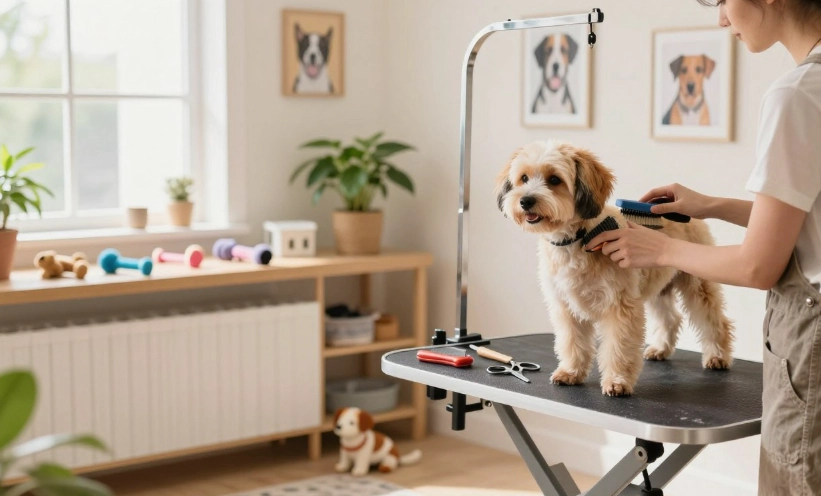
What I do now: dematt before the bath, always. And I keep a simple grooming kit recommended by the ASPCA—no more than five items. That’s it. The expensive clippers? They sit in a drawer. You don’t need them unless you’re doing full-body shaves, which most home groomers shouldn’t attempt.
The Only 5 Tools You Actually Need
Forget the 12-piece kits. Here’s what survived my learning curve, ranked by how often I reach for them:
| Tool | What It’s For | Price Range | My Pick (No Brand Loyalty, Just Results) |
|---|---|---|---|
| Slicker brush | Daily detangling, removing loose fur | $12–$25 | Chris Christensen Big G (worth the splurge if you have a double coat) |
| Metal comb (half-fine, half-coarse) | Checking for hidden mats after brushing | $8–$15 | Any stainless steel comb—avoid plastic teeth |
| Nail clipper (scissor-style) | Trimming nails without crushing | $15–$30 | Miller’s Forge—heavy but precise |
| Styptic powder | Stopping a quicked nail from bleeding | $6–$10 | Quick Stop—keep it within arm’s reach |
| Ear cleaner (vet-approved) | Weekly wipe-down, not deep cleaning | $10–$18 | Virbac Epi-Otic—my vet recommended it |
Notice what’s missing? Clippers. Shampoo (use your regular dog shampoo, diluted 1:3 with water). Conditioner (only for long coats, and rinse twice as long as you think). And a grooming table—a non-slip mat on the floor works fine.
How to Groom Your Dog at Home: A 45-Minute Routine
I time this routine on a Sunday morning. Pepper is tired after his walk, which makes him calmer. Here’s the exact order, and why each step matters:
Step 1: The 5-Minute Mat Check (Before Anything Else)
Run your hands over your dog’s body—behind the ears, armpits, tail base, and behind the back legs. Those are the four spots where mats hide. If you feel a knot bigger than a pea, stop. Use a dematting tool (or your fingers, gently) to break it apart before you brush. Never brush over a mat—you’ll pull skin and your dog will remember the pain.
Step 2: Dry Brushing (15 Minutes)
Start at the back legs and work forward. Why? Dogs are more sensitive near the head and tail. By the time you reach the head, they’re used to the brush. Use short, gentle strokes—no pressing down. I count to ten strokes per section, then give a treat. Pepper gets about eight treats during this phase. That’s fine.
Step 3: The Bath (10 Minutes, Max)
Lukewarm water. Diluted shampoo. Scrub only the dirty parts (paws, belly, rear). Rinse until the water runs clear—usually twice as long as you think. I made the mistake of not rinsing enough once. Pepper’s skin got flaky and itchy for a week. Now I rinse for a full three minutes under the hose.
Step 4: Towel Dry and Air Dry (10 Minutes)
No hair dryer. The noise scares most dogs. Pat dry with a microfiber towel, then let your dog shake it out in a warm room. If you must use a dryer, use the lowest heat and keep it moving—never point it at one spot.
Step 5: Nails and Ears (5 Minutes)
Do one paw, then a treat. One paw, then a treat. I clip only the very tip of the nail—the curved hook. The quick (the pink part) is closer than you think on dark nails. If you’re unsure, take off less. A groomer told me: “You can always take more off tomorrow. You can’t put it back.”
What Is Matte Hair and How to Remove It Without a Fight
Mats are not just tangles. They’re dense clumps of dead fur, oils, and dirt that have fused together. They pull on the skin with every step your dog takes. That’s why a matted dog often sits down mid-walk or snaps when you touch their back.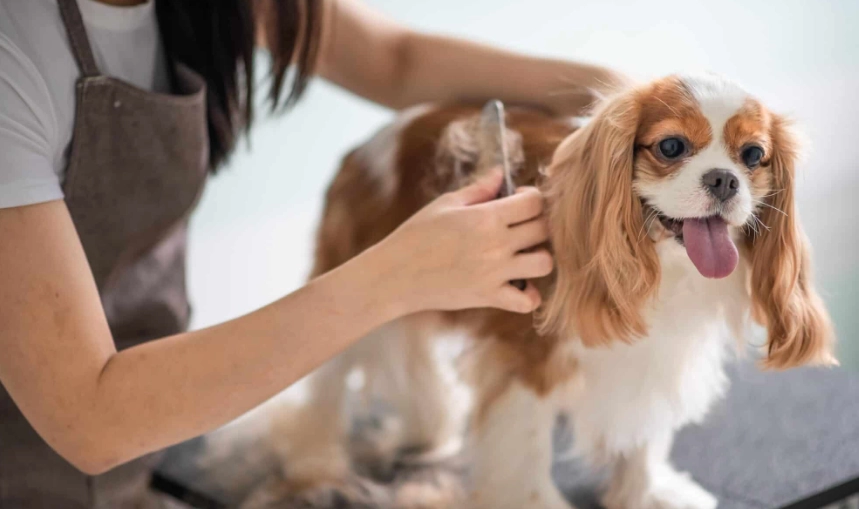
If you find a mat the size of a quarter or larger, don’t try to brush it out. You’ll cause pain. Instead:
- Use a mat splitter (a small tool with a tiny blade) to cut parallel to the skin, not downward. I learned this from a groomer at a local rescue event—she said most home groomers cut perpendicular and nick the skin.
- Work in tiny sections—about an inch at a time. Hold the mat between your fingers to protect the skin, then split it.
- Stop if your dog yelps or pulls away. That’s not stubbornness; that’s pain. Take a break and come back later.
For severe mats (covering a whole leg or the belly), see a professional. I tried to save $60 once and ended up at the vet with a skin infection. Not worth it.
Nails & Ears: The Quiet Danger Zones
Most home groomers focus on the coat and ignore nails until they hear click-click-click on the floor. By then, the quick has grown longer and clipping is trickier. I check nails every two weeks—just a tiny tip off each one. Pepper doesn’t love it, but he tolerates it because I do one nail, then give a piece of freeze-dried chicken. One nail. One treat. It takes ninety seconds total.
Ears: if they smell like yeast or have dark discharge, skip the home cleaning and see your vet. That’s an infection, not wax. For routine care, squeeze a vet-approved cleaner onto a cotton ball (never directly into the ear canal) and wipe the visible folds. That’s it. No Q-tips inside the ear—ever. I’ve seen two dogs with ruptured eardrums from well-meaning owners. Both were preventable.
Real Questions from Real Owners
One last thing: your dog doesn’t care if the groom looks show-ready. They care that you stop when they’re uncomfortable. I’ve ended grooming sessions after five minutes because Pepper was lip-licking and turning away. That’s not failure. That’s listening. The next day, he jumps onto the grooming mat voluntarily because he knows I won’t push him past his limit.
This article was fact-checked against guidelines from the ASPCA and the pet care team at my local vet clinic. No sponsors, no brand deals—just what worked in my laundry room with a anxious terrier and a lot of treats.




Comments